If you already have leather shoes, wool clothing, or down blankets, you don’t have to make a decision for them all at once. Continuing to use, repairing, giving away, or replacing an item when it wears out are options with different effects. Start the decision by asking whether the item still works, whether you need it, and what is problematic about using it. Then consider what is available and practical in the situation. This is about items you have already purchased or received.
See repurchasing and using an existing device separately.
Buying today brings money and a new decision into the chain. Wearing a pair of shoes you bought years ago is a different decision in terms of timing and type. This difference makes some people distinguish between “I won’t buy this again” and “I’ll use what I have.” For others, continuing to use it doesn’t align with their values or feelings. If you write down the reasons for each decision separately, it becomes clear whether the difference is about buying something new or how to use something you already have at home.
The British Vegan Society’s definition emphasizes avoiding the exploitation and cruelty of animals as much as possible and includes clothing alongside food and other uses. This definition is useful for asking questions. A particular decision about an old pair of shoes will be influenced by its condition, the person’s needs and the options available. If the issue has a specific ethical principle for you, state that principle. For example, explain whether you would like to avoid buying new, avoid displaying a particular type of product, or whether personal use is unacceptable to you. [1] Ethical veganism and basic concepts
If multiple people in the household use the item, consider ownership and control. The blanket may belong to someone else or be used for a shared need. Individual decisions about future purchases can be separate from collective decisions about existing items. Before moving, giving away, or changing a shared item, talk to your household about its current and alternative uses. This conversation is clearer when you state the name of the item and the actual problem.
If the device is safe and needed
If the only shoes you have for your workplace are leather and you don’t have a cheap alternative, you can separate the search time from the downtime. Determine what features the shoes really need. Safety, suitability for long periods of standing, or a specific foot shape may be important. Then, consider these same features in new options for replacement. For a product that has a safety or health role, first consider the actual need and intended use. Materials or appearance are only part of the selection.
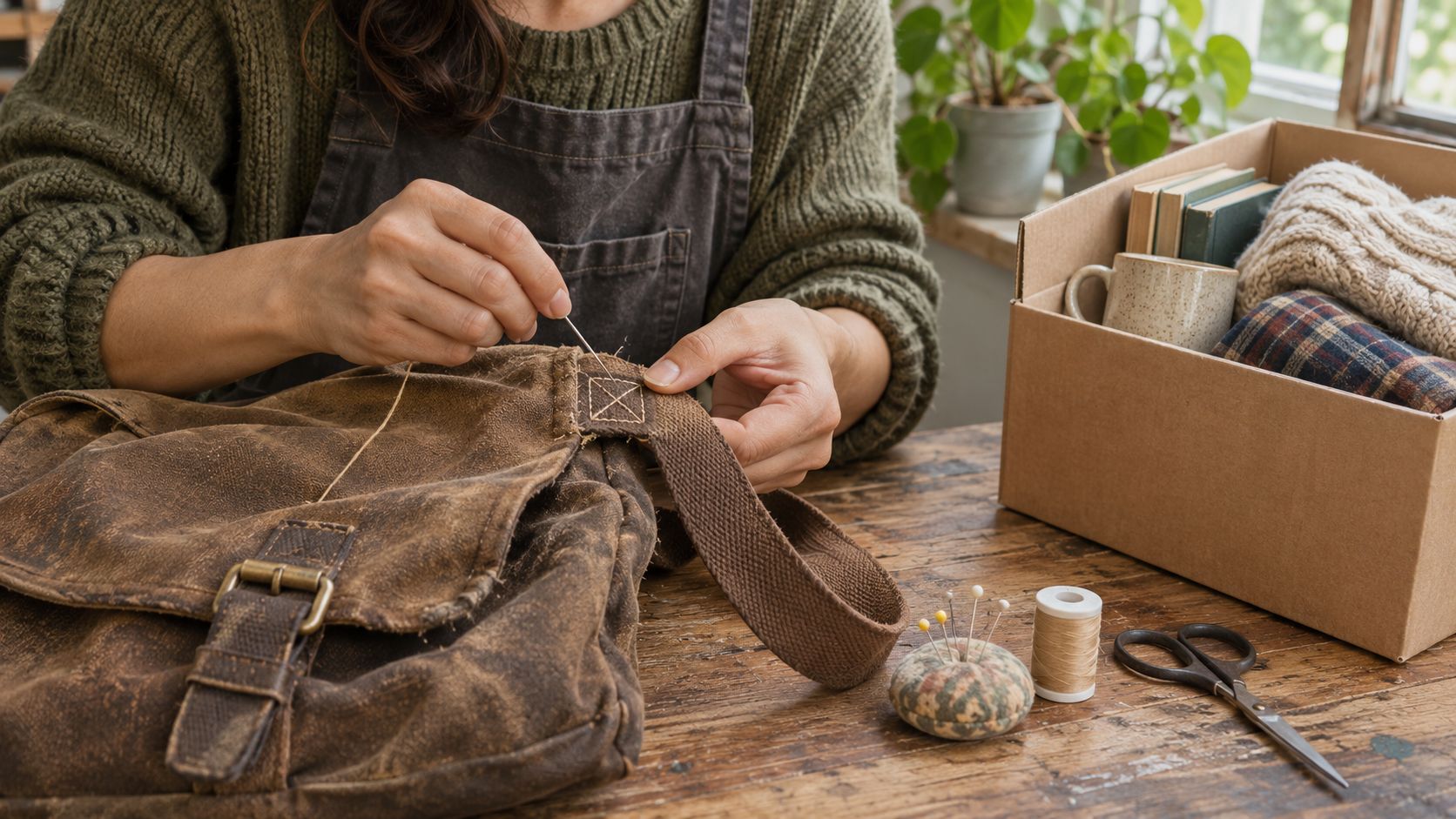
If an item has minor damage, consider repair as an alternative to replacement. For instance, replacing the strap or sole of a shoe can extend its usable life. Inquire about the specific repairs involved and whether any new materials—which might be of concern to you—are required. Weigh the cost and time required for repairs against your actual needs. If repair is not an option, factor this into your decision-making so you do not limit yourself to a solution that is not actually feasible. The U.S. Environmental Protection Agency (EPA) lists repair and reuse as effective methods for waste reduction. [2]
If continuing to use an item feels unsatisfactory, determine when and how you might replace it. While you consider this, you could limit its use to situations where no other alternative exists. Alternatively, if you already have a similar item at home, check whether it can serve the same purpose. Making a change does not necessarily require an immediate purchase. For example, if you need warm clothing, layering items you already own might buy you time to choose a suitable replacement more carefully.
If an item is in good condition but goes unused
For items that have sat unused for a long time, first identify why they have been kept. Perhaps the size is wrong, another item has taken over its function, or you have kept it simply because it was a gift. The reason for keeping an item is not the same as the item itself. If the issue is merely that it takes up space, and someone else could make use of it, passing it on might be a good option. Before doing so, ensure the item is in good condition and check the requirements of the recipient or the organization you intend to donate it to. Passing on an unsuitable item may simply shift the burden of disposal onto someone else. [2]
If the material is important to the recipient, state it clearly when handing the item over. Do not make definitive assumptions—for instance, about whether an outer layer is genuine leather or what the filling material consists of. Provide the recipient with photos of the product label and the item’s current condition. If an item is worn out, dirty, or unsafe, it may not be suitable for further use. You might explore options for repair or look into appropriate collection/recycling channels for that specific material. Check with the relevant facility regarding their local policies and acceptance criteria, as not all centers accept the same types of fabrics or items.
The ethics of passing on or selling second-hand items can vary from person to person. You might simply want to ensure an item doesn’t go to waste and that someone else can make use of it. Alternatively, you might feel uncomfortable selling an item that contains animal-derived materials. Consider these concerns separately. If you wish to make claims regarding environmental impact, avoid drawing definitive conclusions unless you have concrete data about the alternative (what would replace it) and the item’s ultimate fate. For personal decisions, simply noting the reasoning behind your chosen course of action is usually sufficient.
If the item is a keepsake or a gift
You can distinguish between keeping an item as a memento and using it for its intended purpose. For example, you might own a piece of clothing gifted by someone significant to you, even though you no longer wear it. Before making a decision, reflect on what exactly makes the item meaningful as a keepsake. If its value lies in the memory it evokes, perhaps keeping a photograph or a written note would suffice and take up less space. If, however, it is important to you to keep the actual object, you could store it separately and defer any decision regarding its use to a later time. For this situation, you do not necessarily need to apply the same rules you established for your everyday purchases.
Regarding a new gift, consider whether you can identify the giver and if an exchange is possible. If you wish to express your preferences for the future, state your request clearly and concisely. For example, saying, “If you ever buy me shoes or clothing, please ensure that neither the main material nor the lining is of animal origin,” can help guide future decisions. This applies to future acquisitions. As for a gift you have already received, you can take your time to decide whether to keep it, return it, or—with the giver’s consent—pass it on to someone else.
Choose a replacement item based on its intended function.
Before making a new purchase, create a list of the necessary features. For shoes, factors like size, durability, and repairability might be important. For a blanket, weight, washability, and warmth are key. Once you have defined these requirements, check the product labels and information; ask questions only about components whose answers would influence your decision. For instance, an item might have a suitable outer material, but the composition of the lining or filling might not be specified. For information on how to register a product or contact the manufacturer, see the checklist for household items when transitioning to a vegan lifestyle. (See above)
If you haven’t yet found a suitable item, set a specific time to revisit the decision—for example, at the end of the season, or when your current pair of shoes is in urgent need of repair. In the meantime, you can make a note of models that meet your needs and inquire about the materials used in their various components. Hasty purchasing can result in acquiring an item that never actually gets used. Especially when it comes to expensive goods or items shared by others, one must consider not only the origin of the materials but also the practicalities of using and maintaining the object.
Instead of making decisions about your entire household, select three items that represent three different situations: a pair of shoes that are in good condition and currently needed; a blanket that has not been used for a long time; and a piece of clothing that requires repair. For each item, note the reason for its current status and the next step to take. For the shoes, this might simply involve researching potential replacements; for the blanket, it could mean inquiring with a donation or collection center; and for the clothing, it might entail assessing the cost of repairs. In each case, identify what information is currently missing and determine when you need to revisit the decision.
If Options Conflict
Suppose an item still functions well, but its appearance conveys an impression you do not wish to project in a specific context. You might consider different usage scenarios; perhaps the item is suitable for use at home, while you prefer a different option for when you are out. Alternatively, you might choose to part with it. Evaluate each option based on necessity, cost, the possibility of repurposing, and your own personal feelings. It is more practical to make a decision for a specific, real-life situation than to engage in a general discussion about what “everyone” ought to do.
If you are torn between discarding an item and continuing to use it, clarify your next step by asking specific questions. Do you know of a reliable place to have it repaired or to donate it? Would the item truly be useful to someone else? Does your current alternative actually meet your essential needs? If you do not know the answers, gather the necessary information first. If an immediate decision is not required, you can set a specific time to review the matter and keep the item at home in the interim. This breathing room ensures that your final decision is based on a genuinely viable option. [2]
In your note, include a review time next to the action. For example, write, “The blanket will be shared until the end of the winter, and then we’ll reevaluate.” Such a note distinguishes between a temporary decision and a long-term preference. If a need changes, such as a suitable replacement being found or an item breaking, reevaluate the item, rather than having to list the entire house from scratch.
Conclusion
For each item you have, consider your current need, the possibility of repairing or giving it away, and your moral reasons. Set a benchmark for your next purchase in advance. If a practical option hasn’t been found yet, set a time for the decision and until then, do only what is consistent with your actual circumstances.
Frequently asked questions
Is keeping old shoes incompatible with choosing to be vegan?
People have different reasons for this. To make your decision, determine whether it’s a new purchase, personal use, or outdoor display. Then weigh your current needs and practical options separately. [1]
What should I do with a safe and unused device?
If someone can use it, check the terms of delivery and acceptance and make clear its type and condition. For damaged equipment, first check for repair or appropriate collection routes. [2]
What if a replacement device is not currently available?
Record the reason for the restriction and the next review time. You can use the existing device, repair it, or research a suitable alternative, depending on your needs. For a safety or health product, prioritize the application requirements.
How is it different from a vegan shopping checklist?
In a new purchase, the main question is what exact materials and features the product has. In an existing device, you first ask whether you need it and how you plan to use, repair, or give it away. Material information can help with both decisions.
Leave a Reply