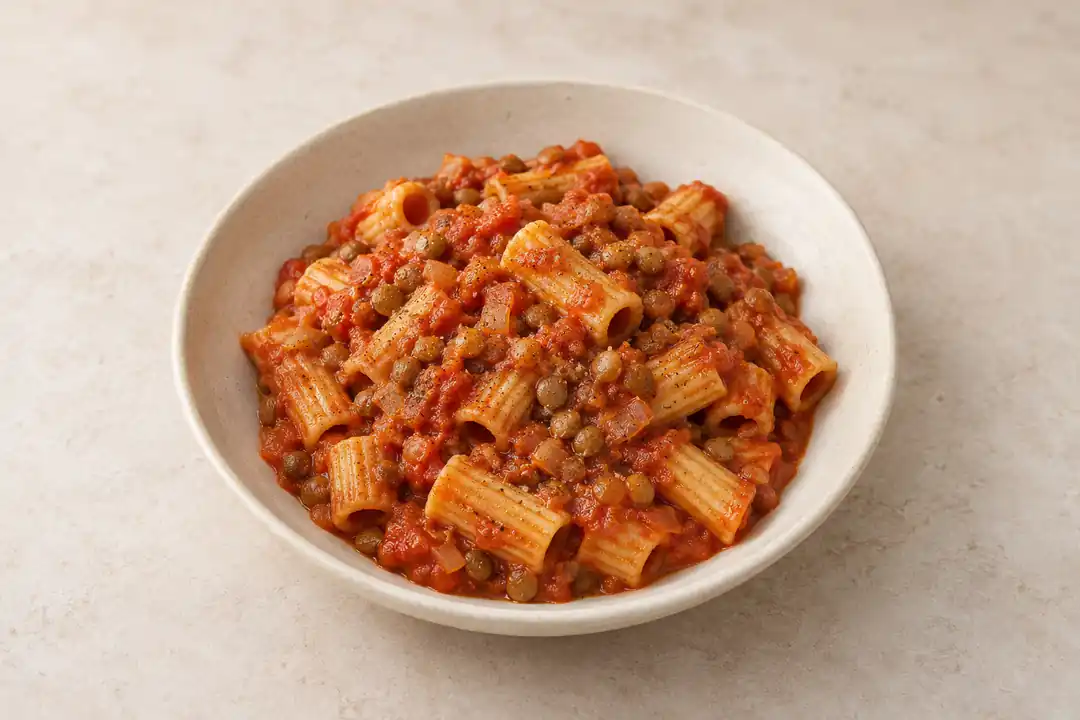
For pasta with lentil and tomato sauce, cook the tomatoes with the onion and a little paste until the sauce thickens. Then add the cooked lentils and briefly stir the drained pasta into the sauce. If the mixture dries out, a little of the pasta water will help the sauce spread over the pasta again. To make sure the lentils are visible in the dish, add them after the tomatoes have thickened and do not press them while mixing.
This recipe has not been tested in the VegDot kitchen. The quantities and times are suggested for about two servings. The featured image was generated using artificial intelligence and is a sample view of the dish.
Ingredients for about two servings
For two people, consider about 180 grams of short dry pasta, 180 grams of fully cooked and drained green or brown lentils, 400 grams of plain chopped tomatoes with their juices, 90 grams of peeled onion, 15 milliliters of liquid oil, and 15 grams of tomato paste. A small clove of garlic and a pinch of black pepper are optional. Adjust the salt at the end according to the saltiness of the prepared tomatoes and the pasta water. The water for cooking the pasta should be enough so that the strands or pieces can move freely in the pot. Read the package recipe for the amount of water and time. If you choose coarse pasta, the sauce pan should be large enough to allow you to turn the pieces over without crushing the lentils.
Weigh the lentils after they are cooked and drained. If you are starting with dried lentils, rinse and drain them separately and cook them according to the package directions. Whole lentils usually retain their grainy texture better than split red lentils. The criterion for inclusion in the sauce is that the kernels are soft and the grains still hold their shape with a spoon. If you are weighing freshly cooked lentils after they have been drained for a recipe, allow the excess water to drain through a strainer. [1] Differences between green and red lentils in cooking
For tomatoes, you can use fresh ripe tomatoes or ready-made chopped tomatoes. If you chop fresh tomatoes on a cutting board, pour the resulting juice into the container with the pieces. If the prepared product already has salt or spices, take that into account when adjusting the taste. Tomato paste is intended for a more intense color and taste. If the tomatoes you use have a strong taste on their own, you can set aside some of the paste and decide after tasting the sauce.
Coordinate the cooking times of two dishes.
Get a pot for the pasta and a fairly wide-bottomed container for the sauce. The wide container will help the tomato juice evaporate more quickly at the end. If your container is narrow and tall, allow more time for the sauce to thicken, stirring occasionally. It’s a good idea to have a strainer and a cup to collect the pasta water close by from the start. If you forget about the cup after draining, you won’t be able to use the same cooking water again.
Start with the sauce. Finely chop the onion, and have the tomatoes, tomato paste, and lentils ready near the stove. Once the tomatoes have been added, you can set the water for the pasta to boil on another burner. If the sauce still contains a lot of liquid, leave the lid slightly ajar; meanwhile, do not add the pasta to the boiling water too early. Cooked pasta left waiting for the sauce may stick together or become overly soft when reheated. If you must finish one component before the other, the sauce is generally more forgiving and can wait for a few minutes.
If you are preparing this dish for the first time, allow about 10–15 minutes for preparation, and another 20–30 minutes for cooking the sauce and pasta simultaneously. This estimate assumes the lentils are pre-cooked. Factors such as the size of the tomato pieces, the type of pasta, the cookware used, and the heat level will all affect cooking time. Use the cooking time indicated on the pasta packaging as a starting point to check for doneness, and use a spoon to gauge the consistency of the sauce. It is possible that both components may not finish at the exact same moment; you can adjust the serving time by a few minutes to align them.
Cook the sauce until it reaches a consistency that allows it to cling to the pasta.
Heat the oil over medium heat and stir the onion until softened. If the edges of the onion begin to darken before it has softened, reduce the heat and scrape the bottom of the pan with a spoon. If using garlic, add it once the onions have softened and sauté briefly. Add the tomato paste and stir a few times to incorporate it with the onions and oil. Once the tomato paste has spread across the bottom of the pan, add the tomatoes; this prevents the paste and garlic from remaining over direct heat for too long.
Cook the tomatoes over gentle heat. Once the pieces soften, press some of them down with the back of a spoon to give the sauce a smoother consistency. Drag your spoon across the bottom of the pan; if the liquid immediately fills the gap and separates from the tomato solids, let it cook a bit longer, uncovered. If it dries out quickly and the mixture begins to stick to the pan, lower the heat and add a splash of water. Check the consistency after each stir to ensure the sauce doesn’t become too thin.
Add the lentils once the sauce has thickened slightly. Let them warm through over low heat for a few minutes, then taste. If the lentils are already very soft, gently shake the pan rather than stirring vigorously. If you prefer a thicker sauce, mash a small portion of the lentils against the side of the pan and mix them into the tomatoes; this thickens the sauce while keeping the remaining lentils intact. At this stage, cook the pasta in a separate pot until it is tender enough to chew easily, but still retains a slight firmness for the final mixing step.
Finally, combine the pasta and the sauce.
Before draining, reserve about a cup of the pasta cooking water—you won’t necessarily need to use all of it. Drain the pasta and transfer it directly into the pan with the sauce. Gently toss the ingredients together. If the pasta pieces appear dry, add one tablespoon of the cooking water at a time. If the pasta water is salty, use a smaller amount, or substitute with a little plain warm water. Taste the sauce again before adding any salt.
When you plate a portion, the sauce should cling to the pasta rather than pooling around it. If the pasta absorbs the sauce too quickly, add a splash of water, but avoid keeping it on the heat for too long. If the sauce remains too thin, cook it briefly in a wide pan over low heat, keeping a close eye on the pasta’s texture. Both adding water and thickening the sauce should be done in small increments so you can observe the results.
If two people are eating at different times, divide the sauce before mixing it with the pasta. Combine the first portion with its share of the pasta, and set the remaining sauce aside. This prevents the sauce from being absorbed by the second portion of pasta while it waits. When it is time for the second serving, simply reheat the necessary amount and add a little water to the sauce if needed. If the meal is to be served much later, plan for safe food storage from the very beginning.
Common Mistakes and How to Adjust Texture
If the pasta becomes too soft, do not cook it further in the sauce. Instead, reduce the sauce separately until it reaches the desired consistency, then gently combine it with the pasta. Next time, test a piece of pasta before the cooking time suggested on the package has fully elapsed. The goal is for the pasta to retain a bit of “bite” (firmness) when it enters the sauce. Different shapes—whether thin, short, or large—may require different cooking times, even if they are made from the same ingredients.
If the lentils break down or turn mushy in the sauce, you can simply serve the dish as a soft, sauce-like consistency rather than trying to restore the texture of the individual lentils by applying more heat. Next time, cook the lentils separately and drain them once the centers are tender. Adding the lentils during the final minutes of cooking and using a wide spoon will help prevent them from being crushed. If the sauce tastes like raw tomatoes, allow it more time to cook before adding the lentils.
Storage and Reheating
Standard pasta may contain wheat or eggs. Always check the labels on pasta and pre-made products for potential allergens. If you are cooking for someone with an allergy, be mindful of the ingredients and ensure there is no cross-contamination from shared utensils or cookware. If you are preparing a vegan version, choose a simple, egg-free pasta and verify the ingredients listed on the package.
Place leftovers in a shallow container and refrigerate at 4°C (40°F) or lower within two hours of cooking. If the ambient temperature is above 32°C (90°F), this timeframe is reduced to a maximum of one hour. According to FoodSafety.gov, most cooked leftovers can be safely stored in the refrigerator for three to four days. Reheat only the portion you intend to eat. If the sauce has thickened after cooling, add a little water to that specific portion. [2] [3]
Summary
First, thicken the tomato sauce, then stir in the cooked lentils. Cook the pasta separately and transfer it to the sauce while it still has a bit of “bite” (firmness). Adjust the consistency by adding a few spoonfuls of the pasta cooking water. To maintain the best texture for future meals, keep the sauce and pasta separate if possible.
Frequently asked questions
Can I use red lentils?
Split red lentils tend to soften more quickly, resulting in a smoother, more uniform sauce. If you prefer to see distinct lentils in the dish, whole lentils are a better choice for this recipe. If you only have red lentils, prepare them separately and be aware that the final texture will be different. [1]
What if I didn’t save any pasta cooking water?
You can use a small amount of plain warm water to thin out the sauce. Add it one spoonful at a time, stirring after each addition to check the consistency. If the sauce adheres well to the pasta, there is no need to add water.
Why does the sauce become watery after adding the lentils?
The lentils may have retained excess water, or the tomatoes might not have reached the proper consistency before being combined. Drain the lentils before weighing them, and adjust the sauce by simmering it gently before mixing it with the pasta.
Leave a Reply