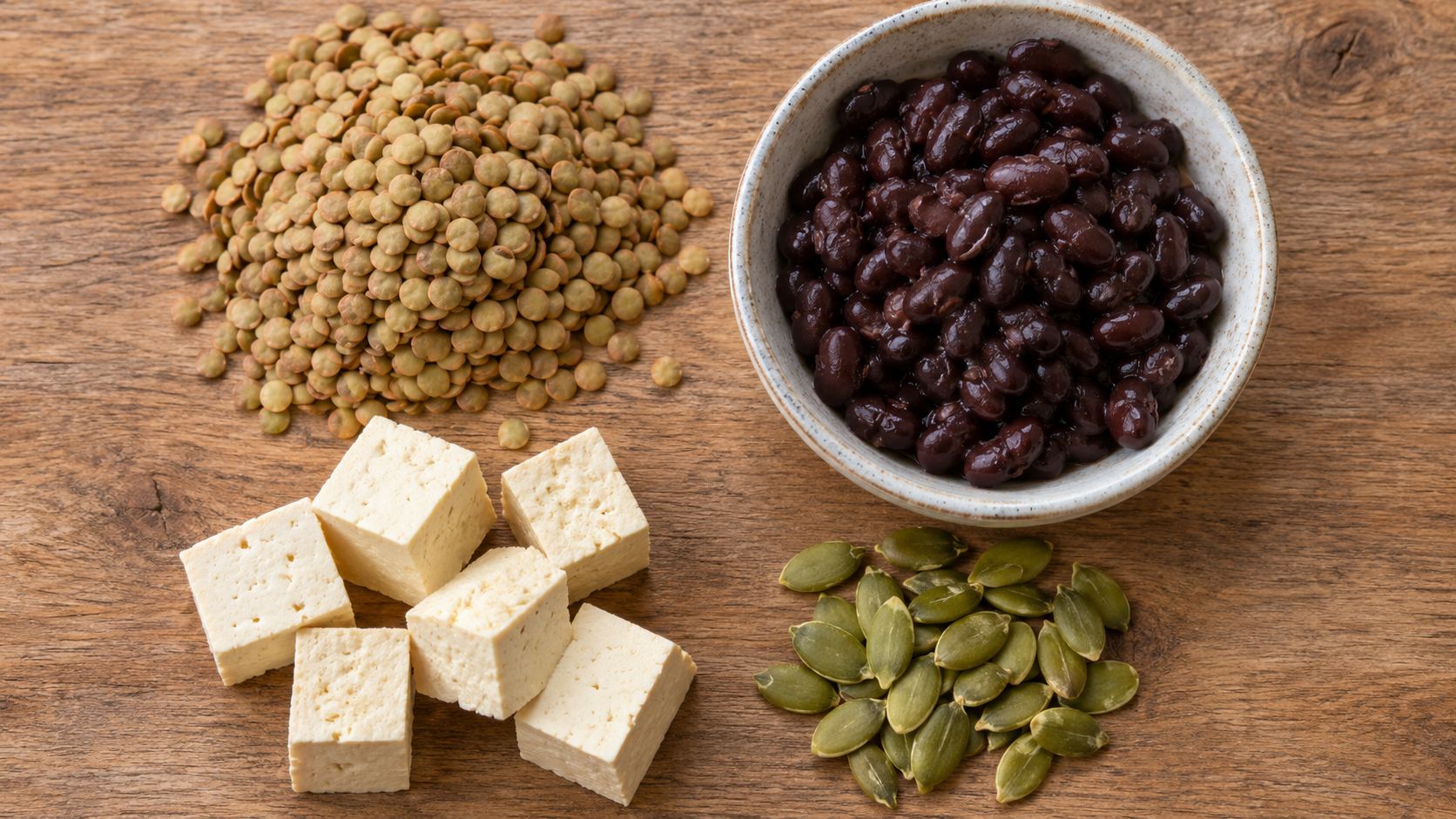
From which foods can we get plant protein?
The NHS recommends legumes for those who do not eat meat, fish or dairy. Lentils, chickpeas, beans and peas are options in this group. In a vegetarian diet with eggs or dairy, these foods can also be part of the protein source; they are not used in a vegan diet. NHS Vegetarian Diet Guide .
- Legumes: Lentils, chickpeas, and various beans; for example, in lentils, bean stew, and chickpea salad.
- Soy and its products: Tofu and textured soy, depending on availability and product ingredients.
- Nuts and seeds: peanuts, almonds, sunflower seeds, and flaxseeds; along with other daily foods.
The British Nutrition Foundation lists legumes, nuts, seeds and soya products as sources of plant-based protein. The inclusion of a food group does not mean that all products in it have the same amount of protein. The British Nutrition Foundation’s Protein Guide .
Do rice and beans have to be eaten in the same meal?
Protein is made up of amino acids. Adults need to get some of them from food. According to the British Nutrition Foundation, once energy needs are met, eating a variety of plant sources throughout the day can provide the essential amino acids; additional proteins do not necessarily need to be taken in one meal. The British Nutrition Foundation’s Protein Guide .
So lentils are a familiar food choice, but they’re not the only possible pattern. You can use different foods at different meals. Daily variety and the amount of food you actually eat are important; the name of a food alone doesn’t prove the adequacy of your plan.
Start planning with your current foods.
Here’s an editorial exercise: Write down a typical day’s meals and list the protein source next to each one. If you’ve just written “rice and salad,” see if adding lentils, beans, chickpeas, or tofu would suit your tastes and budget.
- Breakfast: Lentils with bread, or bread and peanut butter; choice based on your food sensitivities and preference.
- Lunch: Lentils or rice with beans and vegetables.
- Dinner: Chickpea salad with bread, or vegetable dish with tofu.
These are meal ideas, not calculated menus. The protein and energy content of these samples has not been measured, and their nutritional completeness is not guaranteed. When shopping, make a short list of ingredients that can be used in a few dishes; for example, chickpeas for salads and entrees, and lentils for lentils and lentil soups.
What should you look for when buying plant-based products?
The “vegetable” label is not a substitute for checking the ingredients. In the nutrition label, read the protein content, the number basis, such as “per 100 grams” or “per serving,” and the serving size together. Compare two products using the same unit; don’t confuse dry and cooked food weights.
The type of product is also important for plant-based drinks. The British Nutrition Foundation’s guide explains that the protein content of plant-based drinks varies, and that soy options tend to have more protein than many other types. Check the table for the same product you buy. Vegetarian and Vegan Nutrition Guide .
What does this guide not specify?
The names of foods cannot be used to determine a person’s daily needs. This article does not provide a plan for children, pregnancy, illness, or sports nutrition, and does not provide advice on supplement use. To determine the adequacy of a personalized plan, a nutritionist should evaluate the individual’s condition and actual intake.
Also, providing protein alone does not mean that the overall diet is balanced; the NHS guide also includes other food groups in a balanced pattern. NHS Vegetarian Diet Guide .
To continue reading
If the difference between the terms is still unclear, the article What’s the difference between vegetarianism, veganism, and plant-based diets? is a good starting point.
Build protein choices around a real schedule
Start by writing down three meals that actually recur in your week, including one you eat when time is short. Next to each, name the source of protein it usually contains. A bowl of oats could include a topping or drink that contributes protein, a lunch could contain beans or hummus, and dinner could use lentils, tofu or tempeh. If you eat dairy or eggs they can also be part of the list. The purpose is to see what is already in your routine and spot the meals where a practical change would fit.
A meal can contain a food with some protein but little of it at the quantity you normally use. Think about a spoonful of seeds sprinkled over a plate compared with a larger portion of cooked lentils. Both may contribute. They play different roles in the meal. Use your actual portion when comparing foods and keep the other reasons you eat them, such as taste, convenience or contribution to the overall meal, visible. You do not have to turn every plate into a spreadsheet to make that distinction.
Use a simple planning question for a busy day: what can I reach for if the planned meal falls through? A can of chickpeas, plain tofu that you know how to cook, or a dish you already prepared can make a useful backup. Pick something you like and can buy reliably. A product that looks promising on paper but is only available at a shop you rarely visit will be difficult to use as a regular option. Add the fallback to the shopping list in the quantity you realistically need.
Compare two foods at the amount you eat
Look at whether the label gives protein per serving, per 100 grams or per 100 millilitres. For example, if a label lists 6 grams per 100 grams and you use 150 grams, the stated amount for that portion works out to 9 grams. This is an arithmetic example, not a recommended intake or a typical value for a particular food. For a canned product, see whether the table refers to the drained food or the full contents. For a dry product, check whether the values are given dry or prepared.
When comparing a soy drink with an oat drink, first decide why you are buying it. A small splash in coffee may contribute little to dietary protein. A larger amount used at breakfast can matter more to the day’s total. Compare the two labels at the same amount and check protein and fortification separately. A drink with more protein does not automatically provide more calcium or vitamin B12. The package should tell you whether any relevant nutrient was added and what quantity is listed for the same serving.
Compare costs in a form that makes sense for your household. A comparison between a bag of dry beans and a tin is easier if you account for how many useful servings you get, how much time you have and how much you actually eat. A larger pack can work well when several people share it. A smaller ready-to-use pack may fit a person with limited space or a schedule that changes. The plan should make it possible to eat the food you buy regularly.
Rotate the type of dish as well as the source
If lentils are your easiest starting point, use them in more than one style before deciding you need unfamiliar products. They can work as the main ingredient in soup, be mixed with vegetables as a filling, or be stirred into a tomato sauce. A single cooked batch can be divided for separate meals if it is handled and stored safely. Keep strongly seasoned sauces separate until you know what each portion will become. That way dinner can share an ingredient without becoming the same dish every night.
Try tofu or beans in a meal where the other components are familiar. For example, a warm grain bowl can have grains, cooked vegetables, a bean or soy ingredient, and a dressing you already enjoy. A wrap can use chickpeas crushed with herbs and something crisp. A soup can start from vegetables and use lentils to make it more substantial. Notice which option your household would willingly repeat. Changing the flavor or texture may help a lot more than buying a larger selection of foods.
Protein in legumes, grains and other foods comes with different proportions of amino acids. A varied diet lets people use a mix of food sources across the day. When the routine is narrow, widen it by adding choices you can actually use rather than by trying to calculate the amino acids for each meal. The British Nutrition Foundation discusses protein quality and vegetarian and vegan food choices in the guides linked below. Individual planning can be more complicated when someone has limited food choices or a medical condition.
Use a short record when you need individual advice
If you want to ask a health professional whether your plan meets your needs, bring a few typical days with approximate portions. Include the meals you skip, eat away from home or change when you are busy. Write down the brand and serving size if a particular fortified product makes a regular contribution. This provides a better starting point than a list of foods that you like but rarely eat. You can ask if more detail is necessary before taking on a long tracking project.
Keep the question about protein separate from a review of the whole diet. A meal can contain a useful protein source and still be missing other foods that you usually want over the course of a day. The NHS vegetarian diet guide discusses variety alongside other nutrition questions, and the British Nutrition Foundation guide explains protein in that wider context. A short practical goal might be to add a bean-based lunch twice in a week and note whether you can prepare it easily. An individual clinical goal belongs in a conversation with the appropriate professional.
Conclusion
To plan your plant-based protein, start with the meals you actually eat. Include sources like legumes, soy, nuts, and seeds in different meals, and compare products by reading the protein content on a consistent basis.
Frequently asked questions
What foods can you get plant protein from?
Beans, tofu and other soy products, nuts, and seeds are among the options in this article. The protein content of each product depends on its composition and portion size.
Do rice and beans have to be eaten in the same meal?
For most healthy adults, it’s important to have a variety of protein sources throughout the day. These two foods don’t necessarily have to be in the same meal.
Which number should I look for on the package to compare two products?
Compare the protein content on a consistent basis, such as per 100 grams. Also check the serving size and whether the product is dry or cooked.
Sources
- UK National Health Service (NHS) — NHS Vegetarian Diet Guide — Protein sources and their place in a balanced diet.
- British Nutrition Foundation — British Nutrition Foundation Protein Guide — Plant sources, amino acids and dietary variety throughout the day.
- British Nutrition Foundation — Nutrition Guide for Vegetarians and Vegans — The differences between plant-based products and tips for choosing them.
Leave a Reply