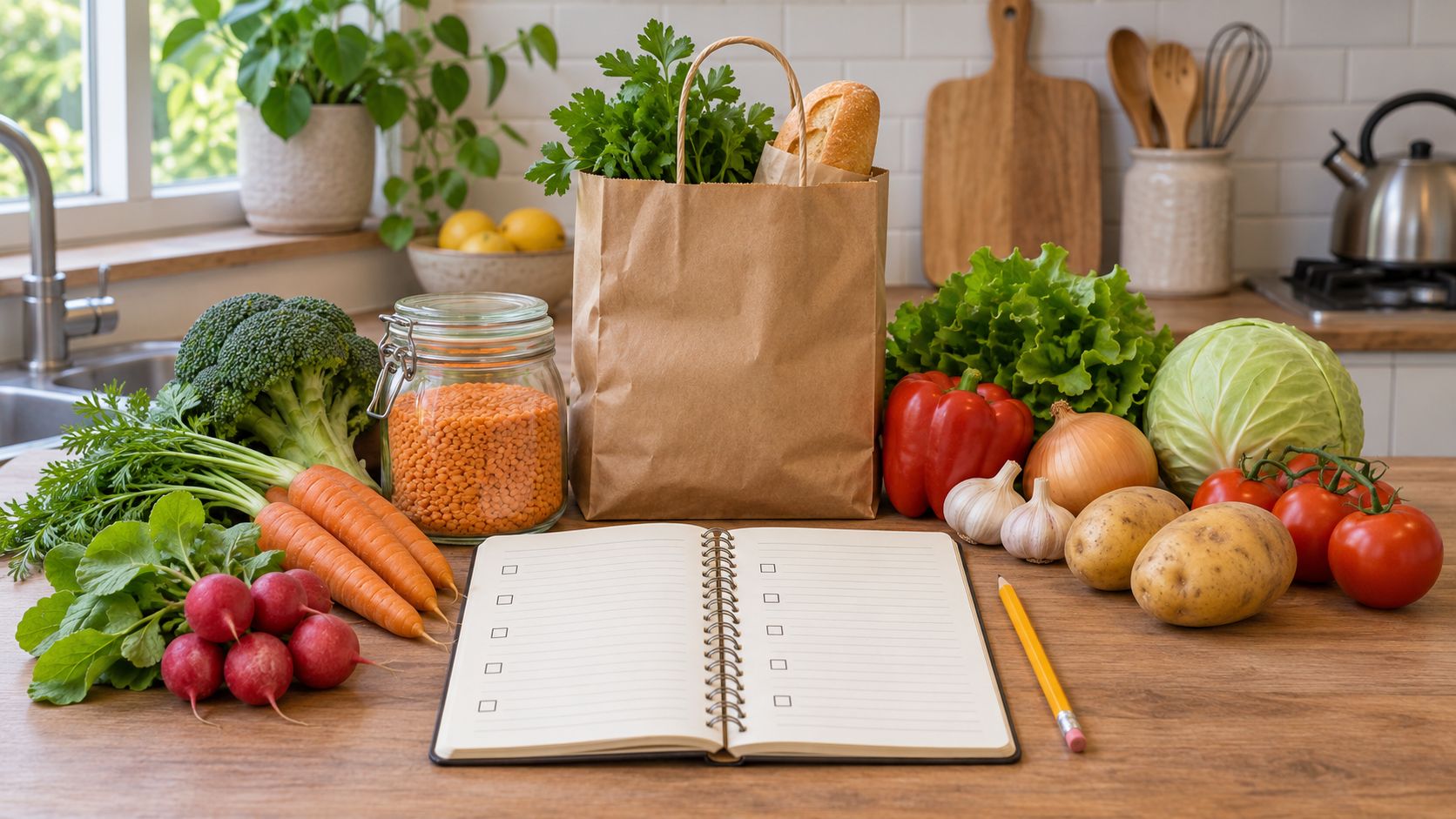
Start your first week of being a vegetarian with seven small decisions. Figure out a meal plan for yourself, check your ingredients, and have a few meal replacements on hand for frequent meals. It’s easier to get started when you know what you’ll be eating tomorrow at work or at home. This plan is written for adults who want to change their daily habits and need a to-do list. You can modify the sample meals to suit your own tastes and ingredients.
On the first day, define the scope of the change.
Before you start your shopping list, write down what you’re going to change in the first week. You might decide to eat all your meals without meat or fish, but leave eggs or dairy on the plan for now. You might have decided to go vegan from the start. These two choices will change the shopping list and the questions you ask at restaurants. [1] [2]
Write down three familiar foods you eat at home right now. For example, lentils, beans, or soup could be a starting point. Figure out exactly what ingredients are used to make each dish in your home. You might use beef stock in lentils, ground beef in beans, or curd in soup. First, find the ingredient you want to eliminate, then decide on the flavor, texture, and role it plays in the dish. Removing beef stock from lentils is different from completely changing a stew.
Set an emergency meal at the end of the day. The criteria should be that the ingredients are always available at home and that you can prepare it on a night when you are tired. Pre-cooked lentils, bread and a simple salad or canned chickpeas with tomatoes are examples that you can choose according to your means.
Day 2: Turn your kitchen inventory into meals
Go through your cupboards, fridge and freezer. Write down what each ingredient is used for. Phrases like “I have beans” won’t help much when cooking. “A packet of lentils for lentils and a can of chickpeas for tomorrow’s salad” will clarify the two-meal task. If you have some vegetables or tomatoes that need to be used up early, put them in the first few days of the plan. Write your shopping list after this review. [3]
For each main meal, ask yourself what makes it a reliable meal. A plate of raw vegetables might be a good snack or side dish. If it’s going to be a main meal, see what other ingredients, such as beans, lentils, bread or rice, would go well with it. In the first week, you can choose combinations that you know how to prepare. The NHS guide explains the food groups and the role of variety throughout the day and week. [1]
If you live with others, set aside three ingredients for shared use. For example, rice, vegetables, and tomato sauce can serve as the base for a meal, with each person adding their own main component of choice. Be sure to set aside your portion before the sauce or rice is mixed with meat stock. This simple arrangement saves you from having to cook two entirely separate meals.
On the third day, limit your shopping to a few specific items.
Select three meals for the coming days and list the necessary ingredients for each. If an ingredient is used in two different meals, calculate the total amount needed at once. For instance, tomatoes intended for a lunch sauce can also be used in a bean dish for dinner. If you plan to try a fresh product for just one meal, choose a package size that suits your actual consumption needs. Before buying a large package, decide how you will use the remainder. [3]
Divide the items on your list into two groups: the first consists of ingredients for your planned meals, while the second includes items you would like to try. If your budget or time is limited, prioritize the first group. For example, there is no need to buy two types of unfamiliar sauces when you can already season your main dishes using tomato paste, lemon, and the spices you have on hand.
At the store, carefully read the product label—even if you are already familiar with the item. Checking the ingredient list helps identify components such as meat stock, milk, or eggs. What matters most for your specific dietary pattern depends on the choices you made on the first day. If the origin of an ingredient is unclear and a clear alternative is available, choosing that alternative simplifies the purchasing process. If you purchase a product regularly, you can always ask the manufacturer for details regarding that specific type and size later on.
Day 4: Have two components ready for a busy day.
For a hectic day, you don’t need to cook every meal for the entire week. Having one main component and one accompaniment ready is sufficient. For example, you could keep some cooked legumes on hand, along with lemon juice and pre-washed greens. You might serve them with bread one day, and with rice or potatoes the next—provided you have prepared enough and stored it properly.
Try a “dry run” of your packed meal at home. If you are taking a meal container with you in the morning, decide how you will keep it at the right temperature (hot or cold) until it’s time to eat. If you cannot reheat food at your workplace, choose a meal that is enjoyable when cold and can be stored safely. If your container is too heavy or the lid isn’t secure, address the issue that same evening. These details are just as important as the recipe itself when it comes to sticking to your plan.
At the end of the day, note down which tasks took up the most time. Perhaps washing and chopping vegetables took longer than the actual cooking, or maybe you forgot to prepare dried legumes in time. Come up with an alternative solution for that specific hurdle. Options like using pre-cooked legumes, freezer-friendly vegetables, or choosing a simpler dish that comes together quickly could be the right fit for your household.
Day 5: Finding Options for Dining Out
Before heading out, check the menu of a restaurant or eatery near your home or workplace. Look for a dish with a clear composition—one that doesn’t require removing several key ingredients to make it suitable for you. Ask about ingredients that aren’t obvious from the dish’s name. For example, asking, “What kind of stock is this soup made with?” yields a more specific answer than simply asking, “Is this dish vegetarian?” If you avoid dairy, you should also check what kind of sauce is used or whether butter is included.
If the staff’s answer is vague or uncertain, treat it as incomplete information. In such cases, you might choose a simpler dish or bring your own meal along. If your inquiry is due to a food allergy, state this clearly and explicitly. Removing an ingredient from a plate is a different request than ensuring there is no cross-contact in the kitchen.
When attending a gathering, have a short, clear statement ready so the host knows exactly what works for you. For instance, you could say, “I don’t eat meat or fish. If the rice wasn’t cooked in meat broth, that—along with some salad—would be perfect for me.” If the host is open to it, you could also offer to bring a dish that everyone can enjoy. Raise these key questions in advance so you have enough time to decide what to eat when the meal is served.
Day 6: Reviewing Your Meals
Look back at the meals you’ve had over the past five days—either by recalling them from memory or checking any brief notes you may have made. Observe which meals kept you satisfied, on which days hunger forced you to make hasty purchases, and which items in the refrigerator remained untouched. This review is intended to help you improve your meal plan. If you ate the same dinner for three consecutive days, consider whether this was due to personal preference, a lack of time, or the absence of a ready-to-eat option.
For the coming week, adjust one of the items that appeared frequently. If you chose only bread and vegetables every day, add a familiar dish containing chickpeas, beans, or lentils to your list. If you selected several heavy, time-consuming meals, reduce their number and replace one with a dish you know how to prepare by heart. If you are also eliminating dairy and eggs, consult a reliable guide to identify dependable sources of nutrients, and speak with a nutritionist regarding your specific individual needs. [1] [2]
When making food-related decisions, distinguish between “essentials” and “personal preferences.” While it might be exciting to buy a new product you’re curious to try, preparing your workday lunch is far more critical for staying on track. If you only have time for one task, prioritize planning tomorrow’s lunch. Other details will become easier to manage once you’ve established a few core, reliable meals.
On Day 7, draft a brief plan for the following week.
List three successful meals you’ve enjoyed, noting when and where they worked well. For example: “Lentil stew for nights when I get home late,” “Rice and chickpea dish for workday lunches,” or “Vegetable and bean soup for the weekend.” These notes will be helpful for future planning. Also, include an “emergency meal” on your list—this ensures that if your schedule changes, you aren’t forced to rely solely on last-minute takeout or shopping.
Cross-reference your list with your actual schedule for the coming week. If you have a dinner party one night or will be away from home for two days, don’t buy enough food for seven dinners. If someone else will be sharing the meal, adjust the quantities and portions before you head to the store. When introducing a new ingredient or recipe, try cooking it for the first time on a day when you have extra time for preparation. [3]
Finally, write down one question to explore for the following week. Perhaps you want to learn how to swap one type of legume for another without altering the flavor, or maybe you’re looking for a portable breakfast option. Having a specific question helps narrow down both your shopping list and your search for recipes. If the first week didn’t go according to plan, start from the specific part that caused the most friction. Often, by tackling one particularly difficult task, you can alleviate the pressure for several days.
Summary
To start, figure out your eating patterns, look at a few familiar foods, and shop for meals that you can actually prepare. Plan ahead for an emergency meal and an out-of-home option. Keep three meals that work for you on the weekend and write down a backup plan for one of your problems.
Frequently asked questions
Do I need to cook a different meal every day?
For a weekly plan, you can repeat a few components and change them around. The goal is to make the plan compatible with your time and resources. For nutritional diversity, you can look at the entire day and not judge food groups by one meal. [1]
Which promise should I start with?
Choose a meal that you can handle and that you have a couple of familiar options for. For some people, this is breakfast at home, for others, lunch on the go. Once that’s established, find a different way to handle the more challenging situations, like a late dinner or a party.
Do I need to buy a meat substitute?
Make your shopping list based on the meal you’re making. Some meals will require cooked grains and familiar ingredients. A ready-made product can be useful when you need a specific texture or speed, and the ingredients are compatible with your choices.
What should I do if a meal doesn’t go as planned in the first week?
Write down the conditions for that meal. If the problem wasn’t the right food at work, find a solution for the next workday. If the ingredients were at home and you didn’t have time to cook, choose a quicker meal in advance. A good plan also allows for flexibility for unusual days.
Leave a Reply