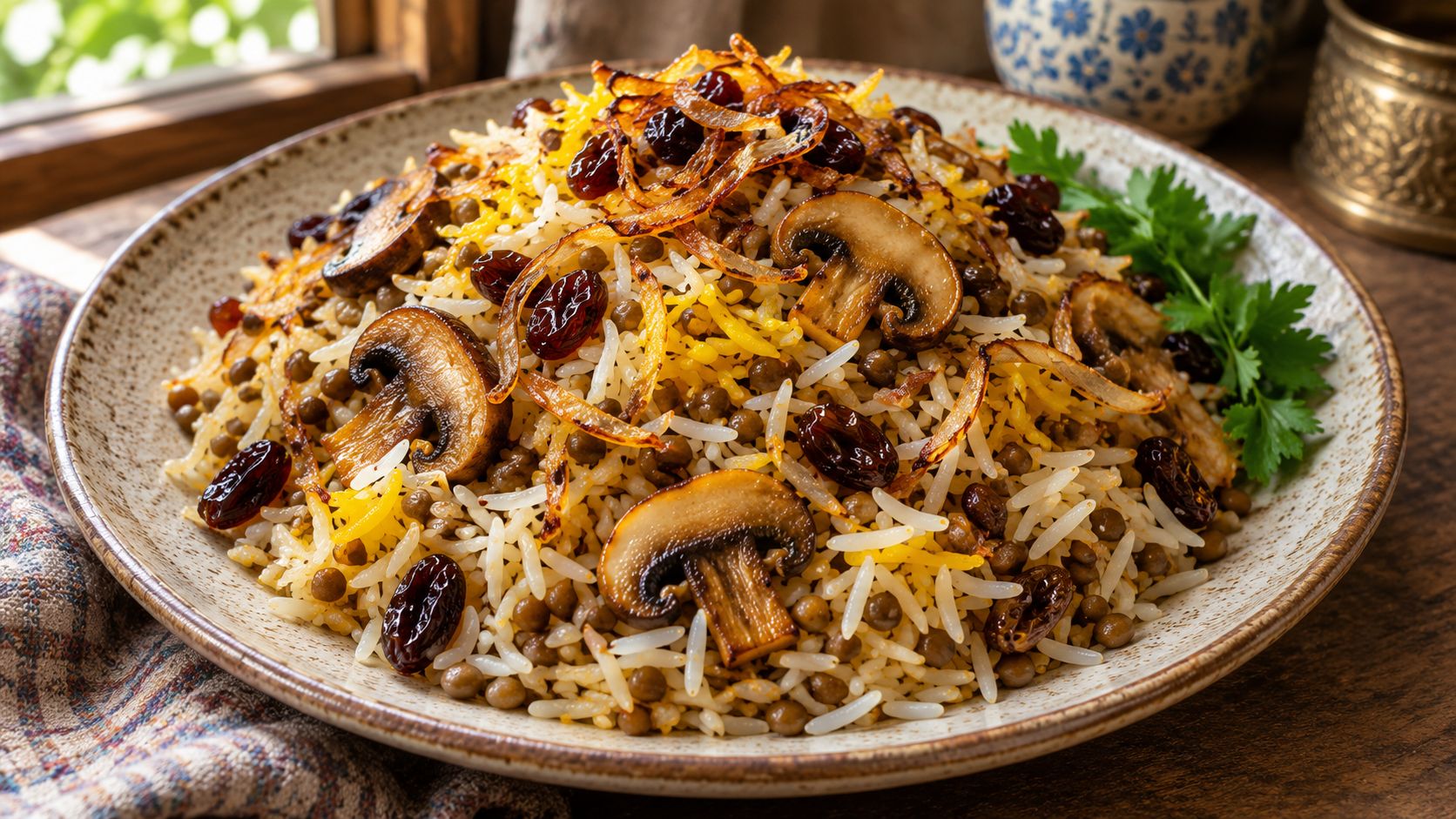
This version of Persian lentil rice combines separate grains with browned mushrooms, golden onions and raisins. It has not been tested in the VegDot kitchen. The featured image was generated with AI to illustrate the dish, and the times and portions are estimates.
What the finished rice should be like
Adas polo combines rice and lentils. There are many ways to season and serve it. This version keeps those two ingredients at the center and uses mushrooms to provide a savory topping alongside the sweetness of raisins. A little cinnamon can tie the flavors together. You can add saffron to a small part of the rice if you already have it. The main method works without it, so there is no need to buy it just for this pot.
The rice and lentils are partly or separately cooked before being steamed together. This gives you a chance to check the texture of each. The mushrooms and raisins are finished in a skillet and added at serving. That keeps the mushrooms from releasing extra water into the rice and allows you to serve the raisins separately if someone prefers less sweetness. This is a practical home adaptation of the dish rather than a claim that every household prepares it the same way.
Allow about 25 minutes for preparation and 45 to 55 minutes for cooking, some of which can overlap. Rice varieties, lentils and stove settings will affect timing. The quantities are intended to make about four main-dish portions. If you are making the dish for the first time, leave a little room in the schedule and use the texture checks rather than trying to make every stage end at the estimated minute.
Ingredients for four portions
For the rice and lentils, use 300 grams of dry long-grain basmati rice, 150 grams of dry brown or green lentils, 2 tablespoons neutral cooking oil, about 80 milliliters water for steaming and salt to taste. You will also need water for boiling the rice and lentils. Use a medium heavy-bottomed pot with a close-fitting lid and a colander that can hold the rice.
For the topping, use one large onion of about 180 grams, 300 grams fresh button or cremini mushrooms, 60 grams raisins, 2 tablespoons neutral cooking oil and half a teaspoon ground cinnamon, or less if you prefer it mild. Optional saffron can be steeped in a little warm water to color a small portion of the cooked rice. A few plain herbs can be served separately, but are not necessary.
Check each package if you are cooking for someone with an allergy. Plain rice, lentils and mushrooms are different from mixes with added flavorings. Some dried fruit products contain sulfites or other additions, so read the actual label when that matters. This guide does not verify the ingredients or kitchen handling for a specific allergy. When choosing mushrooms, use ordinary cultivated mushrooms sold for cooking rather than wild mushrooms you cannot identify safely.
Cook and check the lentils
Pick through the lentils, rinse them and follow any preparation instructions on the pack. Put them in a saucepan with enough water to cover them generously. Bring to a boil and then simmer, checking near the time suggested by the manufacturer. You want cooked lentils with no firm center, but you want them to hold their shape when drained. A small spoonful is a better check than assuming every type of lentil takes the same time.
Drain the lentils well before layering. If some have softened and broken, you can still use the firm portion in the rice and save the softer ones for a soup if they are cooled and stored appropriately. Avoid substituting split red lentils for this method when you want distinct grains and lentils. They tend to break down, which can change the texture of the finished pot.
If you use already cooked lentils, measure a suitable amount after draining, check their seasoning and add them during layering. They still need to be handled according to the package directions. Do not add liquid from the can to the rice unless you are deliberately adjusting the steaming liquid and understand its seasoning. The aim is to keep water predictable while the rice finishes.
Parboil and steam the rice
Rinse the rice until the water is less cloudy. Bring a generous pot of water to a boil. Add the rice and begin checking after several minutes, taking the packet’s instructions into account. For this drained method, you want grains whose outside has softened but whose center still has a little firmness. They will finish during steaming. If you let them become fully soft at this stage, they are more likely to break during the final cooking.
Drain the rice carefully. Put the two tablespoons of oil and about 80 milliliters of water into the clean heavy pot. Return the rice in loose layers with the drained lentils. Sprinkle the cinnamon lightly between layers if you want the spice throughout, or leave it for the topping if the household prefers a plainer base. Do not pack the layers down. Let the steam move through the gaps. Taste the seasoning at the end if the cooking water was already salted.
Cover the pot and heat until steam begins to form, then reduce the heat to low. Let the rice steam for roughly 25 to 35 minutes, checking near the end. Watch for a quiet simmer rather than a harsh sound from the bottom. If the lid does not fit tightly, use a better-fitting lid rather than placing a loose towel near a flame. Keep the pot stable on the stove and open the lid away from your face when checking the steam.
When the grains are cooked through, turn off the heat and rest the pot briefly. Use a wide spoon to lift portions gently from the side. Stirring hard can turn a pot of distinct grains into a compact mixture. If you are using saffron, mix a little steeped saffron water into a spoonful of cooked rice and place it over the portions. Add it just before serving so people can see where it is and choose the amount they want.
Brown the mushrooms and warm the raisins
While the rice steams, slice the onion thinly and cut the mushrooms into thick slices. Heat part of the topping oil over medium heat and cook the onion until golden, stirring regularly. Thin edges color quickly, so lower the heat if they begin to burn. Move the onion to a plate when it is ready. That leaves room for the mushrooms and keeps the onion from darkening while the mushroom liquid evaporates.
Use a wide skillet and add the mushrooms in a layer they can share without being packed tightly. Cook in batches if needed. Let them release moisture and continue cooking until some edges are browned. Add the remaining oil as needed. Salt to taste near the end if you are unsure how much salt the rice and lentils already contain. Cooking them separately lets you check whether the topping needs more flavor without changing the whole pot.
Warm the raisins briefly in the skillet over low heat, after the mushrooms or in a separate corner. They only need to soften slightly and warm through. High heat can make them catch before the rest of the topping is ready. Return the onion, add the raisins and serve the mixture over the rice. For guests with different preferences, keep the topping in separate bowls and let each person add their own amount.
Adjust common problems before the next batch
If the rice is soft before it reaches the steaming pot, shorten the initial boil next time and start checking earlier. If it stays too firm, check how tightly the pot closes and whether enough steam formed before the heat was reduced. For a pot that is close to done, a small amount of hot water around the edge may help if the pot is dry. It is easier to add a little liquid than to rescue rice that has taken up too much.
If the mushrooms look pale, there may have been too many in the skillet for the liquid to evaporate. Use a larger skillet or cook two batches. This is useful even when the overall amount is modest. A brief pause between batches lets the pan recover heat. If you do not like the sweetness of the raisins, reduce them or offer them at the table without changing the way you cook the rice.
For a smaller meal, halve the ingredients and use a pot whose lid still fits. The cooking time will not simply be halved. Check the texture of the lentils and the rice at the same stages. For a shared meal, decide whether to serve this as a main dish or in smaller portions beside other dishes. Keep a note of the quantities you actually served if you want a more reliable estimate for your household next time.
Store cooked rice with particular care
Serve the dish promptly. The UK Food Standards Agency advises cooling leftover rice quickly, ideally within one hour, then refrigerating it and using it within 24 hours. Divide rice into small portions for cooling. Do not leave a large pot out for a long time. If you want to freeze portions, follow applicable food-safety guidance and cool them promptly first. Keep the mushroom and raisin topping separate if you want to preserve its texture.
The agency also advises reheating rice only once and making sure it is steaming hot throughout. Heat only the portion you intend to eat. If you do not know how the rice was cooled and stored, a smell or taste does not establish that it is safe. Take-away rice can already have been reheated, which is another reason to check the history of the food before making a plan for leftovers. This guidance applies to rice even when the dish contains no meat or dairy.
Set up the timing so both pans are manageable
Before you start, put the measured rice, lentils, mushrooms and raisins where you can see them. Set out the colander near the sink and a separate plate for the cooked onions. If you start the lentils first, you can slice the topping while they simmer. The rice and lentils can finish within a few minutes of one another, but they do not need to do so exactly. Drain the lentils when they are ready and keep them nearby for the layers.
The first time you cook this dish, let the two stages that need your attention happen one after the other. For example, check and drain the rice before turning the skillet up for mushrooms. A browned topping is more forgiving if you can watch it without also moving a pot of boiling water. On later attempts, overlap more of the work if you know your stove and pan sizes. The estimated time includes choices like these.
Reserve a plain serving before adding cinnamon or raisins if one person does not enjoy them. The rice, lentils and a little onion still make a recognizable base. Keep separate utensils for the toppings if you need to manage ingredients carefully. Serving the dish this way also makes a large pot easier to share because each person can choose the topping they actually want.
Make the next pot easier to repeat
Take a short note after the meal. Record which lentils and rice you used, whether the grains held together and how long your pot took to produce steam. The name of the rice and the observations about texture are usually more helpful than a single total time. If you use a different pot the next week, the same timing may not produce the same result.
If the dish was too sweet, keep the raisins separate next time and let people try a small amount. If the texture of the mushrooms was too soft, use a wider skillet or cook a smaller amount in each batch. If the overall dish was too dry, look first at the rice cooking stage and whether the pot held enough steam. Making one adjustment at a time helps you see what changed the result.
Plan the amount before you start cooking. If the meal already includes other substantial dishes, four main-dish portions may be more than you need. Make a smaller pot if that fits the occasion and keep the same attention to safe storage. A balanced cooking plan includes the work after dinner. Having containers ready lets you cool the portions you will save promptly rather than leaving the whole pot on the stove.
A small leftover portion can be useful for lunch if it was cooled and stored as directed. Keep its history clear if several people share the refrigerator. Label it as cooked rice and write the date so another person can follow the same short storage window. Do not combine a fresh pot with an older leftover portion just to save space, because that makes the storage history harder to follow.
Summary
Cook the lentils until tender, parboil the rice until its center is still a little firm, and steam them together. Brown mushrooms and onions separately and add raisins at the end. The quantities are a starting point for four portions. Cool any leftovers promptly and follow the guidance for cooked rice.
Frequently asked questions
Can I leave out the raisins?
Yes. Serve them separately or omit them. Browned onions and mushrooms still provide a substantial topping. If you are cooking for several people, separate bowls make the portions easy to adjust.
Can I use a rice cooker?
This recipe describes a drained, layered stovetop method. A rice cooker uses a different amount of water and a different program. Follow the instructions for your appliance and treat a cooker adaptation as a separate method.
Can I keep the leftovers for several days in the refrigerator?
The UK Food Standards Agency advises using refrigerated cooked rice within 24 hours. Cool it quickly, ideally within an hour, and follow the guidance for freezing if you need to keep it longer.