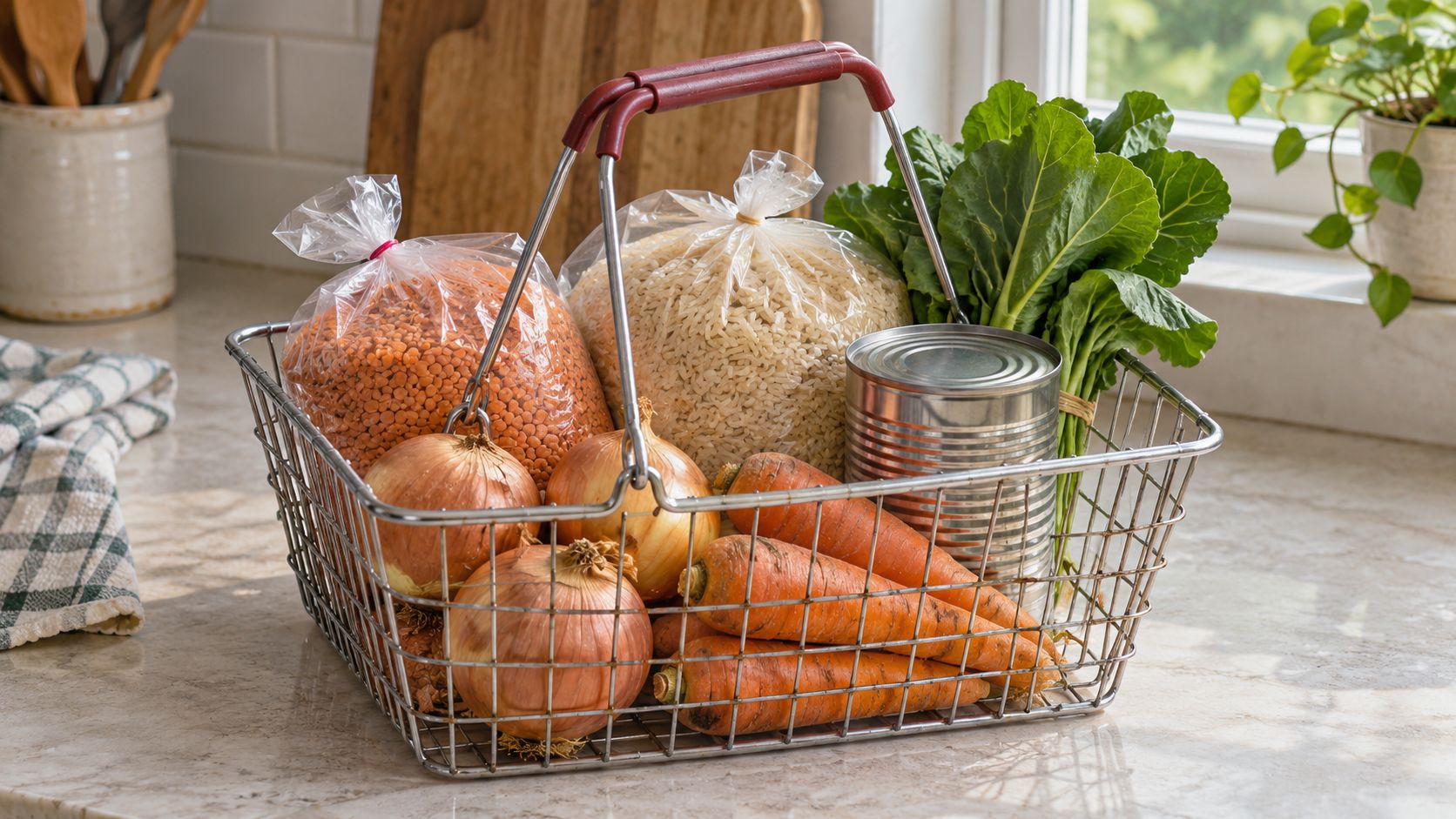
Start with familiar staples, a pulse you know how to use, and vegetables that fit your budget. A useful first shopping list makes several meals possible and leaves room for the foods already in your kitchen.
Plan three meals before writing the list
Look at the next few days rather than imagining an ideal pantry. Choose one meal you have made before, one meal you can make quickly and one fallback for a day when dinner plans change. Rice and lentils with cooked vegetables, a bean sandwich with chopped vegetables and a simple soup are examples. You can choose entirely different meals, as long as you can name the ingredients and know where you will use them.
Open the fridge, freezer and cupboard. Look for a grain, any cooked or canned beans that are still safe to use, and vegetables or fruit that are likely to be eaten soon. An unopened packet of rice may already cover most of the staple on your list. A bag of frozen vegetables might serve a soup and a quick dinner. Write down what you have and only then write down what is missing. This prevents you from buying a second version of the same ingredient because it appears in a different recipe.
Choose one way to make the meals taste different. Lemon and dried mint might work for lentils, while tomato and cumin give a different direction to a bean filling. Use seasonings you already enjoy. Buying an ingredient for a single unfamiliar dish makes sense if you want to try that dish and can plan a second use. It is optional for a first shop. Familiar flavors make it easier to see whether the new part of the meal works for your household.
Build the basket around foods that do different jobs
A grain or other starchy staple makes several meals easier to assemble. Rice, oats, bread, potatoes and pasta are common examples. Choose what is easy to buy and prepare where you live. One staple may be enough if your meals are different in other ways. If you have several people who prefer different things, consider which staple can be offered as a simple side without needing a second complete meal.
Choose a substantial source of plant protein. Dry or canned lentils, chickpeas and beans are practical possibilities. Tofu can be useful if it is affordable and available where you shop, but you do not have to find it to start. Use the form that fits the way you cook. Canned beans are convenient for a fast dinner; dry lentils can be economical for a kitchen that has time to cook them. If a pulse is unfamiliar, start with one pack and find out how your household likes it before buying more.
Add vegetables and fruit that you can use rather than an expensive variety bought for its appearance. Carrots, cabbage, onions, a seasonal leafy vegetable and a local fruit are examples, not required items. Frozen vegetables can cover meals later in the week, while more delicate fresh produce can be used first. Health Canada’s food guide includes fresh, frozen and canned produce in its budget advice. Check the actual ingredients and compare the options available to you, especially where added salt or sugar matters for your choices.
Round out the basket with a cooking oil or seasoning only if you need it. A small supply of oil, an acid such as lemon or vinegar, and one or two seasonings can give several meals a different character. Nuts and seeds can add flavor or texture when they fit the budget. They need not take up a large share of a first shop. Choose optional extras after the ingredients for the planned meals are covered.
Compare costs in the portions you will use
A price tag for a large pack can be misleading in either direction. The larger pack may be cheaper per kilogram. A smaller pack may cost less overall if the rest of the food would go unused. Compare similar units on shelf labels where they are available. When a can includes liquid you will discard, use its drained weight for a comparison with another can. For dried food, account for the fact that it gains weight during cooking before comparing cooked portions.
Try a hypothetical calculation. If a 500 gram bag of dry lentils costs 3 units of money and you use 125 grams for one pot, the lentils for that pot cost about 0.75 units. Add the other ingredients you actually use to estimate the whole pot. A ready-to-eat alternative may have a higher food cost but need less time and equipment. A comparison can include both factors without assuming everyone faces the same budget or schedule.
Give waste a place in the calculation. Suppose the lower unit price on a bag of greens only helps if you eat most of it. If your plans take you away for several days, a smaller bunch or a frozen option might be more useful. Check storage space before buying a bulk pack. A pantry that is too full to see what you own can make it harder to use the foods you have already paid for.
If there is no shelf unit price, write a simple note on your phone or use a calculator once. Divide package price by quantity and keep the unit next to the result. Use this for decisions that recur, such as canned tomatoes or oats. The purpose is to make the next trip easier. There is little benefit in tracking every spice you buy once or comparing stores you cannot get to conveniently.
Make a short list for a real week
Here is an adaptable example for a household starting with a few spices and oil. Put rice or bread in the staple column. Choose lentils for the pot and a can of beans for the quick meal. Add an onion, carrots and a cabbage or another vegetable with a similar kitchen role. Buy a seasonal fruit and a frozen vegetable if you expect a gap between shopping trips. Substitute freely within each role. If carrots are expensive or poor quality, choose a different vegetable you know how to prepare.
Give each item a first and second use. Rice may go beside a pot of lentils and in a bowl with vegetables. Cabbage can be cooked into a soup or shredded for a fresh side. A can of beans can fill a wrap or become part of a tomato dish. If you need a second item for just one meal, check whether you have an ingredient that can do the same job. A thick soup can take vegetables from several different plans without needing a separate full shopping list.
A household with little time can make the list simpler. Choose a ready-to-eat pulse and a staple that does not need much cooking. Add vegetables you can wash, chop or heat in the time available. Someone with more time and a modest freezer may prefer to cook a pot of beans and portion it safely. Neither person needs to follow the other person’s shopping list. The useful list is the one whose ingredients can actually reach the table.
Include a backup meal that can wait unopened. For instance, an unopened can of beans, shelf-stable tomatoes and pasta can stay available until a busy day. Check the product instructions before using it. This lets you buy less food that must be eaten right away and gives you something dependable when the fresh plan fails. A backup that fits your kitchen is more valuable than a long stockpile of products you never choose.
Shop with substitutions in mind
Start with a written limit for the trip, then note which items are essential to the planned meals. At the store, look for a comparable food when a price is higher than expected. Try cabbage instead of an expensive bag of specialty leaves, or lentils instead of an unfamiliar packaged replacement. If an item has a specific culinary purpose, such as a topping that holds its texture, think about that job before substituting it. The cheapest product can still be a poor buy if the dish does not work with it.
Do not take an advertised offer as a requirement to buy several packs. Check whether the offer actually reduces the unit price and whether you can use the quantity. An unopened staple with a long shelf life is a different decision from a product that needs to be chilled and used quickly. Also consider the cost of getting to the shop. A second trip solely to save a small amount on one item might not suit your week.
When buying for a household, ask which item people would be willing to eat more than once. One common vegetable that everyone accepts can do more for the plan than several foods bought because they look healthy on a list. Keep one inexpensive experiment if the budget permits, and give it a clear use. If the experiment does not work, keep the useful parts of the basket and try a different approach next time.
Make room for nutrition questions without buying everything at once
The starter list helps you make meals. It does not establish that the meals cover all individual nutrition needs. If you plan to eat fully vegan, use an appropriate source of guidance for nutrients that need attention, including vitamin B12. A label can show whether a food is fortified and how much of the nutrient is listed per serving. Do not assume every product in a category has the same formulation. The NHS overview gives examples of nutrients to plan for when eating a vegan diet.
If you already use a product for a particular nutrient, keep it in mind when deciding how to spend. A drink that costs less is not automatically an equivalent replacement for one you choose because it contains added calcium or B12. Compare labels and realistic portions. If a health professional has advised you to follow a specific plan, bring questions about substitutes to that person. It is possible to keep ordinary staples cheap while reserving part of the budget for a product you have a clear reason to buy.
Meal planning gets more manageable when the shopping list and the nutrition question are written separately. One list tells you what to buy for the next few days. The other reminds you which labels or guidance you need to check. You can gradually improve both without filling the trolley with specialty foods before you know what they are for.
Check the result before shopping again
When the planned meals are over, note what you finished and what is still available. If the same food remains unused, ask what got in the way. Perhaps the beans took too long on the day you needed them, the bag of greens was too large or the staple worked with only one meal. Replace the barrier rather than starting the whole plan again. A smaller pack or a cooked version might make a bigger difference than looking for a new recipe.
If you came home with too little for one meal, work out which role was missing. Some households run out of vegetables first, while others have plenty of produce but lack a filling ingredient. Buy the missing role next time and keep a backup for it. In a week with guests or travel, change the quantities before shopping instead of assuming the usual basket will fit.
Write down one meal that worked and one purchase that you would change. A three-line note is usually enough. Over several trips, this gives you a personal list of foods that fit your shop, your cooking time and the people you feed. It also helps when prices or availability change. You can substitute with a clear purpose rather than starting over whenever a favorite ingredient is unavailable.
Design a backup basket for a small kitchen
If you have one pan and limited refrigerator space, choose foods with compatible cooking methods. A bag of lentils that cook quickly can be used with onions and carrots in one pot. Bread or another ready-to-eat staple can sit beside the meal without a second pan. A can you can open when needed gives you flexibility without taking up a shelf in the refrigerator until it is opened.
Someone who shares a kitchen may not be able to cook at the times a conventional meal plan assumes. Choose a first meal you can assemble with little equipment, then use the stove on a day when you know it will be free. An unopened can of beans, bread, a small quantity of vegetables and a seasoning you own can cover the gap. If you cannot safely store leftovers, plan to use the full amount promptly or buy a smaller package.
When you compare stores, record one or two staples you can regularly find rather than chasing every special offer. A shop on your usual route may be useful even if it does not carry every product advertised for a plant-based diet. List a substitution beside each less reliable item. For example, write carrots or another firm vegetable, and lentils or fully cooked beans. This gives you room to respond to prices and still return with enough for dinner.
Separate the food you buy for immediate use from the backup before you put it away. Put the immediate ingredients where you can see them and make a note of the backup meal that does not need those ingredients. The list should help you make one more meal without shopping, not encourage you to buy a whole second basket. After you use the backup, replace the items that were actually useful.
Summary
Plan a few real meals, check what you have, and buy one reliable staple, at least one pulse and a manageable amount of produce. Compare costs in usable portions and keep a shelf-stable backup. Let the first week show which ingredients deserve a regular place on your list.
Frequently asked questions
Do I need plant-based meat substitutes to start?
No. Lentils, beans and chickpeas can fill many everyday roles. A specialty product can be useful for a particular dish if you like it and can afford it. It does not have to be part of the starter basket.
Are frozen vegetables a reasonable choice?
Yes. They can be useful when you want to cook only part of a pack or need an option later in the week. Compare the ingredients, quantity you will use and price. Fresh, frozen and canned options can all fit a meal plan.
What is the easiest way to compare a can and a dry pack?
Decide how much cooked food you expect to use and compare the cost of that amount. Check the can’s drained weight and allow for the weight dry beans gain during cooking. Include your available time when choosing.
Leave a Reply