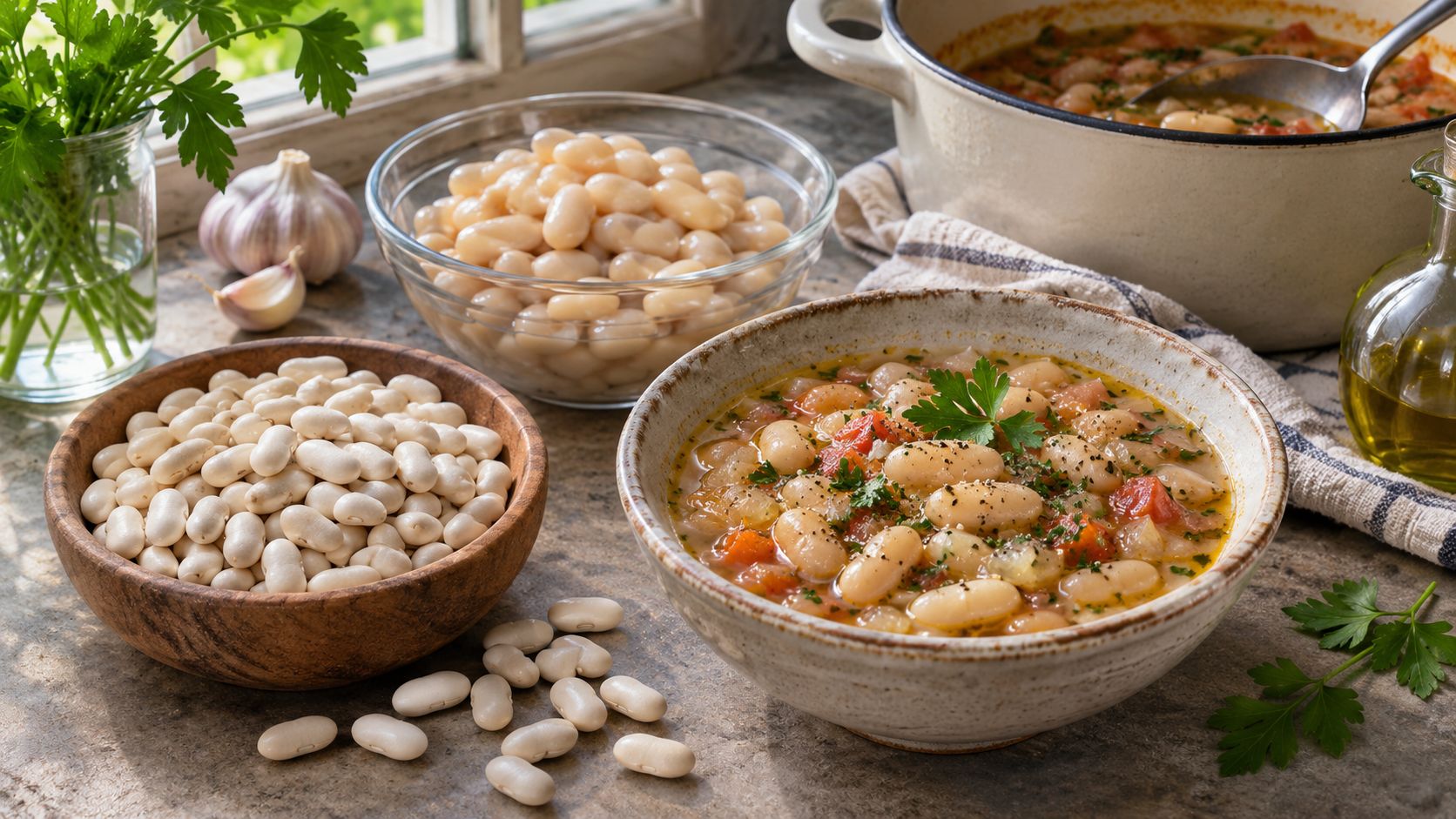
White beans can stay whole in a salad or soften into a sauce. Choose a variety and a form that suit the dish, prepare dried beans properly, and give leftovers a clear storage plan before you cook a large batch.
Start with the texture you want
White beans are a group rather than a single ingredient. Cannellini are white kidney beans. Navy and Great Northern beans are other kinds sold under different names in different markets. Size, skin and texture can differ. A recipe that needs recognizable beans can take a different variety from a soup that will be blended. Look at the package and find out what the seller means by white beans before deciding how to use them.
If you plan to fold the beans through a salad or add them near the end of a stew, look for beans that hold together after cooking. If you want a creamy spread, choose a variety you are comfortable blending and decide how you will adjust the liquid. The same bean can work in either dish if cooked to a suitable texture. The variety gives a starting point; it does not replace checking the beans you actually have.
A can or pouch of fully cooked beans is useful when the recipe gives a short cooking time. Dried beans take longer and need instructions appropriate to their type. Decide which form you are buying before planning dinner. A recipe that calls for a cup of cooked beans cannot take a cup of dry beans with the same result. The package weight of a canned product may also include its liquid. Check the drained weight when you need to compare amounts or prices.
Read the package before cooking
For a ready-to-eat can, read the ingredients and the after-opening directions. You may find beans packed in water with or without added salt. Choose based on the flavor and handling you want. A salted product may still suit a soup if you adjust the rest of the seasoning. If a recipe asks for an unsalted can, look for that particular description instead of assuming all plain packages are the same.
For dried beans, read the directions for soaking and cooking and identify the type on the label. White kidney beans are related to red kidney beans and can contain the lectin discussed in the US FDA’s Bad Bug Book. Raw or inadequately cooked beans should not be tasted. Use a dependable method with adequate boiling for the beans you have. A low-temperature slow cooker is not a substitute for appropriate boiling. When the type or instructions are unclear and time is short, start with a fully cooked product.
Sort and rinse dry beans as directed. Allow time for soaking if the product or applicable guidance requires it. After soaking, drain and use fresh water according to the cooking method. Once you have completed the safety steps, check tenderness rather than taking a time estimate as a guarantee. Beans can vary from batch to batch. Keep the pot from drying out and allow enough time for the beans to become tender before adding them to a finished dish.
Decide what to do with the liquid
Canned beans can be drained and rinsed when you want a clean flavor and less liquid in the dish. That is useful for a salad, where can liquid would thin the dressing and change its seasoning. Put a colander over a bowl if you want to compare the drained quantity before discarding the liquid. A tablespoon or two of clean cooking liquid can be useful in some hot dishes, but taste it after the beans are fully cooked and take the product’s salt into account.
Bean liquid can help loosen a mash or give a soup a fuller texture. If you want to use it, add it gradually. A dry mixture can be loosened with water, unsalted stock or another ingredient that suits the dish. There is no need to keep all the can liquid if it does not fit the recipe. Keep the choice separate from safe handling: a useful texture does not extend how long an opened or cooked product can sit out.
Think about the water the other ingredients will release. Tomatoes, greens and mushrooms can contribute liquid as they cook. If the pan already looks loose, add drained beans first and taste before adding more liquid. If you are making a spread, blend part of the beans before deciding how much liquid you need. Texture changes as the mixture cools, so save a little liquid for the final adjustment instead of adding it all at the start.
Use the beans in three different ways
For a warm bean dish, soften chopped onion and another vegetable you have on hand. Add tomatoes or unsalted stock and cook until the vegetables suit your taste. Stir in cooked white beans and heat the dish through. If you want a thicker sauce, mash some beans against the side of the pot. Add the rest whole. A slice of bread, rice or another staple can make this a more substantial meal without changing the basic method.
For a salad, use fully cooked beans and drain them well. Toss them with chopped vegetables and a dressing that suits the meal. Serve promptly or keep the dish chilled as appropriate. Firm vegetables such as cucumber or bell pepper can bring contrast to the soft beans. If the salad needs to travel, think about how you will keep it cold. Keeping part of the dressing separate can also help if the vegetables release water.
For a spread, start with cooked beans, an acid such as lemon or vinegar and a little oil. Mash or blend to the texture you want. Add water in small amounts. Garlic, herbs or a pinch of spice can change the character, but add them gradually so you can taste their effect. Keep the spread refrigerated according to safe leftovers guidance. It can go on toast, in a sandwich or alongside vegetables, depending on how thick you make it.
These uses help you choose a pack size. A can that covers a pot and a spread may be better than one whose remaining portion has no plan. If the texture of one batch is too soft for a salad, use it for the sauce or spread rather than forcing it into the original plan. A dependable backup can also be a smaller can that remains unopened until you need it.
Compare prices and quantities realistically
Start with the amount you expect to use cooked. A larger dry bag may be good value if you can store it, prepare it safely and use several portions. A small cooked pack may be better for a kitchen with limited time or freezer space. To compare canned products, check drained weight. To compare canned with dry, remember that dry beans gain water as they cook. The weights on two packages do not tell you directly how much cooked food you will have.
Give the unused part a purpose. Plan one meal that needs whole beans and a second that can use softer ones. Make a note of the volume you actually get from a dry pack once you have cooked it. Results vary with variety and cooking, so your note is a practical estimate, not a conversion that applies to every bean. This makes the next purchase more predictable and keeps an inexpensive bulk purchase from becoming food you do not use.
If you need a nutrient value for a specific product, look at the label or a suitable food composition entry. White beans can contribute protein and fiber, but numbers depend on the food form and serving. A database value for dried beans is not the amount in the same weight of cooked beans. Match cooked with cooked and remember that the figure is information about the ingredient, not a full assessment of the meal.
Cool and store the leftovers you intend to keep
Set out clean containers before cooking. Once the meal is ready, separate the portions you will eat from the portions you want to store. The UK Food Standards Agency advises cooling leftovers promptly, refrigerating within two hours and using refrigerated leftovers within 48 hours or freezing them. Follow shorter package directions if they apply. Dividing a deep pot into smaller portions helps it cool and makes it easier to use only the amount you need.
Label containers with the date and contents. If you freeze a portion for soup, leave enough space for expansion when it includes liquid. A portion intended for a spread may be more convenient without much liquid. Do not repeatedly warm the whole batch to remove a small serving. Reheat only the portion you intend to eat, until steaming hot throughout, and follow local guidance on defrosting and reheating.
If you do not know how long the beans were at room temperature, do not rely on their smell or appearance to judge safety. Proper initial cooking and proper cooling address separate risks. A clear note on a container can prevent confusion in a shared kitchen, particularly when cooked beans and soaked raw beans can look similar at a glance.
Use a small taste test for texture after cooking
Once the beans have completed the required cooking steps, divide a small cooked portion into two bowls. Keep one plain and mash the second with a little water. This shows whether the batch is a better fit for a salad or a creamy dish. A bean that splits easily can still be useful in soup. Beans that stay whole can give a clear texture beside cooked vegetables.
If you want the whole beans to remain visible, add them after the vegetables and sauce are largely ready. Fold them in gently and heat the dish through. If you want them to thicken the sauce, add a portion earlier and mash it. You can make both choices in the same pot. Deciding which texture you want first helps you use the liquid and seasoning more accurately.
An opened can offers a quick way to compare these uses on a small scale. Measure the amount you use in each dish. If you regularly have more than you can store and use safely, buy a smaller package or plan both dishes on the same day. A large pack is a useful purchase only when its contents fit the kitchen’s routine.
Pair beans with dishes already in your rotation
Choose an existing meal and identify where a white bean could fit. In a tomato pasta sauce, a small portion of mashed beans can add body. In a vegetable soup, whole beans can become part of the main filling. In a sandwich, a bean spread can replace a wetter filling that tends to make the bread soggy. Keep the seasonings you already like for the first trial. This isolates the change to one ingredient and makes it easier to judge whether it works.
A white bean dish can also be assembled around an inexpensive grain. Cook the grain and beans according to their own instructions and put them together at serving. If one finishes before the other, keep its storage and serving needs in mind. For a chilled salad, you can prepare an appropriate portion separately. For a warm bowl, heat the components through and serve them promptly. There is no need to cook both in the same pot simply because they appear on the same plate.
Try a second use before deciding you need a different variety. If whole white beans were not what you wanted in a salad, a warm mash might make better use of that same texture. If the skin remained too firm after proper cooking, try a different batch or ready-to-eat product rather than relying on the same cooking estimate again.
Make a simple note about the beans you buy
Keep the name of the variety, pack size and the usable amount you got from it. Write down whether you used it as whole beans, a spread or a base for soup. This gives you a comparison you can repeat with a different product. The note is more useful than a generic rule about which white bean is best. It tells you how your actual batch behaved in your actual kitchen.
Include the preparation instructions or keep the label if you store dry beans in a separate container. Without a label, a second person may not know which variety is inside or how it should be prepared. Clearly mark cooked portions and store them separately from raw soaked beans. This prevents a practical shortcut from turning into a handling mistake.
Summary
Choose the white bean and preparation that suit the dish. Fully cooked products make quick meals easier. Dried beans need a dependable method that fits their type. Decide whether you want whole beans or a creamy base, compare drained quantities and store leftovers promptly.
Frequently asked questions
Are all white beans the same?
No. Cannellini, navy beans and other white varieties differ in size and texture. Check the variety on the label and use the texture you need as a guide.
Can I put dried cannellini beans straight into a slow cooker?
Do not rely on a low-temperature slow cooker to cook raw kidney beans. Use reliable preparation and boiling guidance for the beans you bought, or use a fully cooked canned product.
Do I have to rinse canned white beans?
Follow the package directions. Rinsing is a useful choice when you want less of the packing liquid in the dish. If you want the liquid for texture, add it in small amounts and account for its seasoning.
Leave a Reply