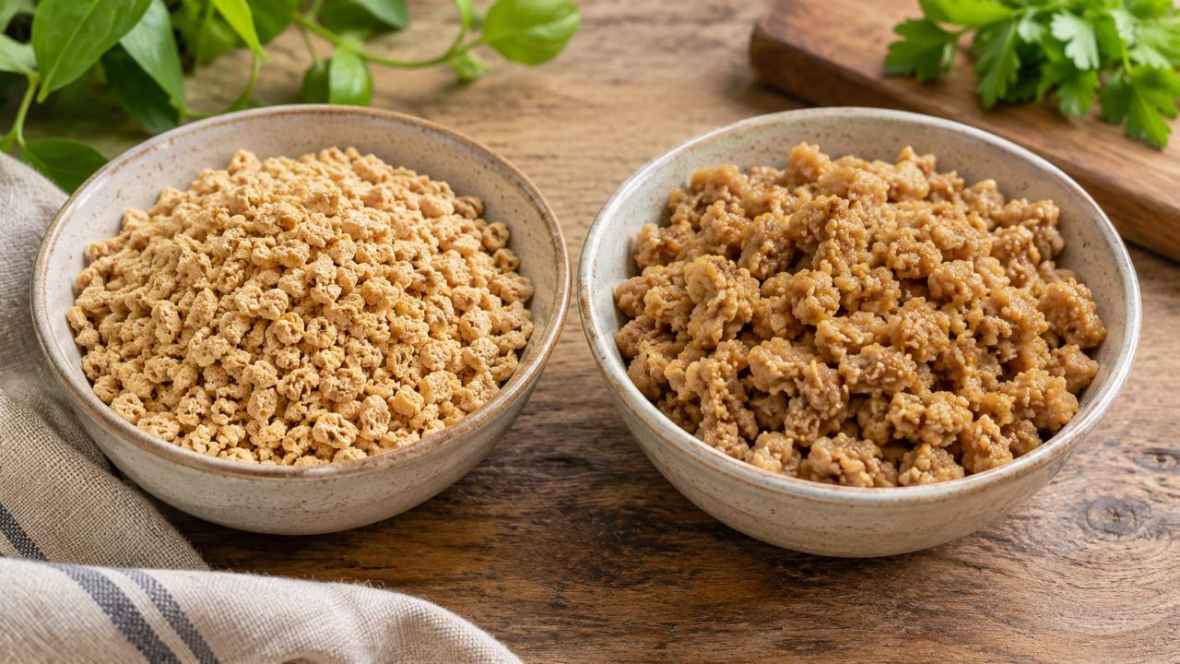
Textured soy protein is a soy ingredient available in forms such as dry granules and chunks. Start with the directions for the exact product, then manage how much water it takes up and how you season it for the dish.
Know which product you bought
Textured vegetable protein is a broad name for processed plant protein ingredients with a structure designed to hold together or resemble fibrous or minced pieces. Textured soy protein is made with soy. Production can involve extrusion, and published food science research shows that the ingredients and manufacturing conditions affect texture and rehydration. The type of granule you bought can therefore behave differently from one shown in a recipe, even if both packages use the same general name.
A dry packet may contain small granules, larger chunks or strips. Prepared alternatives sold chilled or frozen may already contain water and other ingredients. A recipe that asks for dry granules needs a different amount and method from one using a ready-to-cook product. Read how the package describes the food and whether it needs hydration or further cooking. Do not treat a dry ingredient as ready to eat unless the product specifically says so.
Compare the product with tofu and whole soybeans only for the role you need. Firm tofu holds a slice or cube, while small hydrated granules can spread through a sauce. Whole soybeans are a distinct ingredient with their own preparation. A package of textured soy is useful when you want the shape and texture it provides. That choice does not require using it for every soy dish.
Start with the package directions
Read the required liquid, water temperature and time for the exact product. Some packages call for soaking and draining. Others explain how to prepare the pieces directly as part of a dish. Use those instructions for the first batch. The size and composition of the pieces change how they take up water. A method that worked for fine granules may leave larger chunks firm inside or make a softer product mushy.
Measure the dry ingredient if you want to repeat the result. A measuring cup can be practical for cooking, but different shapes pack differently. A kitchen scale is more useful if the recipe gives dry weight. Record whether the recipe’s amount is dry or hydrated. A cup of dry pieces cannot always replace a cup of cooked pieces. Hydration adds water, changing both volume and weight.
Prepare a small amount before using the whole packet in an unfamiliar recipe. After following the directions, check whether the pieces are soft enough for the next cooking step. If the package tells you to drain them, let the excess liquid run off. Use a clean colander or strainer that will not lose the smallest pieces. Keep a note of the water and time if you plan to repeat the method.
Avoid a common shortcut: replacing dry soy with an already hydrated product while keeping all the original liquid. That can make the dish thinner than intended. If you use cooked or prepared pieces, measure and season them as an ingredient in their current form. Add liquid in small amounts, especially for a sandwich filling or a dish whose texture needs to stay fairly dry.
Decide whether to drain, brown or simmer
A tomato sauce can finish with hydrated granules stirred through it. If the sauce already has the consistency you want, drain the pieces as directed before adding them. If the product’s instructions allow cooking in the sauce, add it with enough liquid for the required preparation and watch how the sauce changes. Taste the finished dish before adding extra salt, because both the base and the product can contribute seasoning.
A filling for bread or stuffed vegetables usually needs less loose liquid. After preparing the granules, cook them with onions and seasoning as appropriate and let excess moisture evaporate. Spread the mixture on a small area of bread or a spoon to see whether it holds together without dripping. If it is too wet, reduce it gently before filling the food. A dry filling can be loosened with a little sauce. Make the adjustment before assembling the whole dish.
Larger pieces can work in a stew where you want something distinct to bite into. Prepare them according to the packet and check whether the center has softened adequately. Add seasoning during the cooking step that suits the product. Longer simmering may change the texture, so it is worth trying one piece before adding a large portion. If you want brown edges, use a suitable pan and enough room for moisture to evaporate.
When time is short, choose one method and one dish. For a quick sauce, the priority may be moisture control rather than browning every piece. For a filling where texture is noticeable, take the time to drain and season. A good weeknight method has steps you can follow without leaving the hydrated product on the counter while you decide what else to cook.
Season in layers
Plain textured soy can take on the flavor of the dish, but a strong taste on the outside does not guarantee the center is well seasoned. Start with a base you already know, such as cooked onion, tomato and herbs. Prepare the soy as directed, add it to that base and check the result. If you use stock for flavor, read its ingredients and salt content. If you use salted stock, taste before adding another salty ingredient.
A suitable acid or fresh herb added at serving can change the way a filling tastes without increasing the seasoning throughout the whole batch. Compare a spoonful with the addition and another without it. This helps you tell whether a flat result needs a brighter note or just more time with the main sauce. Start with a small amount so you can adjust without making the whole meal taste the same.
Keep strong spices separate when cooking for several people. A mild tomato and soy base can be divided, with additional seasoning added to one portion. This is practical if one person wants a familiar meal and another wants to try a different flavor. Save the method that works for the base and note which additions you liked. The next batch can start from a known texture without forcing you to repeat the same flavor.
Read labels for allergens and nutrition
Soy is an allergen that may require strict avoidance for some people. If you cook for someone with a soy allergy, do not treat textured soy as a substitute for a food they can eat. The FDA describes soy among major allergens under US labeling rules. Labeling details and precautionary statements can differ by market. Check the exact ingredients and any cross-contact information needed for the person, and follow their guidance on preparation.
Not all textured vegetable protein is made solely from soy, and some packaged products contain other ingredients. A product with the same general description might contain wheat, seasonings, oils or additional proteins. If the label is unclear and the information matters, contact the manufacturer or choose a product you can verify. A front label or familiar package shape cannot answer an allergy question.
Compare nutrition using the same basis. A dry label may describe the product before water is added, while another label may describe a prepared serving. Adding water increases weight without adding the same amount of nutrients. If you want to know the amount in your meal, start with the amount of dry product you used and follow the label’s units. Any sauce or oil added to the recipe also contributes to the finished dish.
Keep protein and salt separate when comparing options. A dry ingredient and a flavored ready-to-cook product can have different profiles. If the food is intended as the main protein in dinner, check the portion you actually use. If it is a small addition for texture, consider the other ingredients that provide substance. Nutrition information should help you plan the dish rather than rank all products by one number.
Store dry and prepared forms differently
An unopened dry packet can often be kept in a cupboard under the manufacturer’s conditions. After opening, follow the storage instructions and protect the dry ingredient from moisture. Keep the label if you transfer it to a separate container. It is useful for preparation, ingredient information and identifying the lot if you have a question. Mark the container so nobody mistakes dry pieces for a ready-to-eat snack.
Hydrated or cooked ingredients have different handling needs. Follow the package and applicable leftovers guidance. Cool cooked portions promptly and put them in the refrigerator or freezer as appropriate. Use clean containers and mark the date. Do not leave a large batch out while waiting for another meal. If the product gives a shorter storage instruction, follow that instruction.
When using leftovers, heat only the portion you intend to eat and follow the local advice on reheating. The UK Food Standards Agency advises reheating leftovers until steaming hot throughout and only reheating them once. If the storage history is unknown, appearance and smell cannot establish safety. Make smaller batches if you do not have a reliable way to cool, label and store the amount you prepared.
Try a small comparison and keep a record
Make two portions from the same packet. In one, prepare the soy and use it in a moist sauce. In the other, drain it carefully as directed and use it in a drier filling. Keep the seasoning similar. Compare which one has the texture you want. A result that works for a sauce may be less appealing in bread, and a drier mixture may need another ingredient in a bowl.
If the pieces are too soft, check whether you followed the stated hydration time and whether they spent a long time in the sauce after preparation. If they are still firm, check whether the product needs a different process or additional cooking. If there is excess water, adjust the next recipe or drain more thoroughly when the instructions permit it. Record the product name and the change. The useful conclusion is about that product and method, not every textured soy ingredient.
Use that note when buying again. A small pack is a good way to learn whether a texture suits you. If it works in several meals, a larger pack may be useful if you can store it properly. If it works in only one dish, keep a suitable amount for that use and choose another ingredient for the rest of the week. Your own cooking routine is a better guide to quantity than a generic recommendation to buy in bulk.
Give a new product a small first job
If you have never used the packet before, choose a dish whose texture is forgiving. A tomato sauce can take a small quantity of prepared granules without depending on them to hold a shape. If you want to use larger chunks in a stew, prepare a small number first and check that they soften appropriately. The result will tell you whether the product suits that particular use, which is more useful than deciding the whole category works or fails.
Write down the dry quantity and the amount you used after preparation. If you drain the product, note that as well. This lets you compare two recipes that describe the ingredient differently. The weight difference is largely a question of water and does not mean that the product gained protein during hydration. Use the form and unit the label specifies if you make a nutrition calculation.
Adjust the dish by observing what happens
A sauce may be the right thickness before you add the prepared soy. Check it again after the ingredients have warmed together. If the mixture needs less moisture, give it time to reduce. If the pieces seem dry and the package directions were followed, a small amount of sauce may improve the finished texture. Do not treat moisture as a fixed quantity for every packet.
When a filling must stay inside bread or a vegetable shell, cool a small spoonful enough to taste and check how it holds. This can show whether the mixture needs a little more cooking or whether a thicker ingredient should be added. If you make two dishes from one batch, keep part of the product plain and season each portion separately. That avoids using one sauce for two meals whose textures need to differ.
Keep the package information available for other cooks
If you move the dry pieces into a jar, keep a copy of the preparation and ingredient information. The next person may not know whether the pieces are ready to eat, how they should be hydrated or whether the product contains soy or another allergen. An unlabeled jar can look similar to another dry ingredient. A clear label makes the method repeatable and helps people make choices about ingredients.
For prepared leftovers, write down the dish and the date. Do not rely on a dried product’s cupboard life once water has been added. Choose a small batch if the kitchen has little refrigerator space, or make a clear storage plan before cooking more. A reliable plan includes both how you will prepare the ingredient and what you will do with any amount you do not serve.
Summary
Identify whether you have dry granules, chunks or a prepared product. Follow its hydration and cooking directions, then adjust the moisture and seasoning for the dish. Check the exact label for soy and other allergens, and store cooked portions promptly.
Frequently asked questions
Can I add dry granules directly to tomato sauce?
Only if the package or a reliable recipe for that product calls for it and the sauce has enough liquid for the preparation. Otherwise, hydrate and drain it as directed first.
Is textured vegetable protein always soy?
No. Textured soy protein is soy based, but the broader name can describe other plant ingredients. Read the exact label.
Does dry and prepared weight mean the same thing?
No. Hydration changes the weight and volume. Use the form specified in the recipe and compare labels on a common basis.
Leave a Reply