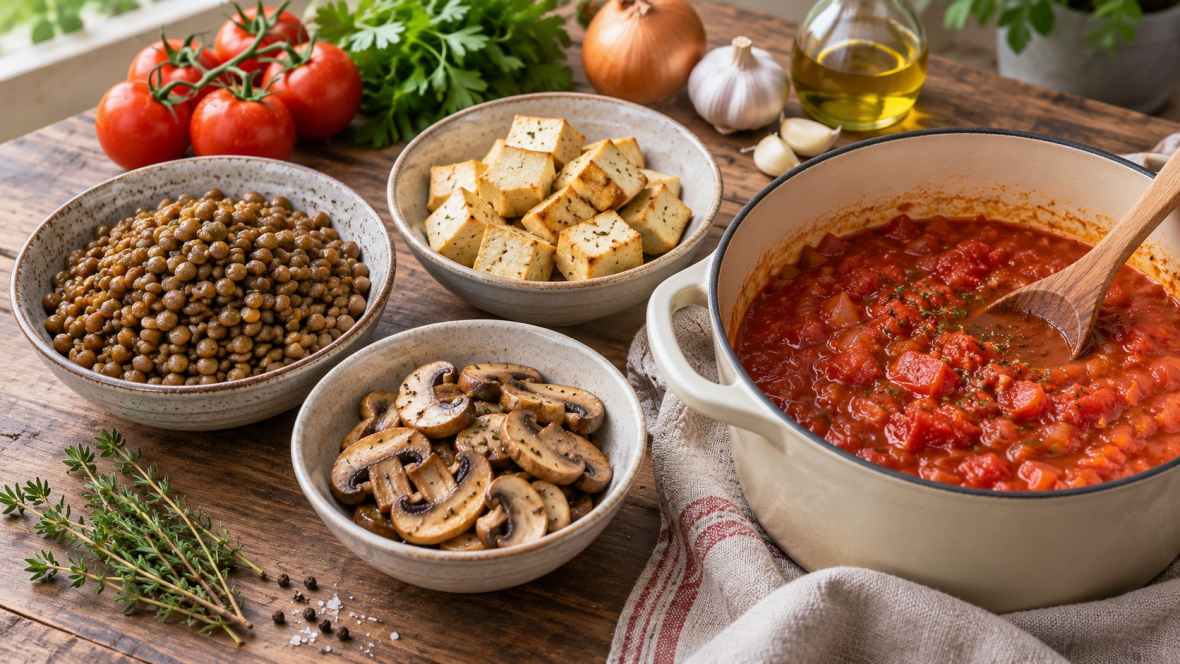
Start with what the meat was doing in the dish. A filling, a source of protein and the base of a sauce can call for different ingredients. The best replacement is one you can cook with, afford and enjoy in that particular meal.
Name the job before you shop
A piece of meat can give a meal its shape, add browning to a pan, contribute protein or supply a strong flavor to a sauce. It can do several of these things at once. A plant ingredient may replace one function well and another less well. Decide which feature matters to the dish. A stew may need a substantial ingredient to bite into. A minced filling may need small pieces that hold seasoning. A sandwich may just need a filling that can be spread or sliced.
Describe the meal without naming the meat. For example, a weekday pasta needs a thick tomato sauce with something substantial in it. That description suggests cooked lentils, crumbled tofu or textured soy protein depending on what you have and the texture you like. A dinner of vegetables on a tray with a sliceable main component points toward a firmer ingredient or a packaged product you can cook according to its directions. The question is more specific than which substitute is best.
Decide whether you are adapting a familiar recipe or looking for a different meal. When you want the same cooking method, find an ingredient that can handle the heat, moisture and timing. When you can change the dish, a bean stew or lentil sauce can be easier than trying to imitate the original exactly. Keep a familiar seasoning, side dish or serving style if that makes the result easier to enjoy. A recognizable dinner need not reproduce every feature of the old one.
Use beans and lentils where they fit
Cooked lentils work in sauces, soups and some fillings because their small size lets them mix easily with the other ingredients. Brown or green lentils can remain visible if cooked to a suitable texture. Red split lentils often soften into the liquid and can thicken it. The right choice depends on whether you want separate pieces or a smoother sauce. Check the recipe and the package rather than assuming different lentils cook on the same schedule.
Beans and chickpeas work well where a larger piece is useful. Fully cooked canned beans can go into a quick tomato stew or be mashed into a sandwich spread. In a dish with several vegetables, choose whether to keep the beans whole or mash a portion to give body. Account for the seasoning of the canned product. If you are using dried beans, choose a reliable preparation method for the type you bought and allow time for safe cooking. A short recipe for cooked beans cannot take dried beans directly.
A pulse can be the protein component even if the dish looks nothing like a meat dish. In a rice bowl, for example, put a substantial portion of lentils or chickpeas alongside the grain and vegetables, then use a dressing you already like. If you use a few beans only as garnish, think about where the main protein will come from. Canada’s Food Guide uses a plate with a place for protein foods and encourages plant sources. It is a guide to composing meals, not a rule that every dish must have a visible quarter of beans.
Choose tofu or textured soy when texture matters
Firm tofu can be sliced or cubed and cooked separately before joining a sauce. Pat it dry if you are trying to brown it, use a pan that can hold the pieces without crowding and turn it carefully. For a filling, crumble it instead of slicing it. It takes seasoning from what you add. A strongly flavored sauce can work well, but a bland result is often a question of preparation or seasoning rather than a reason to dismiss all tofu.
Textured soy protein, often sold dry, is useful when you want small pieces that hold sauce and resemble the texture of a minced filling. Follow the directions for the exact product. Some need to be hydrated before cooking, while other prepared products can be used differently. Too much liquid can leave a filling watery. Drain if the directions call for it and adjust the sauce in small amounts. Textured soy can be useful in pasta sauce, stuffed vegetables and a seasoned filling where it does not have to hold a whole slice.
Check ingredients if the household avoids soy or another allergen. A product described as plant based can contain soy, wheat or other ingredients. Check the actual label and preparation arrangements when a food allergy matters. If you choose a commercial substitute, read the cooking directions even if the product looks familiar. Appearance does not tell you whether it is ready to eat or needs cooking.
Give mushrooms the right role
Mushrooms can bring a savory flavor and a pleasant texture. Sliced mushrooms can replace some of the browned pieces in a stew or filling. They release moisture as they cook, so start with a wide pan or cook them in smaller batches if you want browned edges. They are useful alongside lentils, beans or tofu. A dish that uses mushrooms for flavor can still need a separate protein component if that was a role the original ingredient played.
Try replacing the roles in two steps. Brown mushrooms and onion for flavor, then add cooked lentils to the sauce for substance. For a sandwich, slice cooked tofu for structure and use a little seasoned mushroom as an additional layer. If you do not enjoy mushrooms, a familiar vegetable and another seasoning can still work. These examples give you more control than assuming one ingredient must replace everything at once.
Consider time as well as flavor. A dish with both mushrooms and lentils may require two pans if you want distinct textures. A can of cooked lentils in a one-pot sauce may be easier on a busy day. Set the plan to match your available time. Keep the more involved version for a day when you can pay attention to browning and seasoning. A replacement is more useful when you can make it more than once.
Compare prepared products using the same portion
Prepared patties, strips and mince-style products can be convenient when you want a similar cooking format. Compare similar quantities on the nutrition label, then check what you normally use. A figure per serving can be misleading if two brands choose different serving sizes. Read the ingredients, protein, salt or sodium and any other information that matters to your meal. Product profiles differ, and the words on the front cannot establish nutritional equivalence.
Price comparisons also need a common basis. Compare the amount you will use in a meal, taking into account what remains in the pack. A small packaged product can be useful when it prevents an unfinished ingredient from sitting in the fridge. A larger bag of dry lentils can be useful if you can use it regularly. Include cooking time and equipment when they materially affect the decision. A household can reasonably buy prepared products for some meals and cook from basic ingredients for others.
Keep a fallback in mind. A substitute that requires a particular store is less useful if that store is not on your usual route. Choose at least one familiar ingredient you can get easily. If the usual packaged product is out of stock, a bean filling or a lentil sauce may still give you dinner. Do not assume a different brand has the same allergens or cooking instructions. Check the label each time the product changes.
Apply the method to meals you already make
For a tomato pasta sauce, decide whether you want a smooth sauce or pieces you can feel when you eat it. A soft lentil can thicken the base. A firm cooked lentil or hydrated textured soy can stay more distinct. Start with a small amount of the new ingredient and keep the seasoning you normally like. Add more liquid only when you see how much the ingredient has absorbed. If the sauce becomes too thin, give it time to reduce or serve it with a different staple that can handle the consistency.
For a tray dinner, choose something that keeps its shape when you turn it. Sliced firm tofu can be seasoned and cooked beside vegetables if you follow a suitable method. A prepared product may need a different temperature or cooking time, so read its directions and use a separate tray if necessary. A bean mash would fit better on the plate after roasting than spread across the tray. Matching the ingredient to the cooking format avoids trying to solve a texture problem at the end.
For a sandwich, look at what you need it to do away from home. A mashed chickpea filling can be easier to handle than whole chickpeas. A slice of firm tofu may be less messy than a loose sauce. Pack wet vegetables separately if they make bread soggy. If the filling is perishable, plan how you will keep it cold. The choice depends partly on where and when you will eat, not just on how the sandwich looks when it is made.
Test one change and use the result
Make a small batch the first time. Write down the ingredient and how you prepared it. If it was watery, decide whether it released liquid, absorbed less sauce than expected or was added too late. If it had little flavor, decide whether the seasoning needed to be stronger or applied at a different stage. A clear observation helps you choose what to change next time. Trying several substitutions at once makes it hard to tell which one mattered.
If a meal did not feel substantial enough, check the portion and which ingredient supplied protein. If an ingredient was too expensive, compare a different form or a familiar pulse for the same use. If your household enjoyed the texture but not the seasoning, keep the ingredient and use a sauce they already like. This is how a recipe becomes a workable part of the week instead of remaining an experiment you only try once.
If you are planning a fully vegan diet, consider the pattern beyond one swap. Nutrients that need attention across the diet do not automatically come from a product that resembles meat. Check fortification only where the label shows it and consult appropriate guidance for the full diet. The NHS vegan diet guide distinguishes foods that contribute particular nutrients and the role of fortified products. A useful recipe substitution and a complete nutrition plan are separate decisions.
Choose a replacement for a dish that people share
A shared meal can use the same sauce and vegetables with toppings added separately. If your household is new to plant-based cooking, start with a dish that does not depend on every person choosing the same texture. For example, put a tomato and vegetable sauce on the table with a bowl of well-drained cooked lentils and a small bowl of browned mushrooms. People can serve themselves. That tells you whether the disagreement was about flavor, texture or the meal as a whole.
If the meal is cooked in one pot, decide which replacement can tolerate the longest cooking step. A soft bean stirred hard through a stew can break. Sometimes that is useful because the liquid becomes thicker. If you want the beans to remain visible, add them later and heat the mixture through. Firm tofu can be cooked separately and folded in. The choice should follow the dish’s structure, not the first substitution listed in a cookbook.
Compare a single recipe in two ways
Make a familiar tomato sauce and split it into two smaller pans. Put cooked brown lentils in one and a measured amount of prepared textured soy in the other. Keep the same tomatoes and seasoning. Watch whether either pan needs more liquid or a longer reduction. Serve equal portions if you want a fair taste comparison. If one person prefers the lentil sauce because it is softer, that is a useful finding even if another person prefers a firmer texture.
Do not treat that comparison as a nutrition test. If you want to compare protein or sodium, use the actual labels or food composition entries for the amounts you put into the dishes. A cooked weight and a dry weight can describe different quantities. Also consider other ingredients in the plate. A small taste test answers a kitchen question, and label information answers a different question about what you used.
Plan a second use for the ingredient
If a packet contains more than you need, choose a second use before buying it. A can of chickpeas can fill a sandwich today and go into a vegetable stew another day if it is stored as directed. A dry packet of textured soy can stay available for a later dish under its package instructions. A tofu block may need to be used soon after opening. The form of the ingredient affects how much of the price becomes food you actually eat.
Write your best result on the shopping list rather than relying on memory. Say firm tofu for slices, brown lentils for tomato sauce or mushrooms for a savory topping. Each label on the list names a use. If a product is unavailable or too expensive, you can look for something that serves the same role. That makes the next shopping trip easier without requiring you to buy a specialty replacement for every meal.
Summary
Choose the replacement by its role in the meal. Use pulses for a substantial base, tofu or textured soy when their structure suits the dish, and mushrooms when you want browning and savory flavor. Compare prepared products in the amount you will eat and test a familiar meal before buying a large pack.
Frequently asked questions
What is a simple first replacement for mince?
In a familiar sauce, try cooked firm lentils for distinct pieces or textured soy prepared according to its label. The choice depends on texture, time and whether the ingredients suit your household.
Can mushrooms replace the protein in the meal?
Mushrooms can provide flavor and texture. If protein is one of the roles you want to replace, include an appropriate food such as beans, lentils or tofu. Check the meal as a whole.
Do I need a packaged meat substitute?
No. Cooked pulses and other familiar foods can fit many everyday meals. A packaged product can be useful for a specific format or a busy day if its ingredients, price and directions suit you.
Leave a Reply