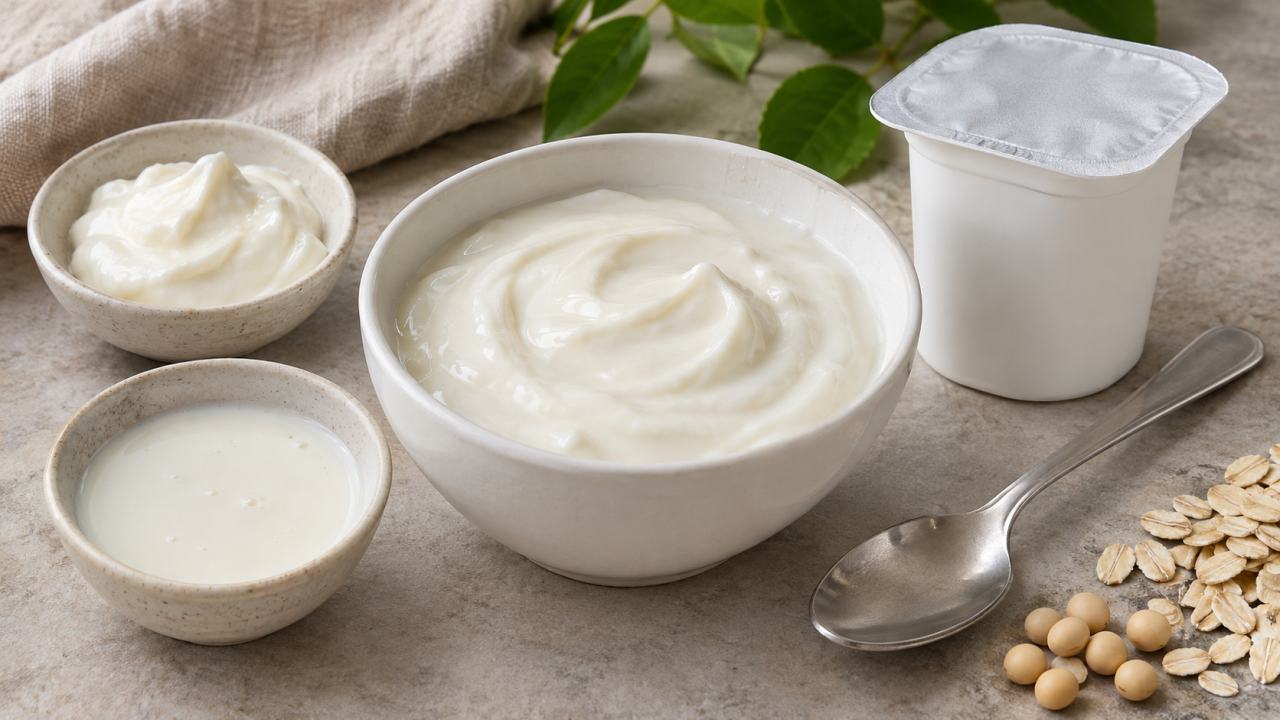
Choose a plant-based yogurt alternative for its intended job, then check the exact label. A breakfast bowl, a savory dip and a warm sauce can need different flavors and textures. Protein and fortification vary, and a dairy-free description does not answer every ingredient or allergy question.
Decide what you want the product to do
Start with the meal. If the product will be eaten directly, flavor and spoon texture may decide whether you use it regularly. If it will go into a cucumber dip, added vanilla or sweetness can matter. If it is for baking or a hot sauce, a recipe that specifies the product type is a more useful guide than a generic claim about creaminess.
Write the intended use beside any nutritional question. You might want an unsweetened breakfast product with a particular protein contribution or a small amount used only as a sauce. Those uses involve different quantities. Compare labels at the amount you eat. A food’s appearance does not show its nutrient profile.
This guide provides criteria and a small comparison method. VegDot has not taste-tested products for this article and does not rank brands. A manufacturer page can document what a product lists in one market. It cannot establish how every competing product performs in a kitchen.
Read the base and the full ingredient list
Alternatives may use soy, coconut, oats, nuts or blends. The base can affect flavor, texture and nutrients, but the whole formula matters. Read added ingredients such as starches, oils, thickeners, flavors and sweeteners. Do not assume two products made from the same base have identical properties.
A plain name and an unsweetened or no-sugars claim have meanings tied to the actual label and market. Read the ingredient list and nutrition information together. A product called plain can still have a flavor you notice in a savory dish. The best way to learn about taste is an actual comparison, which should be described as such after it is performed.
Check coatings, fruit layers or separate toppings in multi-part pots. The information may apply to the whole pack or to one component. Read serving details before comparing with a plain product. If a topping is optional in your meal, record the combination you actually eat rather than borrowing a value for a different version.
Compare protein and each fortified nutrient
Read protein for the same amount of both products. If one table lists 100 grams and another a whole pot, convert before comparing. A hypothetical 4 grams per 100 grams would supply 6 grams in a 150-gram serving. These are arithmetic examples, not a claim about a typical brand or an individual requirement.
Look for calcium, vitamin B12 or vitamin D separately if those nutrients are part of the reason for the purchase. A fortified product may include one and omit another. The NHS vegan guide discusses planning nutrient sources. Use it as context, then check the local product. A similar name in another country may have a different formula.
Do not infer calcium or protein content from thickness. Thickening ingredients and processing can change the texture without producing the nutritional profile you expect. A creamy product can be a useful cooking ingredient while contributing little of a nutrient you were trying to replace. Treat texture and the nutrition table as distinct checks.
Use sugar and fat information in context
Compare the nutrition lines at the amount used, including any fruit, syrup or other addition you put in the bowl. Total sugars and added sugars are different label concepts, and disclosure rules vary. Use the statement actually provided. A front-of-pack phrase cannot replace reading the relevant table.
If saturated fat matters to your choice, examine that line separately. Products based on different ingredients can vary, and mixtures complicate simple assumptions. Keep the portion and intended role in view. A small amount in a dip is different from a large daily bowl. If you have individual clinical needs, ask a qualified professional to help interpret the comparison.
Keep the whole breakfast visible. Fruit, grains, nuts or another food may contribute to the meal. A comparison of two yogurt alternatives can answer a product question without proving that the whole meal is balanced. Record what you will actually serve with it if that affects the choice.
Check whether the flavor fits savory cooking
For a cucumber and herb dip, start with a small spoonful of the chosen product. Taste it plain, then with cucumber and herbs. Notice sweetness, acidity and any vanilla or coconut flavor. A product can be enjoyable for breakfast and unsuitable for that dip. Test before combining a whole pot with the ingredients.
Add watery vegetables and lemon gradually. A dip can become thinner after mixing and resting. If the consistency matters, compare it at the time you plan to serve it. Keep the experiment small and follow cold storage directions. A homemade mixture’s storage cannot be inferred automatically from the unopened pot.
If you need a thicker result, choose a product or recipe designed for that role. Straining may alter texture and yield, but the method and safe handling need attention. Do not promise that every plant alternative will strain like dairy yogurt. The starting ingredients and stabilizers can change the result.
Approach heating as a recipe question
A cold texture does not guarantee that a product stays smooth when heated. Acidity, temperature and the other ingredients can affect the mixture. Use a recipe that describes the kind of product and when to add it. Avoid putting the whole pack into a boiling sauce as a first experiment.
For a small trial, warm a spoonful with part of the sauce and observe what happens. Use the result only for that product and method. If it separates, consider a different recipe or a product intended for hot cooking. Lower heat or later addition may help in some dishes, but this article has not tested a particular formula.
Baking substitutions also need proportions. Replacing dairy yogurt by weight can work in some recipes and change another’s structure. Check whether the recipe relies on acidity, moisture or thickness. A tested recipe with a specified alternative is a firmer starting point than assuming every product is interchangeable.
Assess ingredients, allergies and storage separately
Check the full list for animal-derived ingredients if you want a vegan product. A certification can help when it applies to the exact product and you understand its standards. A dairy-free description covers a different question from whether every ingredient is vegan. Read fruit layers and flavorings as well as the base.
Soy, nuts and other ingredients can be relevant allergens. Read the current package and ask the manufacturer when essential information is unclear. People with allergies need appropriate safety information and preparation controls. A vegan or plant-based description does not establish absence of unintended allergen contact.
Follow refrigeration and use-after-opening instructions. Use a clean spoon, close the pot and date it if useful. Do not transfer the unopened shelf life to an opened container or a homemade dip. If several people share it, make the date and purpose visible so a portion reserved for cooking is not accidentally used.
Further practical examples
At breakfast, compare two small portions with the same oats and fruit. Notice which one you actually want to finish. Record the serving amount and the label values relevant to your decision. A product that fits on paper but is repeatedly left uneaten may need another use or replacement.
For a lunchbox sauce, consider the journey and cold storage. A refrigerated yogurt-based dip needs temperature control. Check whether the destination has a refrigerator or whether an insulated arrangement with cold sources can keep it appropriately chilled. If that cannot be arranged, choose a different accompaniment.
For a recipe made for guests, make a small trial before the occasion. Use the same product you will serve and identify relevant allergens. Keep optional flavorings separate when useful. A successful trial can tell you about that preparation, but should not be described as evidence that all brands behave the same.
For price, compare the amount you use before the product must be discarded. A larger pot may have a lower unit price but create waste. A smaller pot can make sense for occasional savory cooking. If two meals use the same product, note the second use before buying. Check its storage window rather than extending it to fit the plan.
For nutritional replacement, compare the old food and the new one at realistic portions. Ask whether the new choice supplies the nutrient that mattered and whether another food already covers that role. Seek individual advice if you depend on a product for a specific requirement. The label provides information, not a personal assessment.
For repeated purchases, save the exact name, flavor and market. A product page can change, and an imported pack may differ from the domestic version. Recheck on the actual label when packaging or suppliers change. This makes your comparison current without creating a permanent ranking of all products from one brand.
Additional checks for a repeatable product comparison
Begin with the use that matters most to the household. If the main purpose is breakfast, keep the fruit, grain and serving size the same for two small samples. If the main purpose is a dip, test each product with the same small quantity of cucumber and herbs. Record sweetness, acidity and consistency in ordinary language. Do not describe the samples as a formal product test unless the method and observations were actually recorded. An informal preference can still guide a useful purchase.
The product’s base gives a starting point for reading the label, but its formulation matters too. Two soy-based alternatives may use different amounts of the base, oils, stabilizers or fortifying nutrients. Two coconut-based products can differ in sugar and fat. Read the current ingredient list and nutrition table rather than treating the base name as a complete profile. If the front panel gives a claim, find the detail that supports it and the amount it applies to.
For a hypothetical nutrition comparison, suppose one table uses a pot of 150 grams and another uses 100 grams. Convert both to the amount you eat before comparing protein or calcium. Keep each nutrient separate. A product can list added calcium while showing no vitamin B12 addition, and another can list both. If the information is absent, ask the manufacturer or leave it unknown. Do not fill the gap with an assumption based on a similar product from another country.
If you use the alternative to replace a food you ate daily, describe what that old food contributed and what else is now in the routine. A spoonable product may solve the same culinary task while changing the nutritional contribution. Other foods may already cover part of that role. A personal assessment requires the wider pattern and, when appropriate, professional advice. A single label comparison cannot determine whether a whole diet supplies everything an individual needs.
For a savory dish, taste before adding lemon, salt or herbs. A product with a noticeable sweet or flavored note may need another use rather than more seasoning. Add watery ingredients in small amounts and assess the mixture near the time it will be served. A thick product can loosen when mixed with vegetables. Record whether the result was intended as a spoonable dip, a dressing or a sauce. Each has a different useful consistency.
If a hot dish is planned, find a recipe that names the type of alternative or explains the role of the ingredient. A cold spoon test does not establish performance under heat. Try a small portion with the sauce before adding all the product. If you change the method, keep the observation tied to that trial. An adjustment that helped one sauce cannot be assumed to work in baking or with every acid and temperature.
Store the opened pack according to its label and keep track of when it was opened. A prepared dip may need a different storage judgment because additional ingredients and handling have been introduced. Use clean utensils and make a quantity that can be used within an appropriate period. If you plan to carry it to work or university, include the journey and waiting time in the cold storage plan. A creamy plant product still needs its specified temperature control.
For allergies, read the relevant ingredients and precautionary information on the actual package. A product made without dairy ingredients may still raise a question about contact during manufacture. Soy or nuts may also be present. Ask the manufacturer when essential information is unclear and use appropriate personal advice. A claim about vegan ingredients should not be used as a substitute for a separate safety inquiry about a named allergen.
For price, compare the amount actually used before discarding the rest. A larger pot can make sense when several people share it or two meals are planned. An occasional cook may find a small pot more practical even at a higher unit price. Record the second intended use before buying, and check that it fits the opening instructions. This prevents a product chosen for a single spoonful from becoming an unexplained expense in the refrigerator.
Summary
Match the product to the meal, compare protein and fortification at the same portion, and test flavor and texture in the intended use. Treat hot cooking, allergies and opened-pack storage as separate practical checks.
Frequently asked questions
Are all plant-based yogurt alternatives nutritionally equivalent?
No. Check protein and each nutrient of interest on the exact label at a comparable portion.
Can a sweetened product work in a savory dip?
It depends on the flavor and dish. Taste a small portion with the intended ingredients before mixing a full batch.
Will every alternative stay smooth in a hot sauce?
Products and methods vary. Follow a suitable recipe and test a small amount if you change the product.
Is dairy-free the same as vegan or allergen-free?
These claims address different questions. Read ingredients, certification details and allergy information appropriate to the person eating it.
Leave a Reply