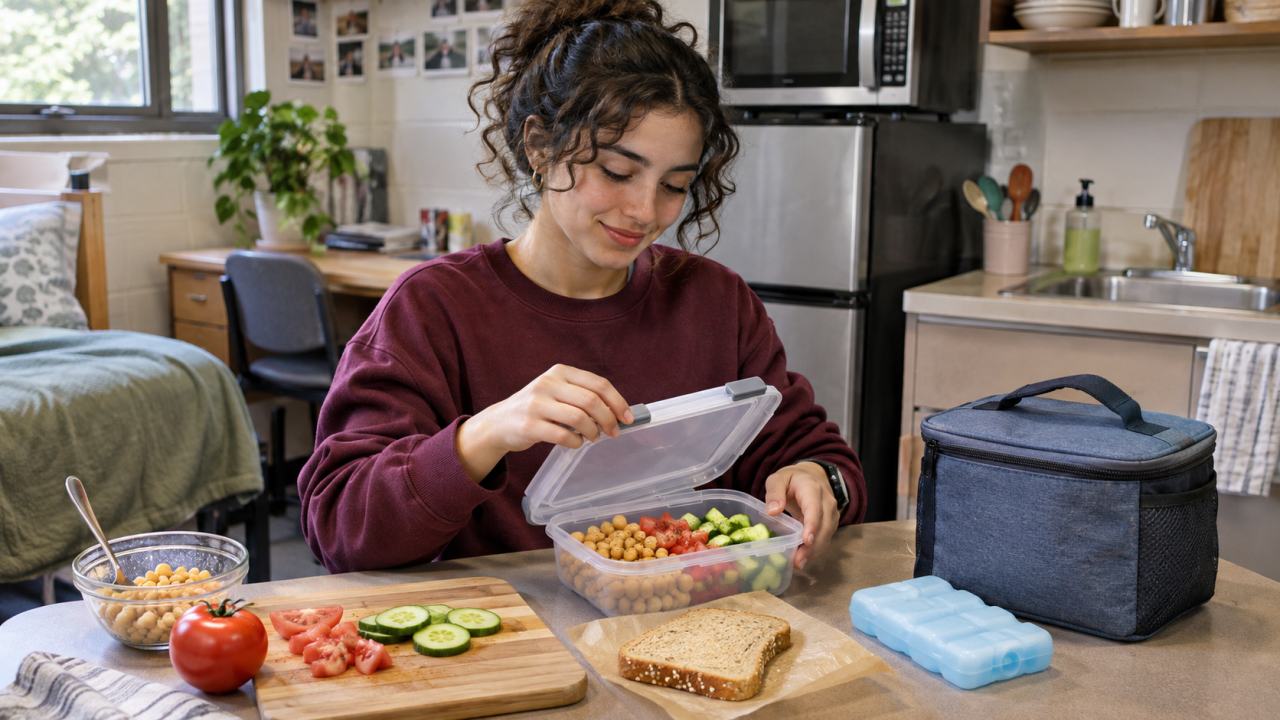
Start with the facilities available from preparation to eating. A lunch that needs refrigeration or reheating must fit the journey and the campus setup. Choose a few familiar combinations, a realistic budget and a fallback for days when the shared kitchen is unavailable.
Map the whole lunch period
Write when you leave home, when you eat and whether you can use a refrigerator at the destination. Check access rather than assuming a building has one. A kitchen may be locked during part of the day or shared with many people. Include travel time and the time the meal will wait in a bag. Those details decide which foods can be handled safely.
List the equipment you are allowed to use. A kettle, microwave, hob and refrigerator make different meals possible. Check dorm rules before buying an appliance. A lunch plan should not depend on equipment you cannot use or a microwave that is available only after your break ends. A simple ready-to-eat meal may be more dependable.
Consider whether you want a meal you carry or one you buy. Some students can use a cafeteria on most days and need a packed alternative only occasionally. Others rely on home preparation. Describe the situation you actually have. There is no need to prepare every lunch yourself for a plan to be useful.
Choose meals around one preparation method
If you have a safe cold chain, a chickpea and vegetable filling with bread can be assembled quickly. Open and prepare the chickpeas as directed, use clean utensils and refrigerate perishable components promptly. Keep a dressing separate if that protects the bread’s texture. Read labels for ingredients and allergies relevant to the eater.
If you have a microwave and refrigerated storage, a cooked portion of soup or a grain and bean dish may work. Pack a container appropriate to the appliance and follow the reheating method. Dense food needs stirring and attention so it heats evenly. Check facility rules about containers and cleanup before relying on this option.
If you cannot keep perishable food cold, select items that are suitable to store unopened at ambient temperature and prepare them at the point of eating if needed. Whole fruit, bread and particular unopened shelf-stable products may fit, depending on their labels. Hummus, cooked rice and opened canned food should not be treated as universally safe in a warm bag.
Make food safety part of the route
USDA guidance for packed lunches advises using an insulated bag with at least two cold sources for perishable food. FoodSafety.gov gives a cold storage threshold of 4 degrees Celsius or below. A bag’s appearance does not establish its temperature. Plan how chilled food stays cold during the journey and waiting period.
For hot food, USDA guidance describes an insulated container that keeps food at 60 degrees Celsius or above. Prepare and use the container according to the method and check that it maintains the needed temperature. Merely placing warm soup in a container does not establish safe holding. If the arrangement cannot be verified, choose another lunch format.
FoodSafety.gov advises refrigerating perishable food within 2 hours, or 1 hour above 32 degrees Celsius. Treat these as handling limits rather than a plan to keep food unrefrigerated for the maximum period every day. Follow relevant local guidance and any stricter requirements for your circumstances. Smell cannot tell you everything about safety.
Plan a small menu for an ordinary week
Choose two main combinations that use overlapping ingredients. A bean-based sandwich filling and a chilled bean salad can share a pulse, while vegetables and bread change the meal. If you prefer warm lunch, a soup portion and another cooked dish can be prepared at a time when safe cooking and cooling are possible.
Write the planned portions before shopping. One person eating lunch on campus three days needs a different amount from someone preparing for a roommate as well. A large package may be economical only if it can be used safely within its instructions. Keep the rest for a planned meal rather than buying it because its unit price looks attractive.
Put the busiest day first in your test. Choose a meal that requires the fewest steps during that morning. Assemble what can be prepared safely in advance, and keep the cold sources ready if needed. Test the plan on an ordinary day before relying on it during an exam or a long trip.
Include a useful meal structure
Think about a starchy component, a protein food, produce and other foods that fit the rest of your day. Bread with a substantial pulse filling and vegetables is one example, not an individualized meal prescription. The NHS vegetarian and vegan guides discuss variety and nutrient sources across the diet. Lunch alone cannot establish the balance of a whole day.
If you remove dairy or eggs from your usual lunch, check what takes over their role. A creamy condiment does not necessarily supply the protein or calcium you expected from another food. Read the actual product and serving. Ask for qualified advice when a narrow range of available foods makes individual planning difficult.
For snacks, choose what you can store, afford and eat comfortably between activities. Nuts may be useful for some students and inappropriate where allergies or institutional rules apply. Check shared-space expectations. Avoid building the plan around foods that are difficult to carry or cannot be eaten during the available break.
Work with a shared kitchen
Agree on which refrigerator space is available and label your containers with the date and purpose. A portion saved for lunch can disappear if nobody knows it is reserved. Keep cooking tools and food-contact surfaces clean, and consider whether the kitchen can meet relevant allergy or other preparation needs.
Use one short preparation period for several tasks only if storage is available. You might wash produce for an upcoming meal, prepare a small cooked batch and set out unopened ingredients. Do not make a whole week’s cooked lunches without considering cooling, refrigeration time limits and freezing where suitable. Preparation volume should follow the storage plan.
Keep utensils modest. A bowl, spoon, knife where allowed, suitable food box and a dependable washing arrangement can be enough for some meals. If a recipe needs several pans, compare it with one that uses the equipment already available. Saving money on ingredients can be undermined by buying tools for one occasional meal.
Estimate the budget from usable portions
Record the price, pack size and portions actually eaten. A hypothetical pack costing six currency units and giving three lunches contributes two units per lunch before other ingredients. Use your own receipts for real decisions. Do not generalize one student’s costs to every campus or country.
Include transport, delivery charges or extra purchases if they are required to obtain a product. A cheaper shop farther away may be convenient on an existing route and less useful for a separate trip. Compare the full practical purchase. Time and access can determine whether the plan gets repeated.
Review waste after the first week. If bread remains, choose a smaller pack or a safe storage method suited to it. If a filling consistently gets left, adjust the amount or recipe. A meal people finish is a more useful budget unit than a theoretical portion that does not match appetite.
Prepare a fallback before the disruption
Find one cafeteria order or shop option whose ingredients you can check. Note opening times and whether the option is available on the day you need it. A menu photograph can be a reminder, but recipes and suppliers can change. Confirm important details when necessary.
Keep a suitable unopened item on hand if it can be stored according to its label and used in a real meal. Check whether a can opener or preparation surface is needed. A backup that cannot be opened on campus is not much help. Choose a fallback you have tried and would willingly eat.
If food has not stayed within safe conditions, do not rely on reheating to repair an uncertain history. Decide on another lunch. A fallback is valuable precisely because it removes the pressure to eat something whose handling is unclear. Review the failed step later and adjust the next day’s plan.
Further practical examples
Imagine a morning with no access to the shared hob. If lunch was dependent on cooking at that moment, the plan needs another option. A portion already safely chilled or an appropriate shelf-stable combination may solve the day. If neither is available, a verified cafeteria meal can be more realistic.
Imagine a long lecture before lunch. Add that waiting time to the cold-chain plan. A trip of twenty minutes does not describe the total period the food is outside a refrigerator. Check whether you can store it on arrival or whether the insulated arrangement maintains the appropriate temperature throughout.
Imagine a microwave queue longer than the break. A chilled meal you enjoy cold may work better, provided it has been kept safely. This is a facilities decision, not a reason to eat a dish lukewarm after inadequate reheating. Learn the rhythm of the building before choosing meals that depend on shared equipment.
Imagine a roommate joining the meal. Agree on quantities and ingredients before the next shop. Divide costs using what each person uses rather than assuming identical appetites. Label portions and discuss who prepares and washes up. A shared meal becomes easier when the work and food are both accounted for.
Imagine a schedule that changes weekly. Keep a list of lunch formats and choose after you know the days on campus. A cold filling, a safely packed warm meal and a verified bought option give flexibility. You can retain the same basic ingredients while changing how the meal fits the day.
Keep the review short. Note which lunch was eaten, how it was stored, its approximate cost and one thing to change. This gives evidence for the next week’s decision without turning daily lunch into a large tracking project. Keep essential label and safety information with the plan.
Additional checks for changing student schedules
Start with a day that includes the longest gap between leaving home and eating. Identify where food can be stored during that interval and who controls access. A refrigerator in a department office may not be available to every student, and a microwave may be locked at lunchtime. Ask before designing the meal around it. Record the answer with the schedule. The practical meal is the one that can pass safely through the whole route, including transport and waiting, with the facilities actually available.
If the plan depends on an insulated bag, learn whether the cold sources are prepared in time and whether the food stays appropriately chilled. Packing a meal that is already warm changes the conditions. Use the official guidance for the food and arrangement, and choose another option if the needed temperatures cannot be maintained. An insulated container is equipment, not a guarantee by itself. The same principle applies to a container intended to hold a hot meal.
List the components of one simple lunch and the work each requires. A pulse filling may be ready to use from a labeled pack, while vegetables need washing and bread needs storage suited to its form. A cooked grain dish may need cooling, refrigeration and even reheating later. Put those tasks on the actual timetable. A short list that includes all the stages is more useful than a recipe that seems quick because it starts with ingredients already cooked.
A shared kitchen can create timing conflicts. Agree on when you can use the hob or washing area and prepare a fallback that does not depend on being first in the queue. If a microwave line is consistently long, choose a lunch you enjoy cold where safe rather than planning to eat an inadequately heated portion. If there is no suitable preparation surface at the destination, keep the meal assembled or choose something that can be eaten safely without additional preparation.
Check the lunch container with the food before carrying it. A watery filling can make a sandwich difficult to handle. A dense soup may need a different container from a salad. A dressing stored separately can protect texture, but it adds another item to keep clean and chilled if required. Test with an ordinary meal so the first attempt does not happen on a day with an exam, a long trip or no time to find an alternative.
Work out the usable cost using a receipt and the portions actually eaten. Include ingredients that repeatedly remain unused. A large bag of produce can be economical for a shared household and wasteful for someone away most of the week. Frozen or suitable shelf-stable components may offer a more flexible format, depending on the meal and facilities. Compare what works over the actual schedule rather than treating the lowest shelf price as the whole decision.
If your dietary preferences change, check the whole meal rather than just removing one ingredient. A sandwich without its usual filling may need a replacement substantial enough for lunch. A yogurt alternative may be a sauce rather than a comparable protein source. Use appropriate nutrition guidance for the broader diet and get individual advice where needed. The lunch plan should make food available and practical while leaving clinical questions to an appropriate professional.
Summary
Plan lunch around the actual journey, storage and equipment. Use familiar meal combinations, safe temperature control, realistic portions and a verified fallback. Review the busiest days and adjust the part that prevented the plan from working.
Frequently asked questions
Is an insulated bag alone enough for perishable lunch?
It needs an effective cold arrangement. USDA recommends at least two cold sources, and the food should remain appropriately chilled.
Can I pack any cooked dish for a full day without refrigeration?
No. Choose and handle foods according to their storage requirements and the facilities available.
Do I need to cook every lunch?
A verified cafeteria or shop option can be part of the plan. Choose what is practical for the day.
How can I reduce costs without wasting food?
Compare actual usable portions, buy quantities you can handle safely and give leftover ingredients a planned use.
Leave a Reply