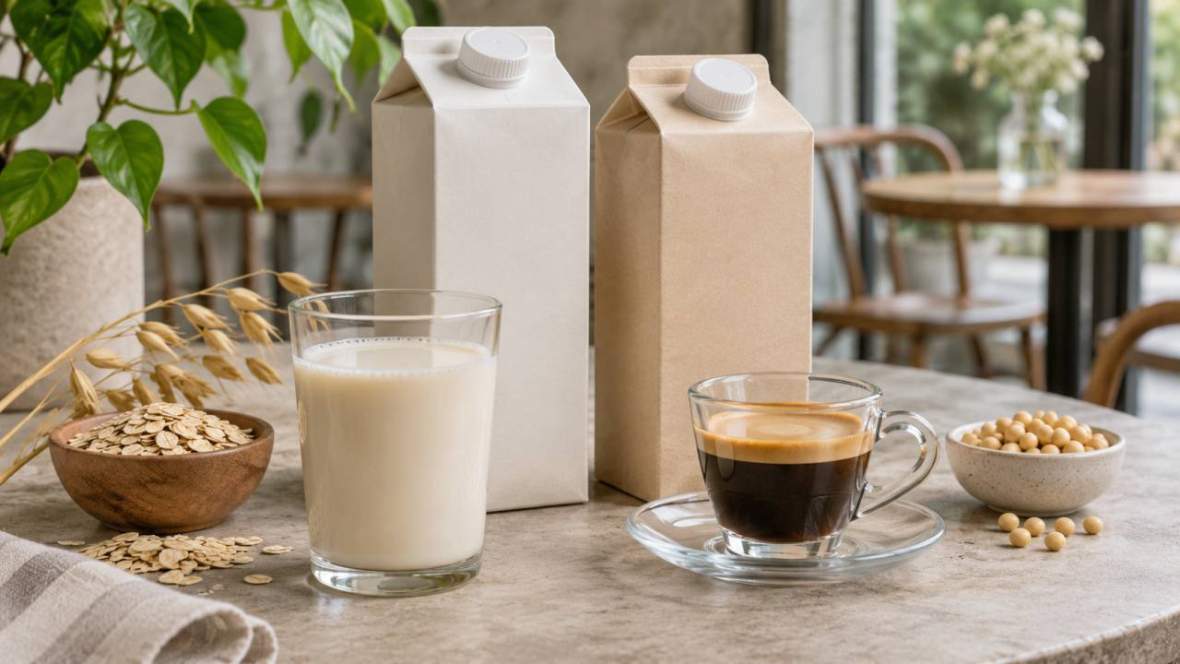
A barista version is generally made with coffee preparation in mind. Its label does not guarantee better foam, a particular ingredient or a better nutrition profile. Compare the exact products and test them in the kind of coffee you make.
Start with what you want from the drink
People buy a plant drink for coffee for different reasons. Some want a small splash that mixes without obvious separation. Some want a silky layer on a steamed drink. Others like the flavor and never foam it. A label that says barista is most useful when you know which result matters. A drink can work well for pouring and be less suitable for fine foam, or the reverse. Compare it in your usual preparation rather than judging it solely by what it does in the carton.
There is no single recipe implied by the word barista. Products can differ in plant base, fat, protein, acidity control and ingredients used to create a particular texture. The same manufacturer can sell several versions of an oat, soy or almond drink. Read the exact labels rather than assuming the regular and barista cartons differ in only one ingredient. The distinction is a starting point for comparison, not a prediction of every cup.
The coffee matters too. A small espresso with a larger amount of steamed drink behaves differently from a long coffee with a cold splash. Milk frothers, steam wands and other appliances also introduce air differently. A product that works for one café or appliance may behave differently in a home kitchen. Keep the intended use in view when you read a comparison.
Understand what good foam means for you
Foam contains air bubbles dispersed in liquid. A texture suitable for a cappuccino can be fine and cohesive enough to pour, and stable long enough to drink. A very tall foam made of large bubbles can look impressive for a moment but leave the cup uneven. Someone who wants a thin layer for a latte may prefer less volume and a smoother texture. The appearance of the foam just after heating is only one part of the result.
Experimental comparisons of plant-based beverages in cappuccino-style preparation find differences in their foaming and sensory characteristics. Those results describe the products and preparation methods tested. They do not tell you which version of a particular brand will work best in your kitchen today. Check how the beverage was prepared before applying a result. A laboratory or café steam wand may not behave like a handheld frother.
Notice whether the texture lasts for your usual drinking time. Look for obvious separation when the beverage meets the coffee, large bubbles that break quickly and whether the result feels pleasant in a sip. A layer that stays on top can be useful for one drink but may be excessive in another. Choose two observations you care about before comparing products. That is more useful than declaring a winner on the basis of how high the foam rises.
Compare labels for ingredients and portion
Read the plant base and the rest of the ingredient list. Depending on the formulation, products may include oils, stabilizers or other ingredients intended to influence body and mixing. A product can have a creamy texture without the same nutrient profile as another creamy product. The ingredient list tells you what is present, but it does not necessarily explain how much each ingredient contributes to a cooking result.
Use the same quantity for the nutrition comparison. A label might give values per 100 milliliters while another describes a serving. Convert to a common volume if both labels provide enough information. Then check the amount you actually pour. A splash in coffee can be much smaller than the amount in a large latte. If you use the drink in several foods, consider what it contributes in those uses separately.
Check protein, sugars and any nutrients you want from the drink. A barista version is not necessarily fortified, and a regular version is not necessarily lower in every nutrient. The FDA’s consumer guidance emphasizes that plant-based drinks vary in nutrient content. Look at the exact product and local labeling conventions. If added calcium or another nutrient is important to you, check that nutrient explicitly. A claim about how the drink foams does not establish its amount.
If you are comparing sugar, check whether the label distinguishes total and added sugars. A plain or unsweetened claim may be useful, but the ingredient list and nutrition information give additional context. Taste also matters. If you prefer coffee without additional sweetness, compare small amounts of the two products in the same coffee. A result that is pleasant in a latte may be more noticeable in a black coffee with just a splash.
Try a simple side-by-side comparison
Use two clean cups, the same coffee and the same amount of each plant drink. Prepare both drinks with your usual appliance and follow its safe operating instructions. Keep the temperature, starting quantity and method similar as far as you can. If one product is heated and the other is cold, you will learn about the two preparations together, not just the difference between the products.
Before mixing with the coffee, notice how easily each liquid pours and whether foam forms with your usual preparation. After mixing, look for separation and take a sip when it is safe to do so. Note the texture, flavor and whether the foam lasts long enough for your needs. A small test avoids using a whole carton just to decide whether you like it.
Change only one factor in the next test. If both drinks separate in one particular coffee, try a different coffee with one of them. If both produce large bubbles, check the frother instructions and the quantity it is designed to handle. If one version tastes too sweet, compare a plain alternative instead of changing both the coffee and the drink at once. A useful result explains which preparation worked, not which carton is universally best.
Buy according to your actual routine
A barista drink can be worth the price when you frequently make a drink where it performs better for you. A regular version may be suitable for a cold splash or coffee without foam. Compare price per liter if packs differ, but also consider how much you finish before the storage period ends. A cheaper large pack is a poor value if much of it is discarded. A slightly higher unit price may be acceptable for a pack that fits your actual use.
Consider whether you need two products. If one version works in coffee and also suits porridge or cooking, you may be able to use a single carton. If a barista product has a flavor or texture you only want in coffee, a small package can make more sense. Keep the storage instructions with the package and write down the opening date if you share the refrigerator.
When you change brands, do not assume the previous result transfers. Find the product name, base and intended use, then check the label again. If a store carries a different market version, the formula may differ. A short note about your previous choice can help you identify the qualities that mattered. You do not need to repeat a detailed comparison whenever the carton looks the same and the result still works for you.
Handle allergies and opened products separately
A barista label does not answer questions about allergens. Check the exact ingredients and any relevant cross-contact information for soy, nuts or other ingredients. If you are ordering in a café, ask whether the exact carton is available and what equipment or cleaning procedure they can confirm. A café’s ability to accommodate an allergy depends on its ingredients and practices. Follow the advice relevant to your situation.
Storage after opening can differ from storage of a sealed carton. Follow the instructions on the actual product. A shelf-stable package may still need refrigeration once opened. If the instructions say to shake it before use, do so as directed so that the portions are more consistent. Marking the date can help people sharing the carton remember the appropriate period of use.
Do not make nutrition or safety claims based on a foam result. Foam shows something about that preparation. It does not identify added nutrients or the suitability of a product for an allergy. Keep the kitchen observations, label information and dietary questions as separate parts of the decision.
Make a comparison you can repeat next week
Write down the exact product and what you made. A useful note might say that a small cold splash mixed well but a steamed portion formed coarse foam. Include the coffee and appliance if they clearly mattered. A note that simply says a product was good does not explain which part of your routine it suited. Record the outcome you care about so you can compare a new carton on the same basis.
Suppose you make one hot latte each weekend and use a little drink in weekday coffee. You could try a regular product for both uses and compare it with a small barista carton the next week. If the difference is meaningful only for the latte, decide whether that improvement is worth the cost and storage. If the regular product works well enough for both, you have a usable result from your own routine. If neither works, change one preparation detail before buying several more products.
When you compare a product at a café and at home, keep in mind that the equipment and technique may differ. Ask what beverage the café uses if you want to reproduce a cup, but do not assume the carton alone explains the result. Measure the amount you use, follow your appliance directions and observe the effect. A stable choice is one you can buy, prepare and finish with the equipment and schedule you have.
Compare price per cup as well as price per liter
If both products are sold in the same size, a price difference is easy to see. If one is sold in a smaller carton, compare the price for the volume you actually use. You can divide the carton price by the number of cups you normally make from it before discarding any remainder. This is a practical estimate, not a precise measure of every serving. It puts the amount you use and the storage period into the same decision.
For example, someone who only makes coffee at the weekend may finish a small carton and waste some of a larger one. Another household may use the larger carton in coffee, porridge and cooking. The same products can be better value for different households. The difference has more to do with usage than with the word barista.
Compare two versions in the actual coffee
A regular version and a barista version of the same plant drink are a useful starting comparison. Begin with the same coffee and two small measured portions. If your usual coffee is cold, use both products cold. If you usually steam them, use the same safe procedure and the same quantity. Observe the result at first and after a few minutes. A foam that is initially tall may settle sooner than a finer foam.
Change the product first and keep the recipe the same. If you change the coffee, the amount and the heating method at once, you will not know which difference explains the result. If both products work well, compare taste and cost. If neither works, check the appliance directions and try one change to the preparation. A fair comparison is usually possible without buying several large cartons.
Check what the two cartons actually say
Write down the serving volume and check the amount of each nutrient you care about. If one carton is sold as fortified, identify which nutrients are listed. Check the other version individually. A claim about coffee performance does not establish anything about fortification. A plain version can suit your nutritional goal while another product suits your preference for foam. You can make those decisions separately if one product does not cover both uses.
If you shop online, confirm the label when the product arrives. Pictures can show an older package or a version sold in a different place. If an ingredient is important, rely on the current product rather than a thumbnail. This is particularly useful when a company sells several versions under similar names. Mark the exact version that worked in your kitchen and recheck when the packaging changes.
Decide what would justify a repeat purchase
Ask whether you can tell the difference in a normal cup and whether it matters to you. A smoother result for a weekend cappuccino may be worth paying for if you can use the remainder before the storage period ends. If you only add a cold splash, the effect may not be important. A smaller pack can be practical even when the price per liter is higher. Record the choice in a way you can repeat.
Think of one second use before opening the carton. You might use a plain version in porridge if it suits the recipe, or finish the carton in a few cups of coffee. If the added flavor or texture makes it useful for only one drink, choose the size accordingly. Follow the opened storage directions. The product that gives the best result in a single test is not always the one that fits the rest of the week.
Summary
A barista drink may be formulated for coffee, but products vary. Compare the exact ingredients and nutrition labels, use equivalent portions, and test the texture in your regular preparation. Buy the version that fits your coffee, storage and budget.
Frequently asked questions
Does a barista label guarantee better foam?
No. Foaming depends on the product, equipment and preparation. Test the result in the coffee you make.
Is a barista version always higher in fat?
No general comparison applies across products. Check the label for both exact versions and compare the same volume.
Can a regular plant drink be used in coffee?
Yes, if the result suits you. For a splash or a drink that does not need foam, a regular version may work well. Check the ingredients and store it as directed.
Leave a Reply