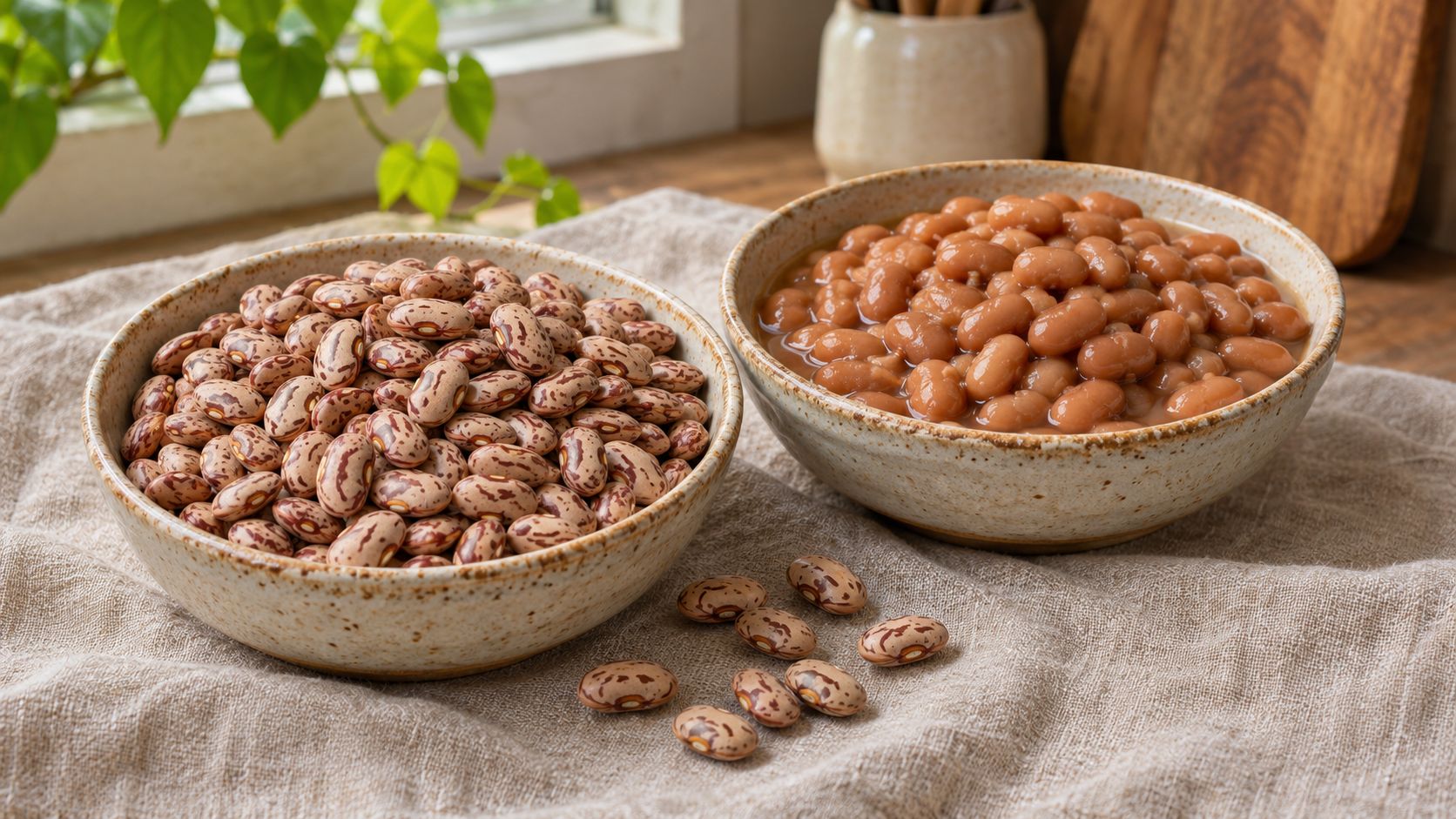
To choose pinto beans, first consider when you plan to use them and what texture you want for your dish. Dried beans require soaking and cooking thoroughly and are best divided into multiple servings. You can choose ready-to-eat canned beans based on drained weight and ingredients. If you buy dried beans, plan to cook them the night before. Soaking is not a substitute for boiling, and dried beans should not be consumed raw or undercooked. [1] [2]
What to check when buying?
On a package of dried pinto beans, look for the approximate uniformity of the beans and the integrity of the package. If you are buying in bulk, look for broken or damaged beans and for the cleanliness of the container. The color of the beans can change during storage. Color alone does not tell you the harvest date, and it is best to look at it in conjunction with information such as the date printed and the condition of the package. For your first purchase from an unfamiliar vendor, take a quantity that is suitable for one cooking session to see the actual softening time and yield. [1]
If you’re shopping for dinner that same day, look at the time between purchase and serving. Dried beans are great when you have time to prepare them. When buying ready-made products, read the name and type and make sure you want plain beans or ones that come with sauce and seasonings. Check the net weight on the package, the drained weight if listed, the ingredients, and the directions. If the recipe calls for just cooked beans, the weight of the liquid in the product doesn’t count toward your total.
To compare costs, relate the price to the amount you can use in a meal. Don’t compare a dry package and a can based solely on the printed weight. Dry weight changes after soaking and cooking, and the weight of the can may include liquid. Record the weight of the cooked, drained amount you actually used once. You can keep it with the preparation time and storage space for future purchases. The method for distinguishing the package weight from the usable weight is also explained in the Differences Between Dried and Prepared Legumes from a Chickpea Guide .
Clean and soak the seeds before cooking.
Pour the beans onto a tray and remove any pebbles or damaged beans. Then rinse them in a colander. The soaking container should have room for the beans to absorb water and expand. If you are cooking the same amount each time, record the dry weight before soaking. Measuring after adding water will not tell you the dry matter content. A simple note of the weight, date of purchase, and soaking time is useful for repeat cooking. [1]
The European Food Safety Authority (EFSA) guidelines for reducing the risk of lectins in dried legumes recommend soaking them in water for 6 to 12 hours, discarding the water, and then boiling them in fresh water. For home cooking, you can soak them overnight in the refrigerator to ensure you have enough time for the actual cooking process. After soaking, discard the water, add fresh water, and place the legumes on the stove. If you forgot to prepare the beans in advance and mealtime is approaching, using pre-prepared (canned or cooked) beans is a simpler alternative. [1] [2]
After soaking, the shape or size of the legume is not an indicator of whether it is cooked; this stage is merely part of the preparation. Do not taste raw or undercooked legumes to test their texture. First, complete the required boiling time, then check for tenderness by pressing a few of the legumes. If you intend to add the beans to a tomato sauce, cook them separately in fresh water until fully done before adding them to the sauce. This allows you to control the tenderness of the legumes independently of the consistency and flavor of the final dish. [2]
Boiling and achieving tenderness are two distinct stages.
The fresh water should completely cover the legumes. Bring the pot to a full boil and, following EFSA guidelines, cook them in boiling water (approximately 100°C) for at least 30 minutes. If the beans are not yet tender after this period, continue cooking until the center of the legume is soft. The cooking time is calculated from the moment the water begins to boil. If you live at a high altitude where water boils at a lower temperature, consult a reliable local resource or your appliance’s manual for the appropriate cooking method; do not assume standard cooking times apply. [1] [2]
Do not use a slow cooker as a substitute for the initial boiling stage when preparing raw beans. Gradual heating—or the appearance of a softened outer surface—is not a reliable safeguard against the risks associated with lectins. If you intend to use a pressure cooker, follow the manufacturer’s instructions and guidelines specific to the type of beans you are cooking. Maximum fill levels, pressure-cooking durations, and lid-opening procedures vary by model. This guide focuses on the fundamental method: boiling in fresh water until the beans are tender. [1] [2]
Once the beans have boiled sufficiently, take a few samples from different parts of the pot. Press them with the back of a spoon to ensure the center has softened. If the skin splits but the interior remains firm, they are not yet ready for use. If the water level drops, ensure the beans remain submerged, adding hot water as needed. To maintain a consistent texture after the initial boiling phase, adjust the heat so that cooking continues gently without causing the beans to collide unnecessarily. Total cooking time will vary based on the age of the beans and specific cooking conditions. [1] [2]
Choose the texture based on your intended use.
For dishes where the beans should remain visible, you want them fully cooked yet firm enough to hold their shape when stirred. Once the beans are tender, drain a portion and add them to your sauce during the final few minutes of cooking. If the sauce is boiling vigorously, adjust the heat before adding the beans. For a dish intended to be served with bread, you can mash a small portion of the beans to thicken the sauce, while keeping the rest of the beans whole.
For a purée or a mixture intended to be spread on bread, softer beans are ideal. If necessary, cook the portion intended for the purée a bit longer than the rest. Then, add the liquid gradually; adding all the liquid at once may prevent you from achieving the desired consistency. If you plan to season the purée with tomato paste or herbs, first adjust the texture of the beans themselves, then add the seasonings. This two-step approach helps you distinguish between changes in texture and changes in flavor.
For salads, use whole, fully cooked beans and mix them gently with the dressing. If you are cooking a large batch of beans for multiple uses, decide beforehand how much you need for salads, stews, or purées. Separate the portion for salads once fully cooked, and prepare the remainder according to its intended future use. Labeling the container—for example, “Cooked beans for stew”—will remind you that no further cooking is required when you use them next.
How should you store them after purchase and cooking?
Store dried beans in an airtight container in a cool, dry place, away from moisture. Keep track of the purchase date or the details from the original packaging. If you buy a new batch, use up the older stock first, or keep the two batches separate so they don’t get mixed—especially since they might require different cooking times. If you notice signs of moisture, pests, or damage, separate the affected portion from the rest and use a fresh, undamaged package instead. For future purchases, adjust the quantity to match your household’s consumption rate so that the beans do not sit in your cupboard for too long. [1]
After setting aside the portion you intend to eat, place the cooked beans into shallow containers. According to FoodSafety.gov, perishable cooked food should be refrigerated at 4°C (40°F) or below within two hours, or within one hour if the ambient temperature exceeds 32°C (90°F). For prepared dishes and many types of cooked leftovers, the guidelines recommend a storage period of three to four days in the refrigerator. If you plan to keep them for longer, freeze the portions promptly and label them with the date. [3] [4]
When repurposing, choose a container size that holds a single serving. Note the quantity inside the container, as well as whether the beans were stored with or without their liquid. If the drained weight is important for a specific recipe, it is best to record that weight before packing the beans. After opening a canned product, check the manufacturer’s instructions regarding storage; the “use-by” date printed on the original can does not necessarily apply once the can has been opened.
Keep a record of this cooking session to inform your future purchases.
Record the dry quantity, the soaking duration, and the time when the water reached a boil. Once the beans are fully cooked, weigh a sample to determine the usable yield. If you are setting aside portions for different uses—such as one container for salads and another for stews—record the amounts for each separately. This data may prove more useful in your own kitchen than standard volume-based conversions found in general guides, as it reflects your specific packaging, cookware, and cooking methods. If you switch to a different product or cooking technique, treat the previous data as an estimate.
When preparing beans in a tomato-based sauce, cook the beans in water first, adding the tomatoes or acidic seasonings only after the beans have softened. This sequence allows you to check the texture of the beans before adjusting the sauce. If you are monitoring your salt intake, check the sodium content on the packaging and any seasonings before combining the ingredients. [1]
Summary
To cook from scratch, clean the beans, soak them, and boil them thoroughly in fresh water until the center of the beans is tender. For immediate purchase, check the label for the cooked product and the usable weight. After cooking, portion the beans according to the appropriate texture for each dish and refrigerate any extra portions in a timely manner.
Frequently asked questions
Does soaking alone make beans ready to eat?
No. After soaking, you should change the water and boil the beans in fresh water until tender. Do not consume raw or undercooked beans. [2]
Why do some grains remain hard after cooking?
Storage conditions, bean size, and cooking time can vary. First, make sure the boiling time is complete and the water is sufficiently covering the beans. For future purchases, cook a specific batch separately and record the time. [1] [2]
Is the time listed the same for each bean?
Read the recipe for the same type of bean. Complete the cooking time required for safety, and then check the texture of the fully cooked beans. Don’t base your judgment on just a general time or the appearance of the beans’ surface.
Is dried beans better for a quick meal or canned?
If you don’t have time to soak and cook thoroughly beforehand, choose a ready-to-eat variety based on the package recipe and ingredients. If you want to make several servings and have room to store, you can cook the dried ones in separate batches and divide them.
Leave a Reply