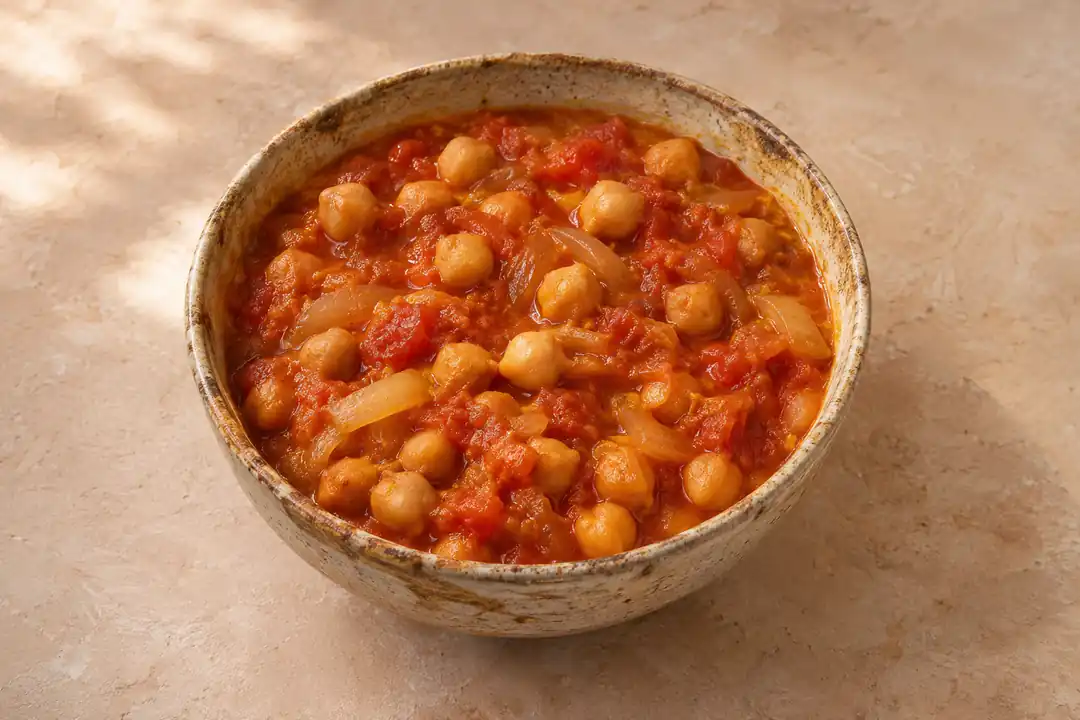
Make a chickpea and tomato stew with pre-cooked chickpeas, chopped tomatoes, and an onion. The onion and turmeric provide the base of the flavor, and once the tomatoes have thickened a bit, add the chickpeas. To get the desired consistency, pay attention to the sound of the sizzling, the texture of the chickpeas, and the marks a spoon makes on the bottom of the pot. These are more useful for different pots and burners than a fixed amount of time.
This recipe has not been tested in the VegDot kitchen. The quantities and times are suggested for about two servings. The featured image was generated using artificial intelligence and is a sample view of the dish.
Ingredients for about two servings
For a medium pot, add 240g of fully cooked and drained chickpeas, 400g of chopped ripe tomatoes or plain canned chopped tomatoes with their juices, 100g of peeled onion, 15ml of cooking oil, 1g of turmeric, 60ml of water to start with, and about 2g of salt. Reduce the salt depending on how salty the tomatoes and chickpeas are. If you like to give the dish a little tang after cooking, set aside 5-10ml of fresh lemon juice. Lemon is optional in this recipe.
The weight of the chickpeas is measured after draining. If you have the can on a scale, subtract the weight of the package and the liquid from the amount needed. One can may be enough for two servings, and you may need to take a little from the second can. Look at the drained weight on the package or weigh the beans at home. For canned tomatoes, the liquid in the can is part of the sauce and counts as part of the 400g weight. If the fresh tomatoes are firm and lack water, have water on hand so you can add a little while cooking.
If you have dried chickpeas, prepare them separately according to the package directions or chickpea preparation guide. First, clean, rinse, and soak them in the appropriate method and cook them. Once they are soft, drain and use the amount specified in the recipe. The cooking time for dried chickpeas is not included in this recipe. Do not add raw chickpeas directly to the tomato sauce. This recipe starts with the cooked chickpeas. [1]
Before turning on the oven
Finely chop the onion so that it softens quickly and spreads into the sauce. The size of the tomatoes depends on the texture you like. If you want a smoother sauce, chop the tomatoes finer. If you like the tomato pieces to be visible on the plate, chop them a little coarser and press some of the pieces with the back of a spoon while cooking. Pour any water that collects on the board into the pot as well. Discarding it can dry out the sauce from the start.
Choose a pot with a fairly wide base so you can spread the onions in an even layer. If the bottom of the pot is thin, start at a lower heat and scrape the bottom a few times after adding the tomatoes. Leave the lid on the pot. You can reduce evaporation by leaving the lid ajar, or thicken the sauce by removing the lid. These two adjustments help control the texture better than adding water haphazardly or turning up the heat all at once.
Before cooking, press a chickpea using the back of a spoon. For this dish, the chickpeas should already be soft enough to break apart under slight pressure. If the center of a chickpea is still firm, cook it separately until it softens. If the chickpeas are very soft and fragile, you can add them to the sauce later and stir more gently to ensure most of them remain intact.
Cooking the dish in a single pot
Heat the oil over medium heat, add the onions, and stir until they become soft and slightly translucent. If the edges of the onions begin to brown before they have softened, reduce the heat and move the onions around in the pot. Add the turmeric and stir a few times to incorporate it with the oil and onions. Then, add the tomatoes; this prevents the spices and onions from remaining over direct heat for too long. If any ingredients have stuck to the bottom of the pot, the liquid from the tomatoes—combined with a few gentle stirs—will help loosen them.
Bring the tomatoes to a gentle simmer. Bubbles should rise slowly, ensuring the sauce does not splatter out of the pot. Once the tomatoes have lost their raw, firm texture, mash some of them using the back of a spoon. If, after dragging the spoon across the bottom of the pot, the sauce does not immediately fill the gap, add a little of the water you have set aside. If the sauce is already quite fluid, you may not need to add the full 60 ml of water. This amount serves as a starting point for adjusting the consistency, as the moisture content of tomatoes can vary.
Add the cooked chickpeas and stir gently until the sauce coats the beans. Continue cooking over low heat until the chickpeas are warmed through and have absorbed the flavors of the sauce. If the chickpeas are already very soft, a few gentle stirs—or simply shaking the pot—will suffice. If there is still too much liquid, remove the lid for a few minutes; stay close to the stove to ensure the bottom doesn’t scorch. If the sauce becomes too dry and the chickpeas are no longer submerged, add water one tablespoon at a time, stirring between each addition.
Finally, taste a small spoonful of the sauce and add salt gradually. Canned tomatoes and chickpeas may already contain salt. Once the desired consistency is reached, turn off the heat and, if desired, add a little lemon juice. For planning purposes, estimate about 10–15 minutes for preparation and 20–30 minutes for cooking. The actual time will depend on factors such as how finely the onions are chopped, the amount of liquid in the tomatoes, and the heat level. Use the softness of the onions and the consistency of the sauce as your guide.
If the texture or flavor is not as expected:
If the dish is too thin, test it by scooping a little sauce into a spoon and pouring it back into the pot. If it runs off the spoon like water, continue cooking with the lid off, stirring occasionally. Evaporation happens faster in a shallow pot, so keep a close eye on it as it nears completion. Another way to achieve a thicker consistency is to mash a couple of spoonfuls of the chickpeas against the side of the pot and stir them into the sauce. This gives the dish a slightly opaque appearance and a softer texture.
If the dish is too thick, first lower the heat. Add a spoonful of water, stir gently, and wait until the consistency becomes uniform. Once the sauce coats the chickpeas again, stop adding water. If the tomato still tastes “raw,” continue cooking the sauce over low heat, adding small amounts of water incrementally if necessary. Save the addition of lemon juice for after this step, as the acidity from both the tomatoes and the lemon can compound.
If the bottom of the pot begins to smell like it is burning, turn off the heat. Carefully transfer the top portion to another container—ensuring you do not scrape up the burnt layer—and taste it. If the bitterness has permeated the entire dish, adding spices or lemon juice will not necessarily fix it. Next time, use a pot with a heavier, thicker bottom, or check the dish more frequently. This issue is more likely to occur as the sauce thickens, since there is less liquid and the sauce remains in prolonged contact with the bottom of the pot.
Serving and Storage
Serve the dish with bread or rice. If serving over rice, ensure the sauce is slightly thinner so it can distribute evenly among the grains. If serving with bread, a thicker consistency makes it easier to scoop up the food. You may serve some greens or a simple salad on the side to allow the flavor of the dish itself to shine. If packing this for lunch, use a suitable airtight container and keep the bread separate so it does not become soggy.
Chickpeas are a type of legume. This dish is not suitable for anyone with a chickpea allergy. Check the labels on the chickpeas, tomatoes, and any pre-made seasonings, and be mindful of any additional ingredients. Adding wheat bread, pre-made sauces, or spice blends can alter the composition of the meal. If you are preparing food for someone with an allergy, clarify the specific ingredients used and the potential for cross-contact with shared kitchen equipment beforehand.
Place any leftovers in a shallow container and refrigerate them—at a temperature of 4°C (40°F) or lower—within two hours of cooking. If the ambient temperature is above 32°C (90°F), this window is reduced to one hour. According to FoodSafety.gov, properly stored stews and soups can be kept in the refrigerator for 3 to 4 days. When reheating, take out only the portion you need. If the dish has thickened during storage, simply add a little water to the portion you are preparing to serve. [2] [3]
If you wish to adjust the recipe quantities
You can halve the ingredients for a single serving, but be sure to use a smaller pot. If you use a wide pot for a half-batch, the liquid may evaporate too quickly, causing the onions to stick to the bottom. For four servings, double the ingredients, and ensure beforehand that there is enough room in the pot to stir the contents. You do not need to double the amount of water right from the start; first, assess the consistency of the sauce using the liquid released by the tomatoes. If you are weighing the food to portion it out, note the weight of the empty container first, then subtract it from the total weight at the end. This allows you to distinguish the actual portion size from your initial estimate.
Summary
To prepare this dish, soften the onions, cook the tomatoes separately in the same pot, and then add the fully cooked chickpeas to the sauce. Adjust the water and salt gradually. Ultimately, the sauce should coat the chickpeas, and its consistency should be appropriate for how it is served—whether with bread or rice. If you are starting with dried chickpeas, account for their cooking time separately.
Frequently asked questions
Can I use canned tomatoes instead of fresh ones?
Yes; use plain chopped tomatoes (including their liquid) in the suggested quantity. Check the label for added salt or seasonings, and adjust the flavor toward the end of the cooking process. If the mixture is too thin, cook it for part of the time with the lid off.
Why haven’t the chickpeas absorbed the sauce?
The sauce might have been too thin when the chickpeas were added, or the chickpeas themselves may still have been firm. Thicken the sauce slightly before adding the chickpeas, and ensure the chickpeas are fully cooked. If the chickpeas are already soft but the sauce is too thin, simply simmer the mixture uncovered for a few minutes.
How can I measure the amount of chickpeas without using a scale?
Read the drained weight on the can. If there is no weight listed, add the bulk of the chickpeas first and check to see if the sauce covers all the beans. Eye measurements are useful for adjusting texture. To replicate the suggested amount, record the exact weight of the ingredients before cooking.
Can this dish be prepared for multiple servings?
You can increase the amount of ingredients to fit the size of the pot and divide the rest into shallow containers. A full pot will take longer to cool, so don’t leave food in the same large container on the counter. Follow storage times and temperatures as per safety guidelines. [2] [3]
Leave a Reply