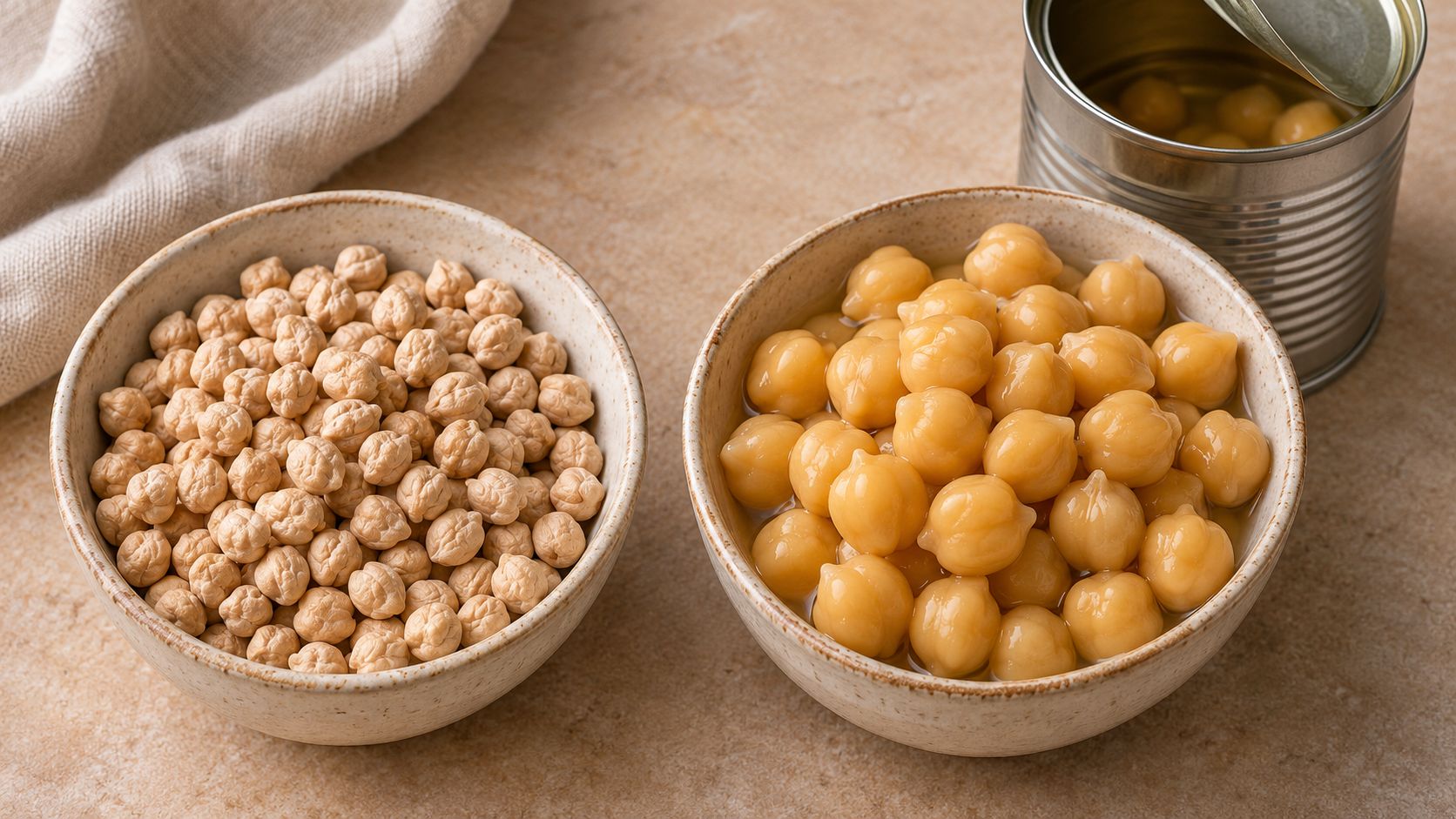
Canned chickpeas are often used when you’re short on time to prepare a meal. You can cook dried chickpeas in batches and adjust the texture at the end of cooking. For comparison, use cooked, drained chickpeas. The weight of the can with liquid and the weight of the dried chickpeas are two different numbers and do not directly translate to the same amount of chickpeas ready to eat. When shopping, consider preparation time, storage space, and the food you’re cooking, in addition to price.
Before buying, determine the use of chickpeas.
For salads and cold dishes, it’s important that the kernels remain intact after draining. For hummus or puree, you want the chickpeas to pop open easily under the pressure of a spoon. For a dish that will be left on the stove after the chickpeas are added, the kernels should be pre-cooked and soft enough that they won’t fall apart with a few minutes of simmering. This simple difference will determine what texture to look for when buying or cooking.
If you’re planning to cook for the same meal and don’t have ready-made chickpeas at home, a clear-labeled, ready-to-eat can is a more practical choice. Also, consider the time it takes to check the container and drain. If you know in advance that you’ll be making two or more servings of chickpeas, the dried version is an option for cooking at once and dividing. In this case, make sure you have extra containers and space for the cooked chickpeas before you start. Cooking a large batch is more economical when the extra portions are actually used.
Don’t confuse canned chickpeas with canned ready-to-eat meals that include chickpeas. If you’re shopping for a salad or recipe with a specific seasoning, look for plain chickpeas. Also read the ingredients list and storage instructions on the package of ready-to-cook chickpeas. The product may come in a can, jar, or refrigerated package, and the storage instructions before opening may not be the same.
What does the weight on the package mean?
In canned goods, the net weight can cover both the beans and the liquid in the container. The drained weight, wherever listed, is more appropriate for a recipe that calls for just the beans. If you can’t find the drained weight on the package, you can drain the chickpeas after opening them and then weigh them. For future purchases, record the weight with the name and size of the same package. Do not use the result from one can for all packages.
With dried chickpeas, you have the weight of the package before soaking and cooking. As they absorb water, their weight and volume change. The Alberta Legume Growers Association’s guide provides a sample volumetric yield, but for accurate servings, it’s best to weigh the chickpeas after cooking and draining. Variations in grain size, cooking time, and the amount of water remaining will affect the results. If you need a specific amount for a recipe, weigh a portion of the cooked chickpeas and set aside the excess. [1]
To compare costs, divide the price of each package by the actual amount of cooked chickpeas you will use in your dish. If a portion of the package will not be used in a timely manner, account for it separately in your comparison. Calculating the cost per 100 grams of *usable* chickpeas provides a more accurate comparison than simply looking at the price of a package of dried chickpeas versus a canned product. When calculating this at home, you may also want to factor in preparation time, energy costs (fuel), and the number of dishes used—all of which depend on your specific cooking method and lifestyle.
Preparing Dried Chickpeas
Spread the dried chickpeas out on a tray or plate and remove any small stones or damaged beans. Then, rinse the chickpeas in a colander. Follow the instructions on the package—or general guidelines for preparing legumes—regarding the soaking method and duration. Ensure the container is large enough to accommodate the chickpeas once they have absorbed water and expanded. If you are unsure about the specific variety, take a look at a few of the dry chickpeas before you begin to see if they are roughly the same size; beans of significantly different sizes may not soften uniformly in the same pot. [1]
After soaking, drain the chickpeas, add fresh water, and place them on the stove. Cook at a gentle simmer; toward the end of the cooking process, test a few chickpeas taken from different parts of the pot. If the outer skin has softened but the center remains firm, continue cooking. For salads, you want the center to be soft while the bean retains its shape. For hummus, you can continue cooking until the chickpeas are soft enough to be easily mashed with a spoon. Adjust the cooking time based on the specific type of chickpeas and the instructions provided on the packaging. [1]
If you are cooking a large batch of chickpeas intended for two different uses, set aside the portion needed for a salad or stew once the beans are tender yet still intact. Continue cooking the remainder until it reaches the desired consistency for a purée. This approach allows you to use the stove just once while obtaining two different textures. Keep a record of the cooking time and quantities used so you can better estimate the cooking time for future batches. If the cooking speed varies, rely on the tenderness of the beans rather than strictly following the clock.
Preparing Canned Chickpeas and Reading Labels
Before purchasing a can, check the label for the type of chickpeas, added ingredients, weight, and preparation instructions. The term “cooked chickpeas” indicates the stage at which the ingredient should be added to your recipe. The instructions on the packaging will specify whether the product is ready to eat or requires further preparation. Do not purchase any can that appears swollen, is leaking, or is otherwise damaged. Once at home, after opening the can, assess the product’s appearance and the provided instructions; if you have any doubts regarding the safety of the contents, discard it and use a fresh, undamaged package instead.
If the liquid inside the can is not required for your recipe, drain the chickpeas. For salads, you may briefly rinse the drained chickpeas under water to remove any thick, starchy liquid coating them. If you need more liquid for a stew, you can adjust the sauce by adding a small amount of water, then taste it to check the flavor. If the recipe specifically calls for the liquid from the can, be sure to account for its salt and seasoning content when finalizing the flavor of your dish. You do not need to add the liquid from the can to every dish just because it was in the container.
When comparing salt or sodium content, first check the serving size. Two labels might show similar numbers, but one could be based on a smaller serving size or a different unit of measurement. Convert the values to an equivalent weight, and check whether the label refers to the “drained” state or the “ready-to-eat” state. If the basis for the provided information is unclear, do not guess; instead, contact the manufacturer to ask about that specific product. [3]
Storage and Portioning for Future Meals
After cooking, set aside the amount of chickpeas needed for today, and place the remainder into several shallow containers to allow for rapid cooling. Label them with the preparation date and the approximate size of each portion. If you are freezing portions for later use, choose portion sizes that match your typical household meals so that you do not have to thaw the entire batch at once. Under normal conditions, perishable cooked foods should be refrigerated within a maximum of two hours. In temperatures above 32°C (90°F), FoodSafety.gov recommends a limit of one hour. [2]
Once a can is opened, store any leftovers according to the manufacturer’s instructions. If you add the chickpeas to another dish, take into account the preparation and storage guidelines for that specific meal. The “use-by” or expiration date on the original, unopened package does not apply once the product has been opened. If you typically use only half a can, either choose a smaller package from the start or decide how you will use the remaining half in an upcoming meal.
To create a useful note, record three details: the dry quantity (or the name/size of the package), the cooked and drained weight, and the texture that worked well for that specific dish. If you divide a batch of chickpeas among several containers, take a photo of the label on each container or note down the weight. Next time, you can evaluate the cost and time based on your actual household habits. This record helps clarify the difference between a generic “cup of chickpeas” and the specific amount actually required for your meal.
Track the entire process—from purchase to consumption—just once.
When making a typical purchase, start your decision-making process with a question: “How much prepared chickpeas do I need for today?” If the answer is just a single bowl—and you have no plans for the rest of the week—a smaller quantity is likely the better choice. If you need chickpeas for dinner, a packed lunch, and another meal, calculate the total amount required for all three. In this case, you might be able to fit the soaking and cooking time into your daily schedule and prepare enough for all those meals at once. Conversely, if you arrive home in the evening and need dinner ready within half an hour, that same assessment will lead you to a different decision.
After your purchase, record exactly what you used. If a canned product label lists a “drained weight” but the actual amount differs, note your own findings for that specific package size. If you cooked dried chickpeas, distinguish between “active time” (hands-on work) and “waiting time” (passive cooking); an hour on the stove is not the same as an hour of continuous labor in the kitchen. Also, note if you needed to add water during the process or if it took longer than expected to reach the desired texture. This information will help make your future purchases better aligned with the actual realities of your household.
Summary
For a quick meal, choose pre-cooked chickpeas based on their drained weight and ingredients. For multiple meals, soak and cook dried chickpeas according to the package instructions, then portion them out after draining. Evaluate the price based on the usable quantity, and consider the texture in relation to the dish you intend to prepare. If you end up with a surplus, have a plan in place—before you start cooking or open the package—for how you will use or store the extra portion.
Frequently asked questions
Can I replace dried chickpeas with canned chickpeas in a recipe?
If the recipe starts with cooked chickpeas, prepare the dried chickpeas first and soften them completely. Then, equalize the cooked and drained amount to the recipe size. Substituting the dry weight for the same weight of cooked chickpeas will change the ingredient ratios.
How to keep seeds healthy for salad?
Choose chickpeas that are fully cooked and fairly firm. When draining and mixing with the sauce, don’t crush the seeds. If the chickpeas are too soft, you can save them for pureeing and use the part that holds its shape better for the salad.
How do I know if the product is ready to use?
Read the instructions on the package and distinguish between terms like dried chickpeas, cooked chickpeas, and ready-to-eat. If the preparation method is not clear, the manufacturer’s official guide will help you. The shape of the container or the appearance of the beans alone is not enough to make this decision.
Is it always cheaper to buy a large package?
Consider the usable weight, speed of use, and storage space. If the extra amount is used in multiple servings, a larger package may be useful. If you have leftovers or don’t have the storage space, the actual cost per serving can be more than what the price tag indicates.
Leave a Reply