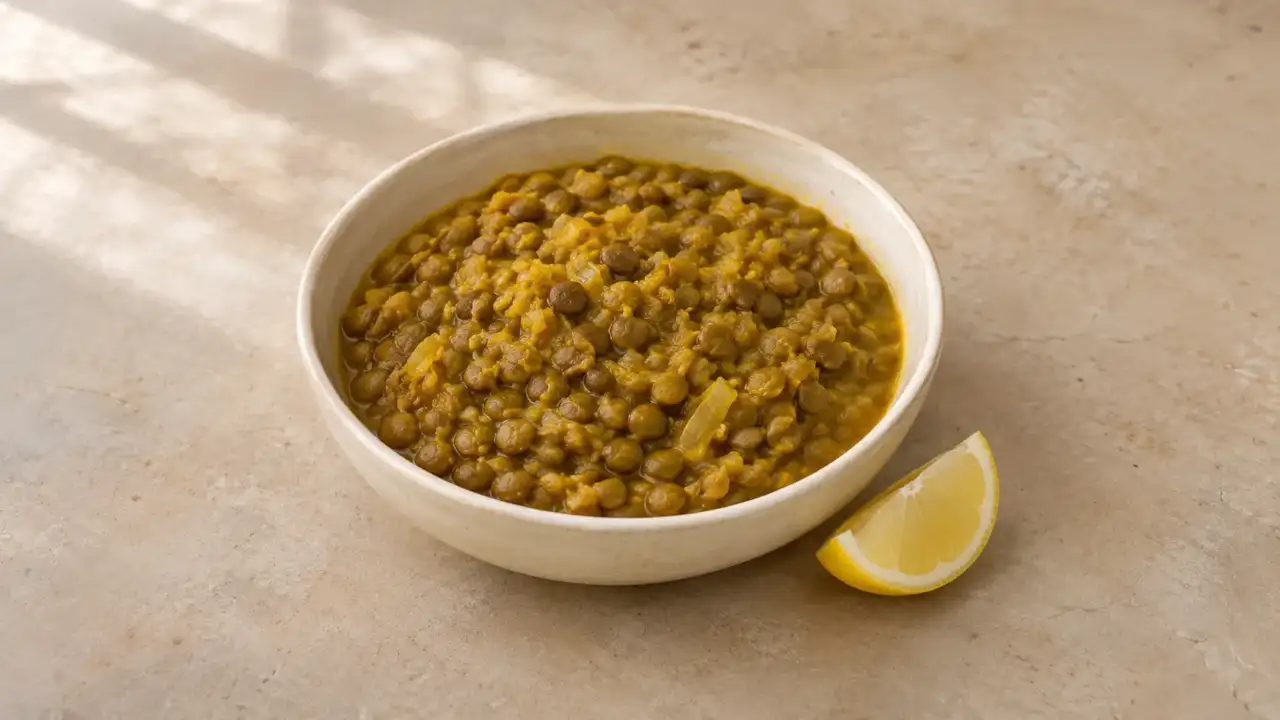
To make a simple lentil stew, cook 150g of green lentils with onion and turmeric. When the lentils are soft, mash a little of the lentils to thicken the dish. The following quantities are suggested for about two bowls.
About this recipe and image This recipe has not been tested in the VegDot kitchen. The featured image was generated using artificial intelligence and is a an illustration of the lentil stew.
Ingredients
- Whole, dried green lentils, 150 grams.
- Peeled onion, 90 grams.
- Liquid oil, 12 grams.
- Turmeric, 1 gram.
- Water, 600 ml to start.
- Salt, 2 grams.
- Fresh lemon juice, 10 ml.
How to make adasi
- Clean the lentils and rinse them in a colander. Finely chop the onion.
- Heat the oil in a saucepan over medium heat. Sauté the onion until soft. Add the turmeric and sauté briefly.
- Add lentils and 600 ml of water. Once boiling, reduce heat and leave the lid of the pot ajar. Test a few lentils after 20 minutes. If the water dries up before the lentils are tender, add 30 ml of hot water at a time.
- When the center of the grain is soft, mash about a ladle of lentils with the back of a spoon and return to the pot. Add the salt and stir.
- Turn off the heat, add the lemon juice, and pour the lentils into bowls.
Cooking time depends on the type of lentil. Whole green lentils take longer to soften than split red lentils. Dry Lentil Cooking Guide .
Storing lentil stew
Refrigerate leftover adasi in a shallow, covered container within two hours of cooking. If the temperature is above 32°C (90°F), refrigerate it within one hour. Refrigerated leftovers generally keep for 3 to 4 days.
Get the ingredients ready before the pot goes on
Use a scale to weigh the lentils and onion before you begin. Spread the lentils on a plain plate so you can spot damaged pieces or anything that does not belong in the bag. Rinse them in a sieve under running water. The recipe is written for dried, whole green lentils. Packages that say split red lentils describe a product that softens and thickens the water differently. Save a photo of the package if you are trying a new brand. That makes your notes more useful the next time you shop.
Weigh the onion after peeling it. Cut it into pieces of roughly similar size so they soften at about the same time. For the oil, choose one suitable for cooking whose flavor you want in the finished dish. Put the turmeric and salt in separate small dishes because they go in at different points. Set out the initial water and a small jug for any extra hot water. Keeping the ingredients next to the stove makes the method easier to follow without responding to every change by lifting the lid and checking.
Choose a saucepan that lets the lentils sit in liquid with some room above the surface when it boils. A very wide pot can lose water more quickly; a very small one gives you little room to stir. Try the lid before filling the pot. The method calls for leaving it ajar after the boil, so a lid that can sit securely a little off center is helpful. Use a spoon or a small ladle that can reach the base. You can mash the lentils in a bowl if the side of your saucepan is hard to work against.
Soften the onion and watch the water level
Start the onion on a heat that lets it soften steadily. Stir so that it cooks evenly and reduce the heat if the edges begin to darken while the pieces are still firm. The onion can remain pale in this version. Add the turmeric briefly and stir it through the oil and onion before adding the water and lentils. The pot is now doing a different job. Once the mixture has reached a boil, lower the heat to a simmer so the lentils cook in the liquid rather than losing water too fast.
Use the first check in the recipe as a point to observe, not as a deadline. Scoop out a few lentils from different parts of the pot and let them cool enough to taste safely. The center should yield without a hard core. If one is tender and another is still firm, return the rest to a gentle simmer and try another sample later. Cook time can differ across bags and stoves, which is why the method also gives a texture to look for.
If the water falls below the lentils while they are still firm, add a measured splash of hot water and stir gently. The main recipe suggests adding small amounts at a time so you can see what the pot needs. Record roughly how much extra you used. If you change the pot or open the lid more often the next time, the amount may change again. These observations can help you produce a similar bowl without assuming that an exact time or water volume will work in every kitchen.
Adjust the texture after the lentils are tender
Take out a ladle of tender lentils and press some against the side of a bowl with the back of a spoon. Put the mashed portion back and stir. This thickens the surrounding liquid while leaving some lentils visible. Wait long enough to see what the mixture looks like before mashing another ladle. If the stew is for a small bowl and spoon, a little more liquid may be pleasant. If you plan to scoop it with bread, a thicker consistency may be easier to serve.
If your bowl becomes too thick, stir in a little hot water at a time and check the flavor afterward. Extra water can dilute the seasoning and lemon. If it is too thin, allow it to simmer gently with the lid off for a short period, watching the base so the stew does not catch. Mashing another small portion can also help if you want to retain the liquid. Choose the adjustment that changes only the part you need to fix.
Taste before you add extra salt. The measured amount in the ingredients is the starting point for this proposed recipe, and the water you used affects the final concentration. Add the measured lemon juice off the heat, then test a spoonful. If people at the table like different levels of acidity, offer a wedge separately instead of changing the whole pot. It is easier for each person to adjust a bowl in front of them than to undo a change already made to the stew.
Serve it according to the meal you are making
A plain bowl can go with bread, fresh herbs or vegetables according to what you have. If the adasi is one dish among several, serve smaller portions and leave the accompaniments separate. If you are relying on it for breakfast or lunch, decide what else you want alongside it and set that out while the stew simmers. Adding a side can change the meal without changing the base recipe or the amount of water it needs.
For a shared table, label optional toppings when guests need to know what they contain. A person might add fried onion, chopped herbs or more lemon in their own bowl. If you use a prepared topping, read the ingredient list separately from the lentils. Keep optional items separate where dietary preferences differ, and address any allergy or cross-contact questions for the whole meal, including the bread and utensils. The plant ingredients in the basic recipe do not establish that every accompaniment is suitable for every eater.
You can also divide the two servings before adding extra seasoning. If one serving is for later, set it aside in a suitable cooling container and follow the storage guidance in the article. Avoid leaving the entire saucepan out while deciding what to do with it. On the day you serve the saved portion, check the consistency after reheating safely. A small addition of water can help if the mixture thickened in the refrigerator.
Adapt the quantity by checking the pot
If you make a smaller batch, measure each ingredient and use a smaller saucepan to keep the depth of the liquid workable. Watch the pot closely near the initial check because a shallow amount can lose water quickly. The individual lentils still have to become tender, so reducing the amount does not necessarily reduce their time in the same proportion. If you double the recipe, choose a pot with room for the mixture to boil before you reduce the heat. Stir from the bottom occasionally.
Judge the strength of the seasoning after the lentils and water have settled into their final texture. If the stew will be split among people, taste a cooled spoonful rather than adjusting from the smell alone. Record the quantity you made and the amount actually served. A note about portions makes it easier to choose a useful scale the next time. It also tells you whether a larger batch really saves work or simply creates a portion with no planned use.
The initial ingredients list is designed to be reproducible. If you add potatoes, carrots or another pulse, you are making a different version with different demands on the water and time. Try such a change in a small pot and write down when you added it. A firm vegetable needs enough time to soften, and a previously cooked ingredient may go in later. Keep the base recipe available so you can tell which changes come from the addition and which come from the lentils.
Conclusion
Start with 600 ml of water and when the lentils are soft, adjust the consistency of the lentils by mashing some of them. Add the lemon juice after turning off the heat.
Frequently asked questions
Do green lentils need to be soaked in advance?
No soaking is required for this method. Clean the lentils, rinse them in a colander, and follow the instructions on the package.
How do I thicken lentils without flour?
When the lentils are cooked, mash about a ladleful of the seeds with the back of a spoon and return them to the pot. If they are still liquid, leave them on low heat for a few minutes with the lid off and stir.
Why are lentils still hard after 20 minutes?
Check at 20 minutes. If the center of the grain is firm, let it simmer. If the water has reduced, add 30 ml of hot water at a time and test the grains again after a few minutes.
Leave a Reply