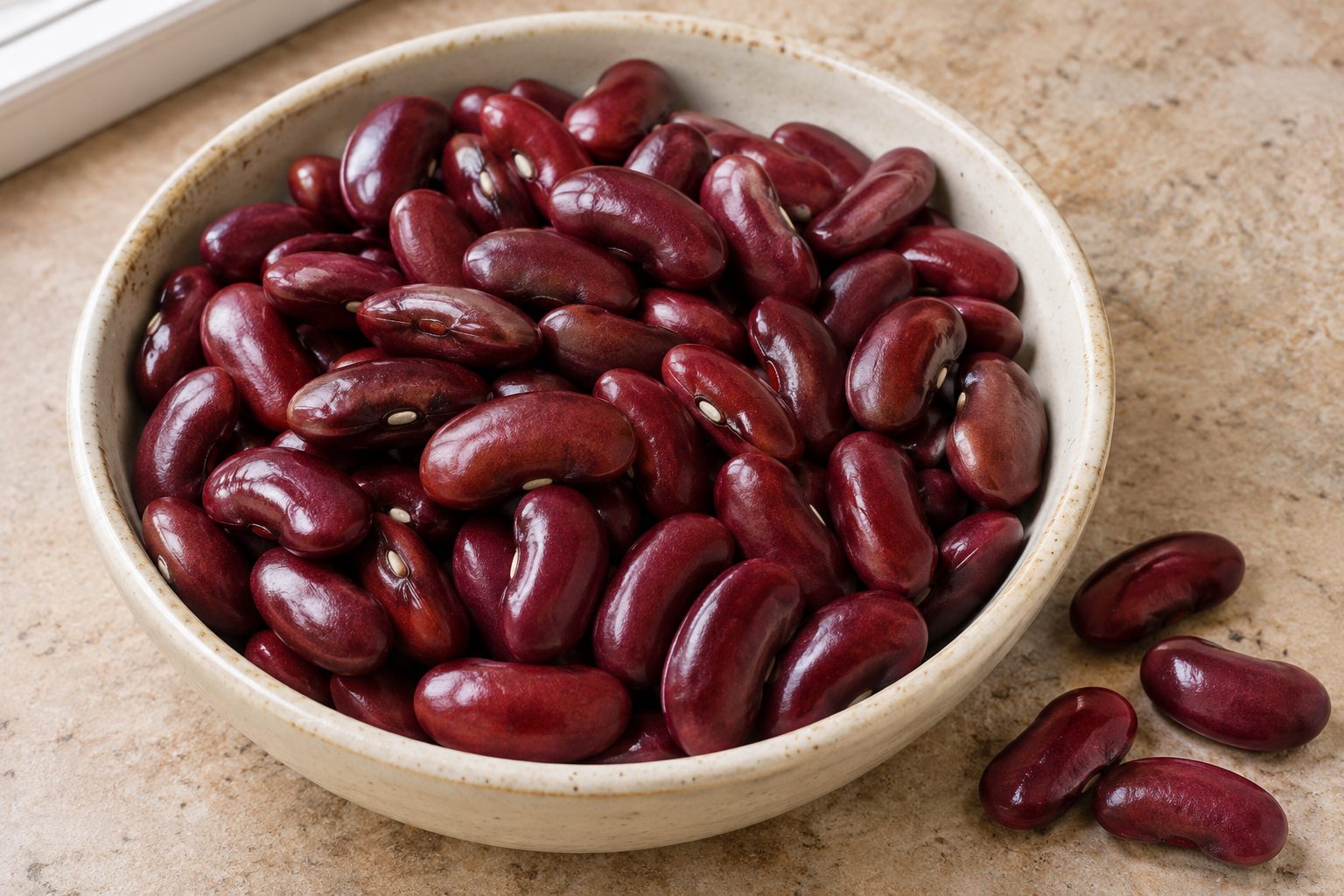
For dried red kidney beans, the US Food and Drug Administration advises soaking for at least five hours, discarding the soaking water and boiling briskly in fresh water for at least 30 minutes. Continue cooking until tender. Do not use a slow cooker to cook raw kidney beans. Use ready-to-eat canned beans when you need a shorter route.
Know which form of bean you bought
A dried kidney bean is not the same starting ingredient as a cooked one. A recipe that says to add beans and heat the stew for ten minutes often means beans that are already cooked. If your pack is dry, the bean must go through the proper preparation and cooking before it is ready to use. Read the ingredient line for words such as dried, cooked, drained or ready to eat. If that information is missing, the recipe does not give you a safe basis for choosing a shortcut.
The main concern with raw or undercooked red kidney beans is a lectin called phytohaemagglutinin, often abbreviated PHA. The FDA’s Bad Bug Book describes illness linked to these beans, including nausea, vomiting, abdominal pain and diarrhea. A cooked dish may look fine even when its preparation was inadequate. Do not taste raw, soaked or partly cooked kidney beans to decide whether a batch has had enough heat. The method matters more than the appearance.
For a weeknight dinner, a can labeled fully cooked or ready to eat is a practical choice. A pouch can also be ready to eat, but check its instructions rather than relying on the packaging style. Some packages contain partially prepared food and tell you to cook it. Once you know you have a cooked product, follow its directions for draining, rinsing, reheating and storage. The dry-bean soaking and boiling procedure applies to dried beans, not to a commercially cooked bean that is already ready to eat.
Prepare a dry batch before cooking
Start by reading the whole procedure and setting aside enough time. Sort the dry beans on a tray or shallow plate, removing any debris. Rinse them and put them in a container with enough water to remain submerged as they swell. The FDA advises soaking for at least five hours. The soaking period is a preparation step; it does not replace boiling. A schedule that leaves time for both parts is safer and easier to follow than beginning an hour before dinner.
Use the soaking time to plan how you will cook the beans in fresh water. You need a pot with room for the water to boil without spilling and enough space for the beans to move. Once the soak is complete, drain it completely and discard the water. Refill the pot with fresh water. A colander makes the transfer easy, but you can also use a separate bowl for soaking so that old and new water are clearly distinguished.
A simple timer or a note on the counter can help when several people use the kitchen. Write down when the soak began and who will start cooking the beans. If you cannot establish that a batch has been properly soaked and cooked, do not use it as a ready-to-eat ingredient. The immediate fallback is a can you know is fully cooked. Planning a backup is especially useful when you are preparing a dish for guests and may be tempted to rush the process.
Boil in fresh water before finishing the dish
Bring the beans and fresh water to a brisk boil on the stove. In the method described in the FDA’s consumer guidance, boil them for at least 30 minutes. Start the timer when the boil has been reached. A rolling boil has continuous active bubbling; a few bubbles around the edge or a warm pot on a low setting do not describe the same step. Leave enough room and keep an eye on the pot so it can boil steadily without overflowing or drying out.
After the boiling step, continue cooking until the beans are fully tender. Cooking time can vary with the batch, and it is sensible to budget extra time rather than expect every bean to be ready as soon as the timer ends. The texture check comes after the required boiling step. If the beans are still firm after that, keep cooking. A soft bean is useful for judging whether the dish is pleasant to eat, but it is not a substitute for knowing that the preparation and boiling happened.
Cook dried kidney beans separately before putting them into an oven dish, a thick stew or a recipe that gives little time on the stove. This keeps the preparation step easy to monitor. It also lets you decide how much cooking liquid to use in the finished food. With fully cooked beans, you can add them near the end of a sauce to keep them from breaking up or simmer them longer if you want the beans to soften into the dish.
Why a slow cooker is not the shortcut
The FDA describes cases involving kidney beans cooked at low temperatures. A slow cooker is designed for a different heating pattern from a pot at a brisk boil. Simply leaving raw or soaked kidney beans in the cooker for many hours is not the procedure described in the guidance. Do not replace the separate soaking and boiling step with a long cooking time, a warm setting or an overnight cycle.
If a slow-cooker recipe is written for cooked beans, start with beans that are ready to eat, such as a suitable canned product. Follow the recipe and the appliance instructions for the rest of the dish. Keep the distinction visible in your own notes: a line saying canned, drained kidney beans is easier to follow later than one saying just beans. If you change to dried beans on another day, prepare them properly before adding them to that recipe.
This guide gives a stovetop route from a named source. It does not assign a generic time or setting for every electric pressure cooker or multicooker. Appliances and programs vary. A timer copied from a different machine is not the same thing as verified instructions for your bean and equipment. If you do not have dependable instructions for another method, use the documented stovetop method or choose cooked canned beans.
Keep cooked beans separate from raw prep
When the beans are cooked, decide which ones will go into today’s food and which ones you will store. Put away portions you do not plan to eat rather than leaving the whole pot on the counter while you finish dinner. The UK Food Standards Agency advises cooling leftovers quickly, refrigerating them within two hours and eating them within 48 hours or freezing them. Smaller containers help the food cool. If a pack gives shorter storage instructions for opened beans, follow those.
Use a clean spoon for portioning and put a date on containers that look alike. You can store enough for a nearby meal in the refrigerator and freeze the remaining portions. Give each container a specific intended use, such as beans for a soup or enough for one serving with rice. This reduces the chance of reheating a whole batch to take only part of it. Reheat only the portion you will eat and heat it until steaming throughout, in line with the UK guidance.
If a batch was left out too long or the storage history is unknown, smell or appearance cannot establish that it is safe. This is a separate question from the kidney bean lectin. Proper initial boiling addresses the dry bean preparation issue, while prompt cooling and storage address what happens after cooking. Both parts matter. Do not assume that reheating will solve a storage problem or a previous failure to follow the cooking method.
Plan the meal around the reliable option
For chili or another tomato stew, decide first whether you have fully cooked beans. If you are cooking dried beans today, do the soaking and separate boiling early enough that dinner can wait for them to become tender. If the meal is already under way, use a can or a known cooked portion that has been handled safely. A reliable meal plan lets the timing of the bean preparation determine your choice instead of trying to force dried beans into a short recipe.
For a cold dish, ready-to-eat means the bean was already cooked appropriately, not that it was softened by soaking. Drained canned beans can be used according to their directions. If you cooked beans yourself, use the same care with cooling and storage as for any prepared leftovers. If you plan to pack the salad, decide whether you can keep it cold until you eat it. Adding a dressing does not replace refrigeration.
If you share cooking with other people, write a short note beside the dry package or in your recipe. Include the form of bean, the required steps and the backup. For example, specify a cooked and drained weight in the dish itself and keep the dry-bean preparation as a separate instruction. This prevents a cook from substituting a cup of dried beans where the recipe expects a cup of fully cooked ones.
If you suspect a batch was undercooked
Stop serving the food if you realize the beans went straight from soaking into a brief simmer or a low-temperature appliance. Do not taste another spoonful to check. Make a note of the ingredient, the times and the cooking method, especially if someone has already eaten the dish. That information is more useful than a guess about the texture. If someone feels unwell after eating the food, contact an appropriate local poison information service or health professional for advice. For severe symptoms, use the urgent medical service where you are.
A safety guide can help you spot a preparation error. It cannot establish the cause of symptoms in an individual. Different illnesses can have overlapping signs, and other ingredients or storage conditions may also matter. Keep the description factual when asking for advice: what was eaten, how it was prepared, when it was eaten and when symptoms began. Do not present a self-diagnosis as a certainty.
You can prevent the same problem next time by changing how the ingredient is described or stored. Keep a clear distinction between the dry package and containers of cooked beans. Make the proper stovetop steps part of the recipe or use a fully cooked product when there is not time. The most useful prevention is a reliable sequence that a second person could follow without needing to guess which parts of the process had already happened.
Work through a preparation schedule before cooking
Suppose you want to serve a dish in the early evening. Read the cooking guidance before starting and count backward from the time you want the beans tender. Allow at least five hours for the soak and at least 30 minutes at a brisk boil after replacing the water, plus time to reach the boil and to finish cooking until tender. Leave a margin for slower beans and for the rest of the dish. If the schedule does not fit your day, use a ready-to-eat product rather than trying to make each step shorter.
A good schedule also says what to do if cooking is interrupted. If you are not sure when the boil was reached, do not count time at a lower temperature toward the minimum. If you have lost track of the handling or the pot has been left out for an unsafe amount of time, do not rely on the schedule alone to salvage it. A clearly identified can of cooked beans is a simpler backup than guessing how much of the procedure happened.
Keep a separate note for each form you buy. Dried beans belong with the preparation instructions. A can belongs with the opened-storage directions and the drained quantity you expect to use. A container in the freezer should identify beans already cooked, the date and the planned dish. This way the cook who opens the freezer does not have to decide whether a container holds raw soaked beans or a finished ingredient. If a container cannot be identified, do not assume it is ready to eat.
Think about where the beans are in the finished meal. A smooth dip, a soup and a layered casserole can all contain kidney beans, but none shows by appearance that the dry beans went through the appropriate method. Add fully cooked beans before blending or assembling. If the beans will be served cold, follow the same initial dry-bean guidance and then cool them safely. Serving temperature does not change the preparation required.
Check the source again when someone recommends a new method. Ask whether the instruction applies to red kidney beans specifically, whether it assumes a soak, whether fresh water is used and whether the device reaches the stated cooking condition. A recipe that omits those details is not equivalent to the FDA consumer method. You can still cook the dish with a suitable ready-to-eat product. Keeping that option available lets you follow the recipe without experimenting with the safety step.
Summary
Use ready-to-eat beans when a recipe calls for cooked kidney beans and time is short. For dried red kidney beans, the FDA consumer method is to soak for at least five hours, discard the water and boil briskly in fresh water for at least 30 minutes before continuing until tender. Skip the slow cooker for raw beans. Treat cooling and storage as separate steps after cooking.
Frequently asked questions
Can I eat kidney beans after soaking them?
No. Soaking is a preparation step. Discard the water and follow the fresh-water boiling procedure before treating the beans as cooked. A soaked bean is still a raw ingredient.
Do I need to soak and boil canned kidney beans?
The dry-bean procedure is not required for a can labeled fully cooked or ready to eat. Follow the package instructions. If the product calls for further cooking, follow those instructions rather than guessing from the package.
What if the beans are still hard after 30 minutes of boiling?
Continue cooking until they are fully tender. The FDA’s minimum boil is not a promise that every batch will be ready to eat at that point. Do not shorten the initial boil because a bean starts to feel soft earlier.