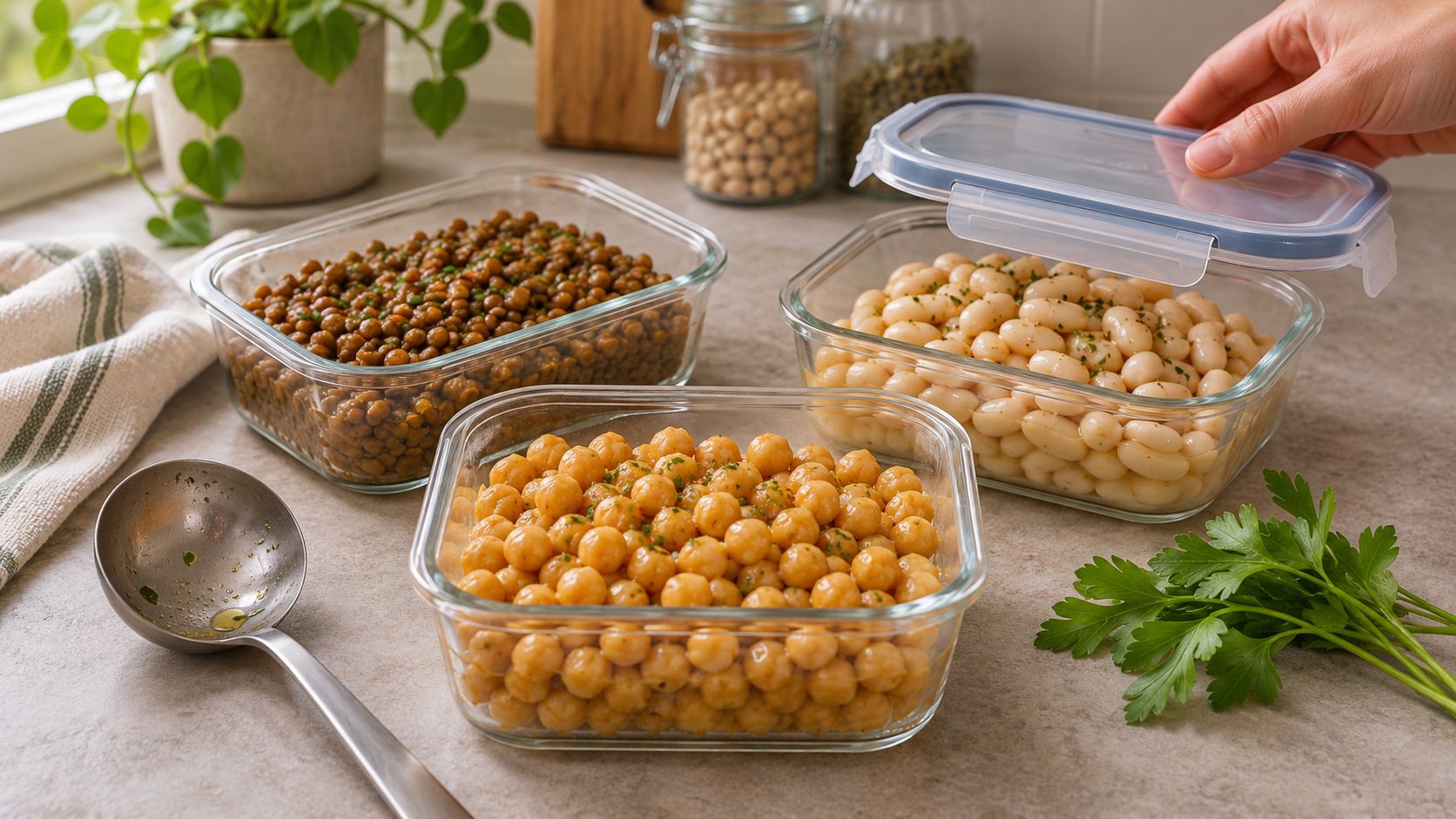
Make a batch with two or three specific meals in mind. Decide what will be used soon and what will go straight into the freezer. A small amount of planning keeps the same beans useful in different dishes and avoids leaving a large pot of leftovers without a destination.
Start with the meals, not the biggest pot
Write down the next time you can eat at home, the next meal you will take with you and one occasion when a freezer portion would help. If all three meals need the same bean in different forms, make one batch. If you will only be home once in the next two days, cook a smaller amount or plan to freeze most of it. The size of your favorite pot should not decide how much food you make.
A good batch ingredient is familiar enough that you can name uses for it without opening a new recipe. Chickpeas can be tossed with vegetables, mashed into a filling and simmered in a tomato sauce. Lentils can go into a sauce, a soup or a bowl with a grain. One type of bean may be more useful than a mixed batch because you can use it in more than one meal without all the dishes tasting alike. Choose according to what is already in your cupboard and what you have time to prepare.
Separate the idea of batch preparation from the idea of doing everything from dried ingredients. A cooked canned product saves time when you do not know what your week will look like. Dried pulses can be useful if you cook them regularly and have a reliable method. A hybrid plan also works: cook one batch when you have time and keep an unopened can for a day when the batch runs out. Buy the amount you will use, not the amount a generic meal plan assumes.
Estimate portions in a way you can repeat
Think in terms of what your meal needs. If you are making a soup, measure how much cooked bean you add to the whole pot. If you are planning a grain bowl, put a usual serving into the bowl once and note the volume or weight. A mash may take a different amount. Recording portions for those meals gives you a better guide than making every container the same size because it is easy to stack them.
A simple example is two bowls and a soup. Measure the cooked amount you normally use in a bowl and set aside two portions. Put the soup amount in a separate container rather than combining everything and estimating later. If the amount you cooked is smaller than expected, fill the portions for the meals that depend on it first. A bowl can often be adjusted with another protein you already have. A planned recipe with a specific quantity may be less forgiving.
If your household alternates between one and several people at dinner, prepare both single and shared portions. The aim is to thaw or reheat an amount you can use without repeated handling. Write both the date and a practical use on the label. A note such as two bowls or one pot of soup is easier to act on than an unlabeled container you have to open to identify. If a portion was already seasoned, include that detail too.
Choose a safe starting method for each pulse
Look at the packet before planning the cooking time. Dried lentils, chickpeas and different beans do not have the same preparation instructions. Sort and rinse dry ingredients as appropriate and follow dependable guidance for that type. Dried red kidney beans require particular care: the FDA consumer guidance advises soaking them for at least five hours, discarding the water and boiling briskly in fresh water for at least 30 minutes before continuing until tender. A slow cooker is not a substitute for that method.
If the batch includes several dry pulses with different requirements, it is easier to cook them separately. One ingredient may become soft long before another has finished cooking, and you may lose track of which preparation steps each received. Combining them after cooking gives you more control over texture and over what goes into each future meal. You can also combine a home-cooked ingredient and a fully cooked canned one if both fit the dish.
For cans and pouches, read whether the product is fully cooked and what to do after opening. Drain or rinse if the product and planned use call for it. Measure the drained quantity when the recipe asks for cooked beans, because the total package weight may include liquid. If you only need part of a can, decide immediately how you will store the rest. Follow the package instructions and use the shorter storage period if they specify one.
Cool, label and store the batch promptly
Plan containers before you cook. When the food is ready, divide what you will keep into smaller, shallow containers rather than leaving a deep pot to cool on the worktop. The UK Food Standards Agency advises getting leftovers into the refrigerator within two hours and eating refrigerated leftovers within 48 hours or freezing them. Apply the directions for your own product if they are stricter. Freeze meal-size portions you will not use in time.
A useful label includes the kind of pulse, the date and the quantity or intended dish. If you freeze a portion with some cooking liquid, leave space for it to expand and use a freezer-safe container. Stack containers only when doing so is compatible with cooling and freezing them safely. An orderly shelf makes the label visible and helps you use an older portion before preparing another batch you do not need.
When you want a frozen portion, follow safe defrosting guidance. The UK Food Standards Agency recommends defrosting in the refrigerator; if you use a microwave to defrost, follow the appliance directions and cook or reheat immediately as appropriate. Reheat only what you intend to eat. The UK agency advises reheating leftovers only once and getting them steaming hot all the way through. A label makes it easier to remember what has already been reheated and what is still a separate portion.
Give each meal a different texture or seasoning
Keep a portion of beans plain if you are not sure where it will go. An unseasoned bean can take a sharp lemon dressing in a salad and then a tomato and spice sauce in a warm dinner. If you season the whole batch strongly at the beginning, some dishes will be harder to adapt. A small portion can be seasoned immediately for the next meal while the rest stays flexible.
A two-day example starts with chickpeas. For the first meal, add some to a grain bowl with chopped vegetables and a dressing. The next day, mash a chilled portion with lemon, oil and herbs as a sandwich filling, using a clean container and keeping it cold when needed. A separate portion that you froze can go into a future soup. The three dishes use the same base but do not require the same handling, serving temperature or seasoning.
Lentils offer another pattern. Use firm cooked lentils in a salad or bowl, and let a different portion soften into a tomato sauce. Add vegetables to the sauce and serve it with the staple you already cook. If the lentils are a little too soft for the salad, use them for the sauce and choose another ready-to-eat ingredient for the cold dish. When one application fails, the whole batch does not have to go to waste.
Make the plan work on a busy day
If you take a meal away from home, account for how it will be kept cold or hot. A refrigerator at the destination or a suitable insulated container with ice packs can make a chilled meal practical. If you cannot store the food safely, choose a different lunch. A dressing, a lidded box or a cool room is not a replacement for appropriate temperature control. Arrange transport before packing a meal that depends on it.
Do not put several full recipes on the schedule if the main problem is lack of time. Prepare one base and decide what else you will use in each meal. A grain you cook regularly, a bread you already have and vegetables that need using up can be enough. Add a single sauce or seasoning at serving. This gives you different meals without requiring you to chop all the vegetables and make all the dressings on the same evening.
Make a small backup list. For example, keep a can of cooked pulses, a frozen vegetable and a shelf-stable staple. If you forget to take out a frozen portion or learn you will not be home for dinner, the backup is still useful on another day. The batch is a way to remove work when it fits your schedule. It should not make you feel obliged to use an ingredient that has been stored longer than recommended.
Check what was actually used
After a week, count the portions you ate, froze and discarded. If most of the batch is still frozen and you cook the same amount again, you are stockpiling rather than saving time. If portions are consistently too small for meals, make fewer and larger ones, or plan another ingredient to go with them. If you kept using all the beans in one recipe, that recipe might be the right batch meal on its own.
Change one thing before the next batch. You might move the cooking day, switch from a deep container to several shallow ones or keep the bean plain for more uses. This is a working kitchen routine, so the useful measure is whether you had meals you ate and handled safely. Keeping a note of the number and size of portions can help you repeat the parts that worked.
Make a plan for a household with different schedules
Suppose one person wants lunches at home and another takes dinner to work. Ask where each person can refrigerate or heat the food. A container for a microwave meal is useful only if there is a microwave where it will be eaten. Pack dressing or bread separately when that makes a meal easier to eat. Keep the cold-storage plan visible so that the person packing the meal knows whether it needs ice packs or a refrigerator.
It helps to give each person a portion they can handle independently. A large common container of cooked chickpeas might be opened and warmed several times if people eat at different hours. A set of dated individual portions avoids that problem. For a shared meal, keep one larger portion clearly labeled for the recipe and leave the individual portions untouched. Decide how much of each size to prepare after looking at the household’s real schedule.
Look at a sample week. On cooking day, use a freshly prepared portion in a warm meal. Refrigerate the portion intended for the following day and freeze the portions for later days. If the next day’s plan changes, check the storage guidance and the actual date rather than silently moving a refrigerated container from day to day. When plans are unpredictable, freezing extra portions early gives you more flexibility than keeping everything in the refrigerator.
Use the meal plan to decide which parts to make in advance. A pulse base can be prepared while greens, bread or a dressing are added at serving. If an ingredient loses quality in a cooked mixture, keep it separate until you need it. This is a practical distinction between batch cooking a component and batch cooking a complete dish. Either can work, but the component approach helps when people want different meals or need different seasonings.
If a portion is hard to use, change the shape or volume of the container next time. A small freezer-safe container can be easier to defrost in the refrigerator for one meal than a large dense block that contains several portions. Leave appropriate room for expansion if there is liquid. Do not choose a container solely because it fits neatly; it also needs to suit cooling, freezing and reheating where relevant.
Use a kitchen list rather than relying on memory when several people cook. Write what is in the freezer, when it was prepared and a possible use. Remove the item from the list when someone takes it. A list that sits on the refrigerator can be enough. The point is to make an existing portion easier to find, so that nobody cooks another batch because they did not know one was already there.
If the same part of the plan fails each week, simplify it. A household that rarely gets to a third meal may be better off preparing two portions and keeping an unopened can available. A household that uses everything quickly may want more single servings. If equipment or food storage is limited, the right batch can be much smaller than an example in a meal plan. Choose the size you can cool, store and use responsibly.
Summary
Pick the dishes before deciding batch size. Prepare each pulse by a method appropriate to it, portion what you will use and label everything you store. Keep only near-term meals in the refrigerator under the storage guidance you follow, and freeze extra portions promptly. Use different seasonings and textures so the same base works for more than one meal.
Frequently asked questions
Do I have to use dried pulses to batch prepare?
No. Fully cooked canned pulses can make a small or flexible batch easier. Check the label for preparation and after-opening instructions and measure the drained amount if that is what your meal calls for.
Should I season all portions at once?
Only if you already know they are going into dishes that use the same seasoning. Keeping one or two portions plain gives you more options for salads, soups or fillings.
Is the freezer the right place for portions I will not eat soon?
It can be. Cool and portion the food promptly, follow guidance for freezing and defrosting, and write the date and contents on the container. Do not wait until the refrigerated storage time has run out to decide what to do with the whole batch.