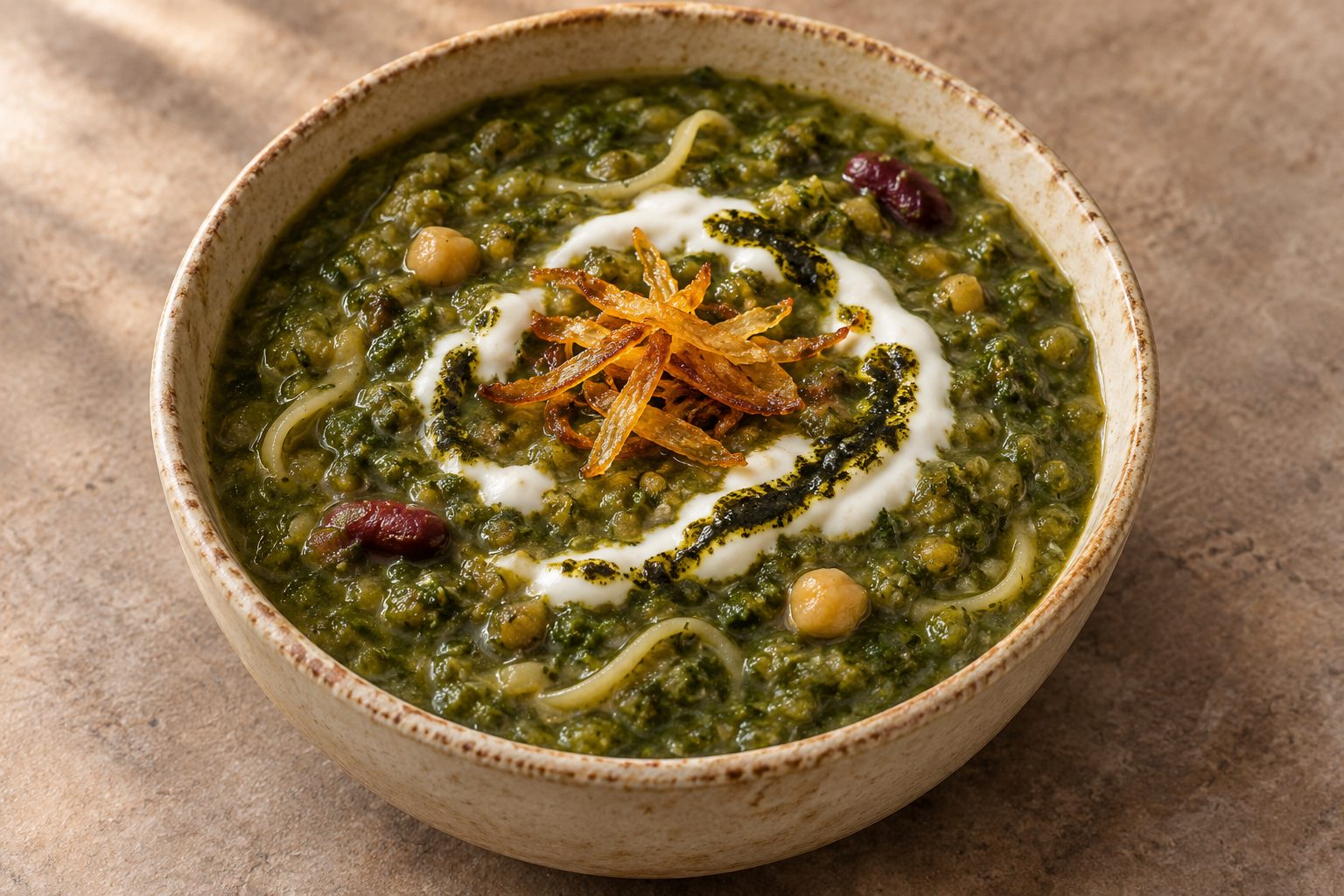
This thick Iranian soup combines herbs, legumes and noodles. A spoonful of tangy soy yogurt stands in for the dairy topping in this version. The recipe has not been tested in the VegDot kitchen. The photograph is an AI-generated illustration, and the times below are estimates.
What makes this ash reshteh
Ash reshteh is an Iranian herb, legume and noodle soup. There is no single home version. In a recipe documented by the James Beard Foundation, Mehrdad Dabir uses Persian noodles and kashk and describes fried onions and mint oil as garnishes. In many kitchens those familiar finishes help distinguish the soup from an ordinary pot of beans and greens. You can keep the herbs, noodles and a fried onion finish while replacing the dairy topping with something you can make from a few plant ingredients.
Kashk has its own fermented dairy flavor and texture. Plain soy yogurt with lemon and salt is a proposed substitute that serves a similar purpose at the table: it brings a cool, creamy and slightly sour contrast to a thick, hot soup. It does not reproduce the flavor of traditional kashk. Keeping it in a bowl beside the soup also makes it easy for each person to decide how much they want. The topping is mixed cold and added at serving.
The amounts here are a starting point for a home batch of four main-dish portions. Plan about 25 minutes for preparation and 35 to 45 minutes on the stove. Washing and sorting fresh herbs can take longer, and noodle cooking times vary. Read the entire method before starting, especially if you need to work around an allergy. The recipe uses canned, cooked beans and chickpeas. It does not include instructions for cooking dried red kidney beans.
Ingredients for four bowls
For the soup: 1 large yellow onion, about 180 grams; 3 cloves garlic; 2 tablespoons neutral cooking oil; 1 teaspoon ground turmeric; 100 grams dry green or brown lentils, picked over and rinsed; 1.4 liters water or unsalted vegetable stock, plus more as needed; 240 grams drained cooked chickpeas; and 240 grams drained cooked red kidney beans. Choose cans labeled ready to eat and measure the beans after draining. A standard can varies by market, so use the drained weight rather than assuming every can is the same.
For the herbs and noodles: 150 grams spinach, 60 grams flat-leaf parsley, 40 grams coriander leaves and tender stems, 50 grams spring onion greens, and 120 grams dried Persian soup noodles. Weigh the greens after removing unusable stems and wash them well. Plain wheat linguine is a practical substitute if Persian noodles are unavailable, although it changes the texture. Use a noodle product that suits your diet and read the full ingredient list. Start with about half a teaspoon of fine salt if using unsalted stock and add more at the end if needed. Some noodles and canned beans are already salted.
For the topping: 150 grams plain unsweetened soy yogurt, 1 tablespoon lemon juice and a small pinch of fine salt. For the garnish: 1 small yellow onion, about 100 grams; 1 tablespoon oil; and, if you want a separate mint finish, 1 teaspoon dried mint and 1 teaspoon additional oil. This version contains wheat or other gluten-containing ingredients when made with the suggested noodles and contains soy with the proposed topping. Check the stock, noodles and yogurt for other ingredients and allergy information. Use separate utensils and ingredients suitable for your guests if an allergy needs to be managed.
Soften the lentils and cook the greens
Thinly slice both onions but keep the garnish onion separate. Chop the garlic and greens. In a large pot heat the two tablespoons of oil over medium heat. Add the larger onion and cook until softened and lightly colored, stirring as needed so the thin ends do not burn. Add the garlic and turmeric and stir briefly, then add the lentils and the water or stock. Bring the pot to a boil and lower it to a steady simmer. If you are using dried lentils with package directions that differ, check those before planning the timing.
Cook until the lentils are nearly tender. Start checking at around 20 minutes, but let the lentils tell you when to continue. A lentil should give under a spoon without a hard center. If the pot looks dry before the lentils have softened, add a little hot water rather than letting them stick. Once the lentils are almost ready, add the drained cooked chickpeas and kidney beans and stir in the chopped greens. Return the pot to a simmer. A pot with plenty of room makes it easier to fold the greens through the liquid without crushing all the beans.
Cook the greens for several minutes, until they have wilted and the soup is simmering evenly again. The color and volume will change as they cook. There should still be enough liquid for the noodles to move through when stirred. If the pot is already as thick as you want the finished soup, add a little hot water now. The noodles will absorb some liquid and the soup will thicken further as it stands, so the stage before the noodles should look looser than the bowl you want to serve.
Add the noodles and make the topping
Add the noodles to the gently simmering soup, stirring as they go in. If they are long and difficult to manage in the pot, break them into shorter lengths. Follow the packet as a starting point for timing and check the texture near the end. Stir across the bottom from time to time, where noodles can settle and catch. If there is too little room for them to cook freely, add hot water in small amounts. When the noodles are cooked to the texture you like, taste a cooled spoonful and adjust the salt.
Stir the soy yogurt, lemon and pinch of salt in a small bowl. Start with some of the lemon and taste before adding it all, because plain yogurts vary in acidity. If the mixture is stiff, add a teaspoon of water at a time until you can spoon it over a bowl. If it is already thin, use it as it is. Avoid sweetened yogurt. A sweet topping changes the character of a soup whose main contrast comes from herbs, onions and sourness.
Cook the reserved garnish onion in the tablespoon of oil over medium heat, stirring and lowering the heat if it colors too quickly. Move it to a plate once it is golden. If you are using dried mint, briefly stir it in the separate teaspoon of warm oil off the heat. The aim is to release its aroma without scorching it. Spoon the finished soup into bowls, add a little yogurt and garnish each bowl with the onion and mint as desired. Keep the garnishes at the table so the soup can be tasted before adding more.
Adjust texture and plan leftovers
If the soup looks too loose at the end, give the noodles a few minutes to settle before making a change. Lentils and noodles can thicken it as it rests. If you want a thicker broth, you can crush a small ladleful of cooked lentils against the side of the pot and stir it back through. This changes the texture without requiring extra flour. If the soup turns too thick, thin it with a little hot water or unsalted stock, and taste again before adding salt or lemon.
For a meal later in the week, store the soup, yogurt and garnishes separately. Cool the soup promptly in smaller, shallow containers and get it into the refrigerator within two hours. The UK Food Standards Agency advises eating refrigerated leftovers within 48 hours or freezing them. Follow any shorter instructions on a product you use. Freeze extra soup in meal-size containers if you cannot use it within that window, leaving space for expansion. Label the date and keep the yogurt topping separate.
If your priority is a firmer noodle when the soup is reheated, cook and serve the noodles for the portions you will eat that day. A second portion can be reheated as a base with fresh noodles added later. When reheating a chilled portion, stir it so thick areas heat evenly and bring it to steaming hot throughout. The UK guidance advises reheating leftovers only once. Do not return a reheated portion to the common container; take out just what you intend to serve.
What to change for the next pot
Pay attention to which part of the finished bowl you would want to adjust. If you liked the herbs but found the soup salty, check the stock, beans and noodles together. Choose an unsalted stock next time or delay seasoning until the noodles are done. If the main problem was that the noodles broke down, shorten the time between cooking and serving, or keep the soup base separate. A change that solves one clear problem is easier to evaluate than changing every ingredient together.
If the topping was too mild, add lemon gradually rather than pouring it into the whole pot. If it was too sharp, reduce the lemon in the next batch. Serve it separately if you want different people to use different amounts. A cook looking for the taste of dairy kashk should expect a difference. The point of the substitute is to offer a sour, creamy finish while allowing a plant-based bowl, not to make a promise about reproducing the original.
Set up the kitchen before you start
Measure the lentils, noodles and drained beans before the pot is on the stove. Use a large colander to wash the spinach and herbs, then let them drain so the chopping board does not collect a pool of water. Separate the garnish onion from the soup onion early. It is easy to tip all the sliced onions into the pot if they are on the same plate. Keep a jug of extra hot water nearby once the noodles go in, so you can loosen the soup without stopping the cooking to fill another kettle.
Choose a spoon that lets you reach right across the bottom of the pot. A thick soup can look loose at the surface while the pasta is settling at the base. If you want to taste for seasoning before serving, draw a small amount into a clean bowl and let it cool briefly. Taste the soup by itself first, then with a little topping. That helps you decide whether to adjust the soup or simply serve a sharper topping. It also prevents the salt and lemon in the topping from hiding the seasoning of the whole batch.
If you are cooking for people with different preferences, divide the choices at the table rather than changing the main pot. Put the yogurt, fried onions and mint oil in separate bowls, and describe what each contains. If you are accommodating an allergy, do not assume that leaving a topping off is enough; ingredients and utensils need to be managed separately. If an ingredient is unfamiliar to you, read the full label before using it.
Make a smaller batch or adapt it for a shared table
If you want two portions rather than four, halve the ingredient amounts and start with a pot proportionate to the smaller volume. The soup still needs enough liquid for the lentils and noodles, so add hot water if the reduced batch becomes too thick. Cooking times will not necessarily be halved: the lentils and noodles still need to become tender. A wider pot can also lose water more quickly, making texture a better guide for adding liquid than the clock.
If you make the full batch for a shared meal, have the bowls, garnishes and containers ready before the noodles finish. The soup is easiest to serve while it is hot and loose enough to ladle. Set out a spoon for each topping. A person who wants a plain bowl can take it before the yogurt or mint oil is added. If a guest has an allergy, plan around the ingredients and kitchen handling in advance rather than offering to remove a garnish after it has already touched the food.
When shopping, check what a noodle package means by Persian soup noodles and look at the ingredient list. If you can only buy linguine, use the same weight as a starting point and pay attention to its cooking directions. Different thicknesses can change the amount of water you need and the point at which the noodles soften. If you replace a noodle to accommodate a dietary requirement, the package must suit that requirement. This recipe does not establish a gluten-free version or assess cross-contact.
A pot can be served with bread if you want a larger meal, or in smaller bowls before another dish. Decide how many bowls you intend to serve before dividing the food. If the garnish runs short, it is easier to leave some bowls plain than to cook another onion after the soup is ready. Extra fried onion can be kept separate according to safe storage guidance. Adding it only at the table also avoids making every leftover portion taste the same.
If you make the soup a second time, write down the brand of noodles, the amount of extra liquid and whether you used stock or water. If you change several things at once, it will be hard to know what improved the bowl. Try changing the noodle timing, the amount of liquid or the acidity of the topping separately. Notes from your own kitchen can make the next batch more predictable. They do not make the original recipe a tested recipe in a different kitchen.
Summary
Use cooked canned beans, dry lentils, plenty of chopped greens and Persian soup noodles if you can get them. Leave enough liquid for the noodles to cook, then serve with fried onion and a spoonful of the proposed soy yogurt topping. Cool leftovers promptly and keep the topping separate. Times and seasoning are starting estimates because this version has not been tested in the VegDot kitchen.
Frequently asked questions
Can I substitute dried red kidney beans directly?
No. The recipe starts with ready-to-eat cooked beans. Dried red kidney beans require proper preparation and boiling before they can replace the canned ones. If you do not have time for a separately cooked batch, choose canned beans.
Can I make the soup ahead?
Yes, the soup base can be prepared ahead if you cool and store it safely. Keeping the noodles out until serving can help retain their texture. Keep the yogurt and fried onion separate so you can adjust each bowl when you serve it.
Is the proposed topping the same as kashk?
No. Traditional kashk in this dish is a dairy ingredient. The soy yogurt mixture provides a tangy finish but has a different flavor and texture. Use plain unsweetened yogurt and add the lemon to taste.