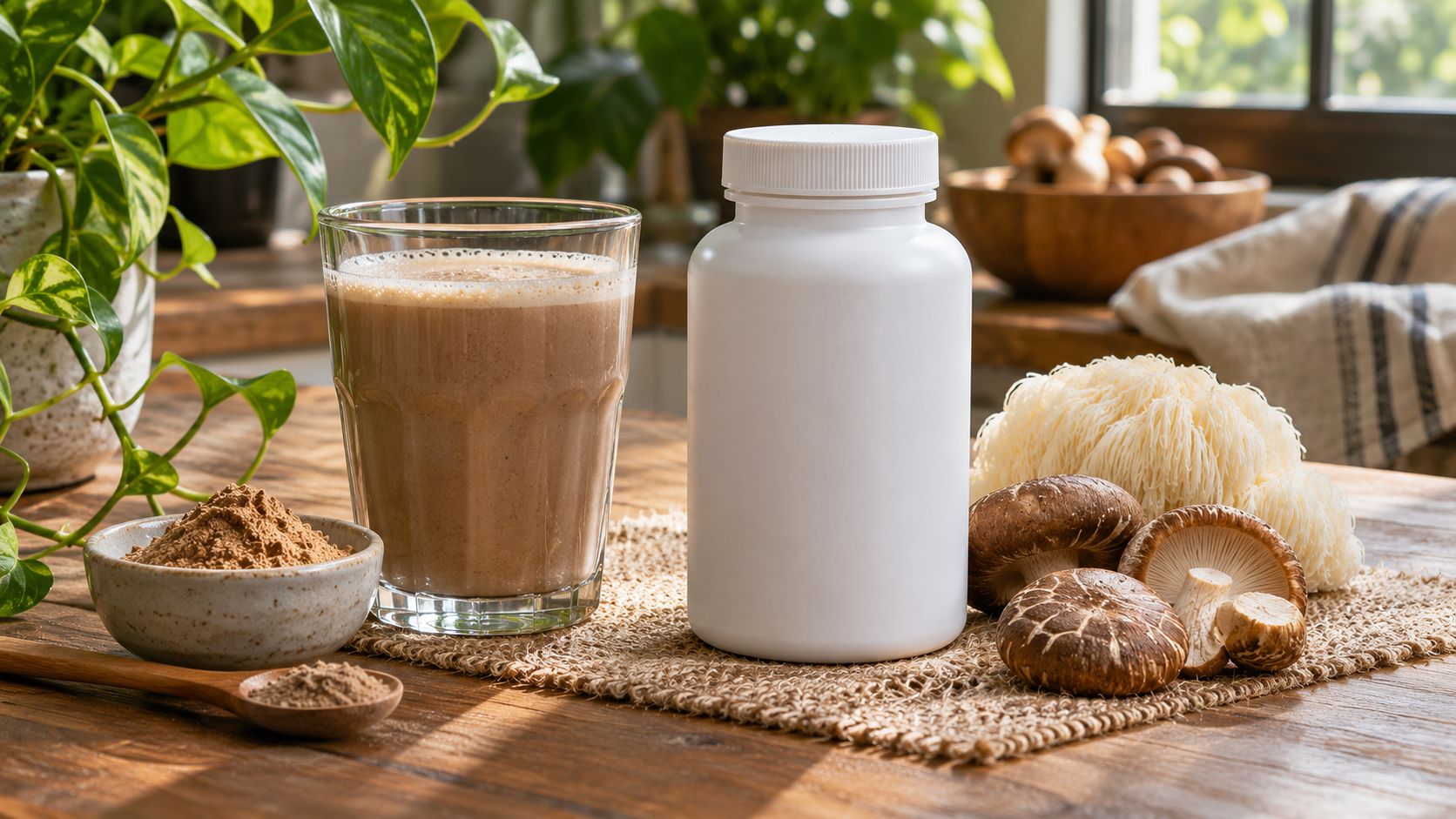
Vitamin D is present in a limited range of foods and may be added to other foods. Supplements and blood tests answer different questions. Start by checking the foods and products you actually use, then seek individual advice if your health, medications or circumstances call for it.
What vitamin D does and where it comes from
Vitamin D helps the body absorb calcium and plays a role in maintaining healthy bones. The body can produce vitamin D when ultraviolet radiation from sunlight reaches the skin. Food and supplements are other routes. The importance of each route varies by season, location, time spent outdoors, skin exposure and personal circumstances. Knowing that a route exists does not tell you how much it contributes in a particular case.
A food label gives information about the product and its serving size. A supplement label describes what the manufacturer says is in a dose. A laboratory result, when a clinician orders it, estimates something different again. It reflects vitamin D status under the conditions in which the test was taken. Treating these figures as interchangeable can turn a sensible shopping question into an incorrect medical conclusion.
The distinction matters when someone changes their diet. If you stop buying a fortified food, find out what it used to contribute and whether the new food has a comparable addition. If you have been advised to take a prescribed or recommended product, keep that advice separate from a routine grocery comparison. A plant-based food guide can help you find questions to ask. It cannot establish that you should change a supplement regimen or interpret a laboratory report by yourself.
Read the label for the exact food
Some mushrooms contain vitamin D, and UV treatment can raise vitamin D2 in mushrooms. Ordinary mushrooms and UV-exposed mushrooms can differ, and an unlabelled serving does not have a known vitamin D amount simply because it is a mushroom. If a package lists vitamin D, read the amount and the unit. If you are using a food composition table, match the product and the condition described in the table rather than assuming every variety has the same value.
Plant drinks, cereals and other foods can be fortified, depending on the product and the market. Check the nutrition panel for vitamin D and check the serving size. A statement on the front such as plant based, made with oats or rich in calcium does not tell you whether vitamin D was added. A drink can contain one added nutrient and not another. A similar-looking package from the same manufacturer may be different.
Use the amount you really consume. If a label lists a value for a full glass and you use a small amount in a drink, the contribution is smaller. If you use a fortified product several times a week, note how often you use it. A comparison based on your usual portion is more useful than a list of foods you rarely eat. When two products use different serving sizes, convert to a common amount before comparing them.
The US Office of Dietary Supplements lists examples from the US food supply. Those examples are helpful for understanding possible sources. They do not establish that a product in another country has been fortified or that a US reference percentage is the correct target for you. Save the exact label or a clear photo of it if you plan to discuss what it contributes with a dietitian.
Understand what a supplement label tells you
Vitamin D supplements commonly contain vitamin D2 or D3. If your choices need to be vegan, check the ingredient source for the product and any ingredients in the capsule. Some D3 products use animal-derived ingredients or sources, and some use plant-compatible sources such as lichen. The name D3 alone is not enough to decide whether a supplement meets that preference. Look for a reliable statement from the maker if the source is unclear.
Pay attention to the units. Labels may give micrograms or international units. They describe the same nutrient in different units, so you need a common unit before adding figures from several products. Keep the amount per tablet, drop or serving separate from the number of servings you take. Liquid products can use different concentrations. A number copied from another bottle does not tell you how much is in one drop of yours.
Check whether you already take vitamin D in a multivitamin, combined calcium product or another supplement. Keep a list of the labels and how often you use each product. This is particularly useful when several products were started at different times or recommended by different people. Do not interpret the largest number on a shelf as the most appropriate choice. Excess vitamin D from supplements can be harmful, and a more concentrated product changes how easily you can take more than intended.
Ask a pharmacist or clinician when you are unsure about a product, especially if you take medicines or have a condition that affects absorption or the way nutrients are managed. Bring the actual package and the rest of your supplement list. A professional can assess whether a proposed product is suitable and whether another part of your care needs attention. A shopping comparison does not replace that assessment.
Separate seasonal advice from a personal treatment plan
Public health advice can differ by country because it is written for a particular population, climate and health system. Some national services advise particular groups to consider supplements during part of the year or year round. Check which audience the guidance addresses. A recommendation for residents at a certain latitude or for a particular age group cannot simply be copied to every language edition or every reader.
A useful question is whether the advice describes the general public, a group with an identified risk, or treatment of a confirmed problem. These situations have different aims. General recommendations help populations make sensible choices. Clinical treatment may use a plan based on your medical history and the reason for concern. Keep the name of the organization and the intended audience with any recommendation you write down.
Sunlight is also a variable source. Outdoor routines, clothing and time of year can change the amount of UV reaching the skin. Do not use a fixed number of minutes from an unrelated country or assume everyone should expose their skin in the same way. Local advice on sun protection and individual guidance are the appropriate references. Supplements and fortified foods are often discussed because sunlight is not straightforward to count on every day.
What a blood test can and cannot answer
The common blood marker discussed in vitamin D assessment is 25-hydroxyvitamin D, usually written as 25(OH)D. It is distinct from the amount of vitamin D listed on a food or supplement label. Laboratories can report it in different units. A result needs to be interpreted with the unit, the clinical context and the reason the test was ordered. Comparing a bare number to a post online can create confusion when the units or circumstances differ.
The Endocrine Society’s prevention guideline advises against routine testing for otherwise healthy people without a specific reason for testing in the populations it addresses. That guidance does not determine what is appropriate for someone with an established clinical indication. A health professional can consider symptoms, previous results, medications and conditions that may alter absorption or bone health. A decision about testing should follow the question the clinician is trying to answer.
If you already have a result, ask what it means in your situation, whether the measurement needs follow-up and what decision would change because of it. Bring earlier results if they are available. Keep the units and the date on the record. If a doctor has given you a plan, ask before changing it in response to a product advertisement or a general nutrition article.
Prepare for a useful discussion
You do not need a detailed diary to start. Write down the foods you regularly use that have a vitamin D figure on the label. List supplements, including combination products, and record their serving instructions. If your routine has changed recently, mention the change. For example, you may have stopped using a fortified drink or started taking a multivitamin. The dates help distinguish a long-standing pattern from a new choice.
Bring the questions you want answered. Are you trying to find a vegan source? Are you unsure whether advice for a different country applies to you? Have two people given you different instructions? Ask which information they used and what should guide your decision now. If you are advised to take a product, ask how to identify the correct concentration and what to do if you cannot find the same brand.
You can also make progress at the supermarket without turning the trip into a medical assessment. Compare two ordinary products you might use, notice whether they list vitamin D, and identify the unit. If neither product supplies what you assumed it did, note that fact rather than estimating. The practical value is in knowing where the information is clear and where you need help.
Compare three realistic situations
Suppose you buy a plain oat drink mostly for taste and learn it does not list vitamin D. If you want that drink to contribute vitamin D, look for a version that actually lists the nutrient or plan a different source with appropriate guidance. If you only use it for flavor and the rest of your plan is suitable, the lack of vitamin D in that particular drink may not determine your grocery choice. The purpose of a product changes the questions you ask about it.
Now imagine you are already taking a multivitamin and see a separate vitamin D product. Before making a purchase, check what your current product lists and how often you take it. Write both amounts and units down. The total from two supplements can differ from what you expected when looking at one label. A pharmacist can help you compare products and identify whether the additional product is appropriate for your situation.
A third situation is that you have a laboratory result from a previous appointment and are reading a general guide. Start by finding the date, exact marker and unit in the report. Ask the clinician who ordered the test what decision it was meant to inform. The next step depends on that purpose and on your circumstances. A shopping guide about fortified drinks cannot answer the same question.
Keep a record you can take to an appointment
Write the exact name of each regularly used product and the amount you usually consume. If a serving on a label is much larger or smaller than yours, keep both figures so another person can follow your estimate. For foods that do not list vitamin D, mark the amount unknown instead of entering zero or assuming a similar product has the same value. This gives a clearer picture of which figures are estimates.
Record when a supplement was started and why. If a pharmacist or prescriber advised it, keep a note of that advice and ask them before changing the plan. Bring information about all relevant products rather than selecting only the one that says vitamin D on the front. If you live in a different country from the organization whose advice you read, include that fact. Local guidance can explain which population the advice was written for.
Keep the record short enough to use. A photograph of a label and a note about your usual portion are often more practical than a long list of foods you do not regularly eat. The aim is to show what you know and where the information is missing. A professional can focus on that information rather than trying to reconstruct the contents of a product from its brand name.
Interpret general advice in context
A guideline gives recommendations for defined groups. Before quoting one, check who was studied and whether the recommendation concerns prevention, screening or treatment. Those questions can have different answers. A group recommendation can be useful for comparing policies, but it does not establish the right choice for a particular person with a separate clinical indication.
When two sources seem to disagree, compare the audience and the purpose first. One may describe nutrient intakes for a general population, while the other discusses whether to order a test. Those statements can coexist. If your question concerns an individual result, a chronic condition or a prescription, use the comparison to formulate a clear question rather than trying to choose a plan from headlines.
Summary
Check food labels for the product and portion you actually use. Keep supplement decisions and laboratory results in their own context. Use guidance written for your population and ask a qualified professional when individual health, medicines, testing or treatment is part of the question.
Frequently asked questions
Are all mushrooms a reliable source of vitamin D?
The amount varies. UV-treated mushrooms can provide vitamin D2, but do not assume a particular amount in an unlabelled mushroom. Use the exact label or a suitable food composition entry if you need a figure.
Does a plant drink always contain added vitamin D?
No. Fortification varies by product and market. Look for vitamin D in the nutrition information and compare the amount for the portion you will use.
Do healthy people need a vitamin D blood test before comparing products?
Comparing food labels does not require a blood test. The Endocrine Society advises against routine testing in the otherwise healthy populations covered by its prevention guideline. A clinician can decide whether an individual has a separate reason for assessment.
Leave a Reply