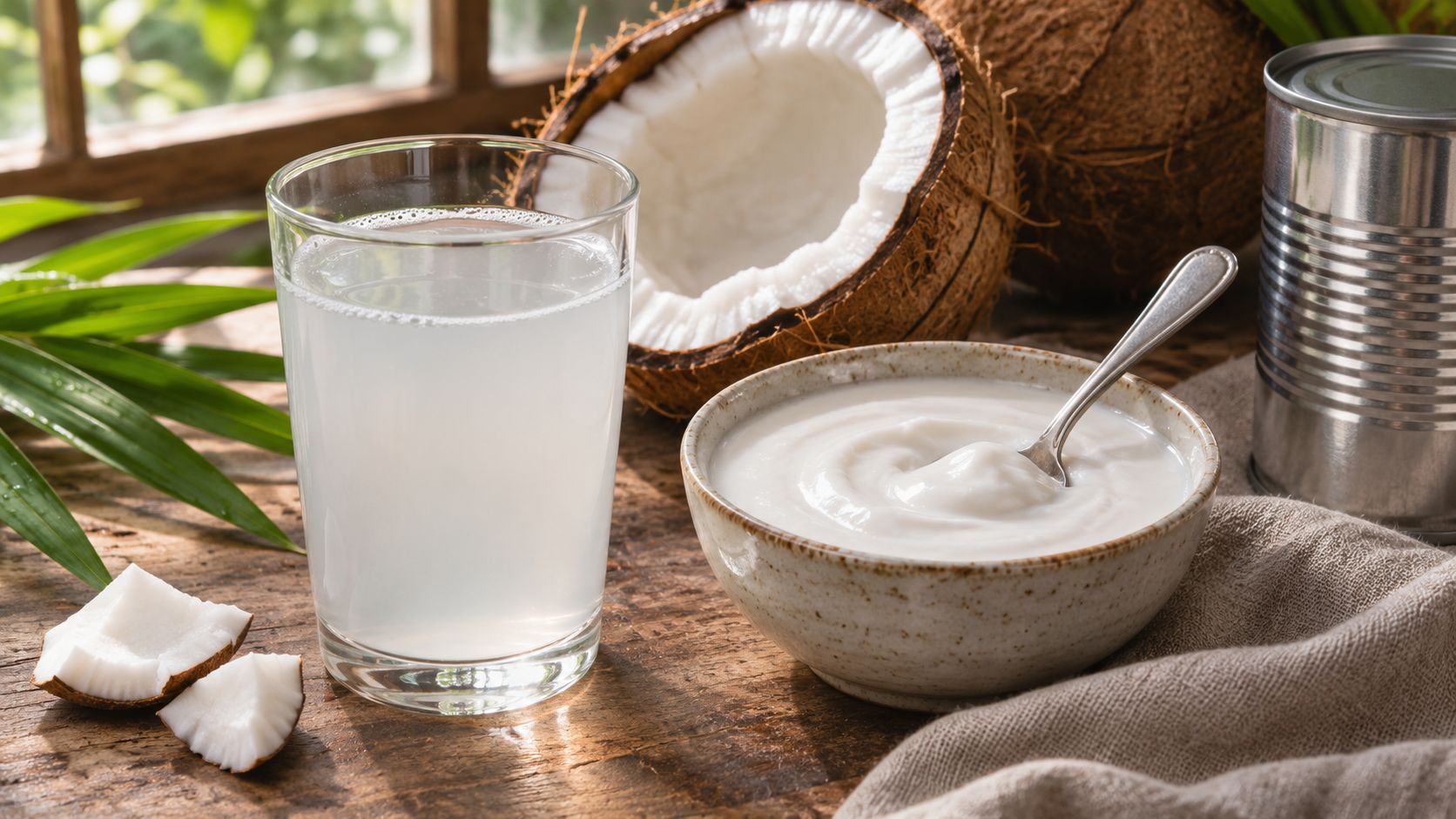
A carton sold as a drink and coconut milk meant for cooking can give very different results. Check the ingredients, fat and serving size before substituting one for the other. A recipe for curry and a glass at breakfast ask different things of the product.
Find out what the package is meant to do
Start with the directions and ingredients on the exact package. A ready-to-drink coconut beverage is usually designed to pour easily. Cooking coconut milk is often used to add body to sauces, soups and desserts. Names differ across markets, and packaging alone does not establish what is inside. Some cooking products come in cartons and some thin drinks may come in cans. Check the intended use and the nutrition information before assuming a package shape tells you the answer.
Look for words about serving, dilution or cooking. A concentrated product can need a different amount from a ready-to-use product. Coconut cream is another form that may contain more fat or solids than coconut milk, depending on the product. The Codex standard for aqueous coconut products distinguishes several categories. It can explain why there is a difference in concentration, but it does not identify every beverage or determine which product you will find in a particular store.
If the carton says that it is intended for drinking, decide whether you want that thin consistency. If the recipe asks for a creamy sauce, choose a product that gives the body the recipe expects. A plain label word such as coconut can describe the flavor or a main ingredient. It does not guarantee a particular thickness, fat amount or amount of coconut.
Compare ingredients before you compare brands
Check whether the ingredient list describes water, coconut extract or coconut solids and what else is present. Some products contain added sugar, salt or ingredients to adjust texture. A product for a dessert may tolerate sweetness you would not want in a savory stew. A neutral drink may still have a light flavor that works differently from a rich cooking milk. Make the decision according to the food you are preparing.
A product labelled unsweetened can still list a value for total sugars. How labels display added sugars differs by market. Read the list and the actual nutrition panel rather than using a claim on the front to infer everything about the recipe. Also check whether a product is plain, flavored or mixed with another plant ingredient. A vanilla or mixed beverage can change the flavor of a sauce even if its texture looks appropriate in the glass.
Keep allergy and ingredient restrictions separate from the choice of consistency. If you are cooking for someone with an allergy, ask what ingredients and cross-contact information they need. Look at the exact package and manufacturer information where appropriate. A front label describing a product as plant based or dairy free does not answer every allergy question.
Use a common serving size for the nutrition comparison
One label might describe a 100 milliliter amount, another a larger glass, and a cooking product might report per spoonful or per 100 grams. Locate the unit before comparing the numbers. When both labels use volume, convert to the same volume. When both use weight, compare the same weight. A direct volume-to-weight comparison needs information about the product’s density. If it is missing, do not assume exact equivalence for a thick product.
Here is a made-up example for two products that both list volume. If a beverage lists 2 grams of fat per 200 milliliters, that is 1 gram per 100 milliliters. If a cooking product lists 10 grams per 100 milliliters, a 40 milliliter portion contains 4 grams. These invented values illustrate the calculation. They do not describe all coconut drinks or all cooking milks. Real products can differ, and one recipe may use a much smaller amount of the richer product.
Decide whether you are comparing a cup you drink, a portion of a sauce or a whole recipe. A can used across several bowls contributes an amount per serving that depends on how much of the can you used and how many portions you serve. If your question concerns one nutrient, write down the actual amount and unit for that portion. If your question is texture, a taste or small cooking trial may be more useful than a numerical comparison alone.
Coconut cooking milk can contain substantial saturated fat. The exact amount is on the label. A thin beverage may have a very different nutritional profile and may be fortified with nutrients such as calcium, depending on the product. The FDA advises comparing plant-based drinks individually because they vary. Do not infer fortification or protein from the word coconut. Check those items if they are the reason you use the product.
Choose the right product for a savory dish
For a curry, stew or blended soup where richness is part of the dish, start with cooking coconut milk if the recipe calls for it. Stir it before measuring if the package permits, as some products separate. Add the amount given in the recipe and judge the thickness after it has warmed. If a product is noticeably thicker than expected, add a little water or stock during cooking as appropriate. Adjust seasoning only after you see how the liquid behaves.
Using a thin drink instead can leave the sauce looser and give a lighter coconut flavor. If you still want to use it, start with a small test portion and decide whether the change is acceptable. A soup that already has blended vegetables may not need the same body from the coconut ingredient as a sauce that depends on it. A sweetened or flavored beverage can create a bigger change than the thickness alone. Read the ingredients before using it to salvage dinner.
When a recipe specifies coconut cream, check why. It might need a thick layer or a small amount of concentrated richness. Replacing it with a drink usually changes the method. If you can accept a lighter result, work with a recipe designed for a thinner product instead of adding a large amount and hoping it will behave the same way. That saves time and lets you choose ingredients that fit your kitchen.
Choose a drink for how you will actually use it
For a glass, coffee or cereal, a ready-to-drink product is easier to portion. If you use it in coffee, choose the flavor you like and test a small amount. Some products react differently when heated or mixed with an acidic drink. An intended-use claim can help you find options, but it does not establish which texture you will prefer. A small pack makes it easier to try a new product without having to find uses for a large leftover quantity.
If you want the drink to supply a particular nutrient, compare the amount in your normal pour. A splash in coffee is a smaller portion than a glass. Check the whole nutrition panel when you expect the drink to replace a regular food in meals. For an ingredient used mainly for flavor, decide what else provides the nutrients you want at that meal. The product can be useful in one role without meeting the requirements of another.
The same approach applies to smoothies and porridge. A thin drink may be easy to pour and mix. Cooking coconut milk can add richness in a smaller amount, but consider the recipe and the label before choosing it. If the dish is shared, count the amount across the actual servings. Decide whether you want a coconut flavor in the background or a distinctive part of the meal. That question often narrows the shelf choice more than comparing package names.
Store the product you opened
Check the package directions for storage after opening. A product sold unrefrigerated may require refrigeration after you open it. The time permitted after opening can vary. Note when you opened the package if you are likely to forget, and choose a pack you can finish within its directions. If the package tells you to transfer unused contents after opening, follow its instructions.
A recipe that uses part of a can is easier to plan when you give the rest a second use. You can put it in another dish if you can store it safely in the meantime. Do not rely on the flavor or smell alone to determine whether a perishable opened product is safe. If you want to freeze it, check that the package or suitable guidance allows that, and expect the texture to change in some products. A separated product may still work in a sauce when handled properly, but you should not assume it will work in a drink.
Try a side-by-side cooking comparison
When the purpose is texture, compare small portions before committing to a whole pot. Warm a few spoonfuls of the intended cooking milk in a small saucepan with some of the other ingredients. Do the same with the drink in a second small portion or at another time. Compare how the liquids coat the spoon and how strongly you can taste coconut. Use comparable heat and quantities if you want to see what the products themselves do. Do not generalize the result to all products with similar names.
Think about what the dish needs after it cools a little. A sauce that looks thin while very hot can have a different consistency at serving. A chilled dessert may depend on the product behaving in a particular way. If the result matters for an event, use a recipe with the intended type of product. A small test at home helps you discover differences without having to rescue a full batch.
If you are adjusting a soup, begin with less of the richer ingredient and add more to taste. If the soup already has body from beans or blended vegetables, the coconut flavor may be all you want. In a sauce that depends on coconut milk for body, the thin drink may change how well it clings to the food. Keep both the flavor and the structure in mind rather than assuming an extra splash can fix either problem.
Compare purchases for a household with two uses
Imagine someone uses coconut drink in coffee and another person wants cooking coconut milk for a curry. Calculate how much of each pack will be used in the next few days. You may be able to buy a small cooking pack for the meal and a separate drink that fits the household routine. If one product happens to work for both uses, note what makes it acceptable. The choice should reflect both dishes and the time you can safely keep the packages after opening.
A retailer might display several similarly named products together. Use the shelf label to compare price only after confirming the roles are comparable. A concentrated product costing more for the same volume might be used in a smaller amount. A bigger pack may be poor value if most of it will be discarded. Price per portion used can therefore tell you more than either the label price or the unit price alone.
If the shop runs out of your regular product, remember the features that mattered. For coffee you may want a plain, pourable drink with the flavor you like. For cooking you may want a particular consistency, no added sweetness and an appropriate quantity. Those are criteria you can use with an unfamiliar brand. A picture of the old label helps if you want to match a specific nutrient value or ingredient.
Write down what you actually learned
Keep a small note after trying a new product. Include its name, the dish and whether the amount in the recipe worked. If it did not work, identify whether the problem was sweetness, coconut flavor, separation or thickness. A clear observation gives you a useful criterion for the next purchase. A statement that a product was simply good or bad does not tell you which use it might suit.
Check the note again when the package changes. Manufacturers can reformulate, and a similar box can have different instructions. If a nutrient or ingredient is important, confirm the current label before relying on an old result. The benefit of comparing products is a shopping decision you can repeat, even when the shelf selection changes.
Summary
Use the intended role to narrow the choice. Cooking coconut milk usually gives a dish more body, and a ready-to-drink coconut beverage is generally thinner. Compare the exact labels and realistic portions, check sweetness and fortification separately, and follow the opened-storage instructions.
Frequently asked questions
Can I use coconut beverage in a curry?
It may work in a recipe that can accept a thinner, less rich result. Choose a plain product and try a small amount first. A sauce designed for cooking coconut milk may need a different method if you substitute a beverage.
Is every coconut drink fortified?
No. Check the exact nutrition panel for each nutrient you care about. The amount can differ by brand, product and market.
How do I compare the products if one label gives grams and the other milliliters?
Compare the same type of unit if the package gives enough information. If you do not know how weight and volume relate for the product, avoid treating the amounts as exactly equal. Compare the amounts in the servings you will use.