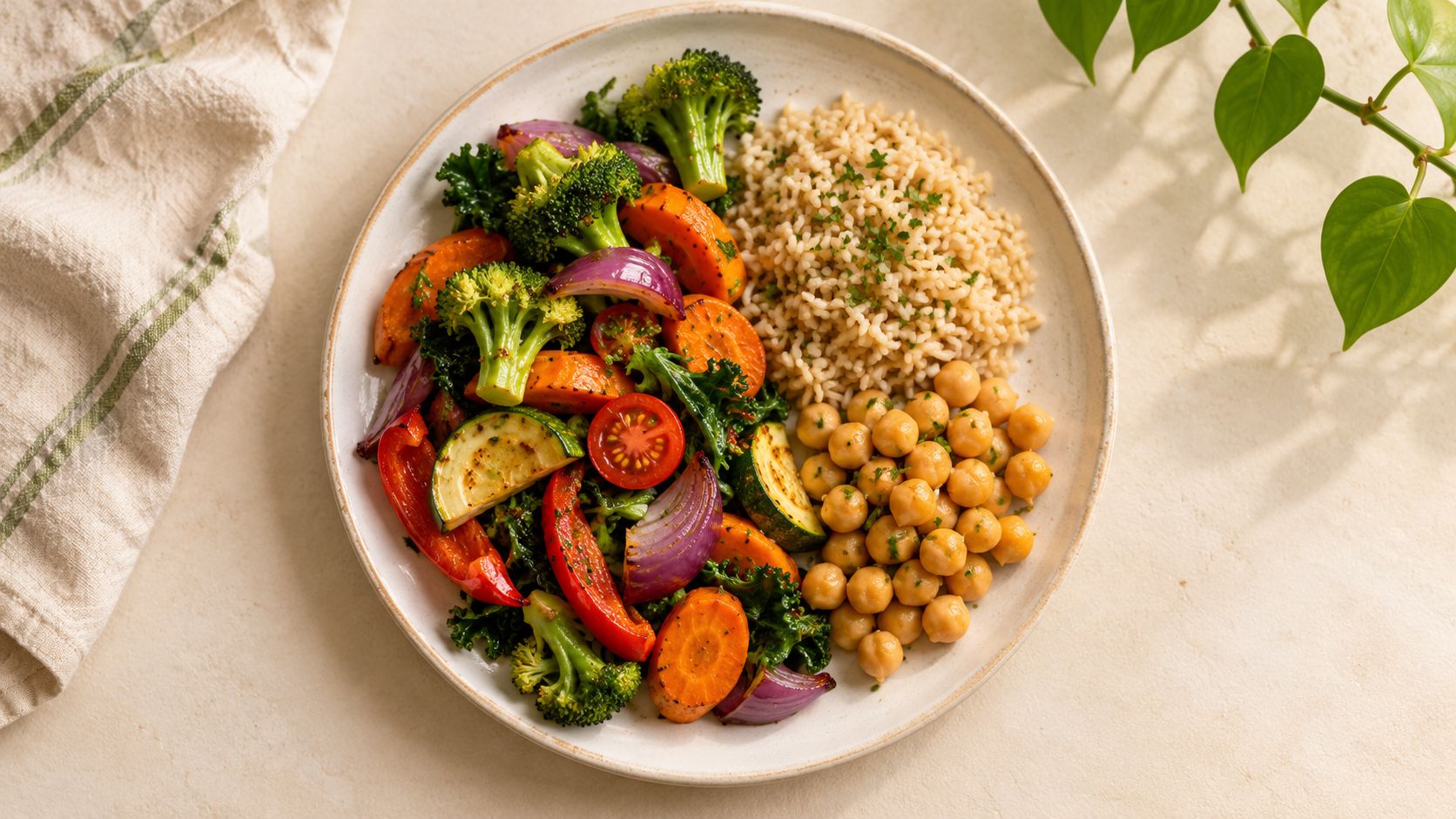
Start with vegetables or fruit, a grain or other staple, and a reliable source of protein. This guide shows how to put the idea to work in meals you already know, then explains what the plate can and cannot tell you about your overall diet.
Start with the meal you already eat
A balanced meal is easier to build when you start with dinner as it exists today. If you usually have rice with vegetables, put a substantial helping of beans or tofu beside them. If you take a sandwich to work, replace a thin smear of filling with a generous layer of mashed chickpeas or another filling you enjoy. If lunch is usually soup, add lentils to the pot or bring a suitable side. The point of the first change is to make an ordinary meal more complete and satisfying without turning every lunch into a new recipe.
Look at a meal and name its main jobs. The vegetable or fruit part brings variety, texture and flavor. The grain or other staple makes the meal substantial. The protein part has its own place, even when it is mixed into the sauce. A little oil, tahini or another familiar dressing can help bring the components together. These roles are a planning aid. Beans, for instance, also supply carbohydrate and fiber; they do not stop doing that because you put them in the protein part of a plate.
Choose a meal you can repeat. If it takes an hour, uses an ingredient you cannot buy again, or leaves you hungry on the way home, it is a poor template for a busy day. Keep the part you liked and change the part that got in the way. A familiar lunch with one useful adjustment teaches you more about your routine than an elaborate plate that you make once and never revisit.
What the plate picture means
Canada’s Food Guide illustrates a meal with about half vegetables and fruit, one quarter whole grains and one quarter protein foods. It also encourages choosing plant protein foods more often. You can use the picture as a rough visual check: is there enough produce to notice, and can you point to the staple and the protein? You do not need to draw lines on the plate, use a particular size of dish or weigh the food to apply the idea.
The diagram gives proportions, not an amount of food that fits everybody. The amount you need can change with appetite, activity, age, or the timing of the next meal. A person taking a quick lunch before a long shift might bring extra bread and a fruit alongside a stew. Someone who prefers a smaller lunch can eat a separate snack later. Use the picture to notice missing components. Decide the total amount with your own needs and circumstances in mind.
Whole grains such as oats, barley, brown rice or wholemeal bread are useful staples when they fit the dish. Potatoes and other starchy foods can also be part of a meal, even though they are not whole grains. If you switch every staple at once, it can be difficult to tell what you actually like. Try a whole grain in one meal, keep a familiar staple in another and see which changes you want to keep. A low-cost, accessible staple that makes a meal possible has practical value.
Pick a protein that works with the dish
Choose the protein early enough that it is not an afterthought. Lentils suit soups and sauces because they can be cooked into the dish. Chickpeas or beans work in salads, wraps and bowls where you want an ingredient that stays distinct. Tofu can take on a marinade or go into a stir-fry. A bean spread in a sandwich is easier to handle than whole beans falling out of the bread. The best starting choice is often the one that fits the way you already cook.
When comparing products, look beyond the plant-based wording. A plant drink used in tea may suit that purpose without making much difference to the protein in lunch. A breaded plant product might be substantial, or it might consist mostly of its coating and filling. Check protein on the nutrition label when the product is supposed to provide it. Compare equivalent quantities, and look at the other information that matters to your meal. The front of the packet rarely answers all those questions.
Nuts and seeds can contribute to meals, but a decorative pinch is easy to mistake for the main protein. Decide whether you intend the seeds or nuts to be a garnish, an ingredient in a substantial sauce, or part of the protein alongside other foods. With a bowl of vegetables and grains, a spoonful of seeds can add crunch while beans do most of the work of the protein component. There is no need to use a specialty product when a familiar food already suits the dish.
Use the same idea in mixed dishes
A rice bowl shows the parts clearly. Put roasted or sautéed vegetables on one side, the rice on another and a serving of lentils or chickpeas beside it. Season the whole dish together with lemon and herbs or a dressing you already make. If you have extra rice and few vegetables, you do not need to throw anything out to make the proportions match. Add vegetables you have in the freezer or serve fruit separately and use the remaining rice in another meal.
With a stew, assess the ingredients rather than trying to see the finished portions. If there are mostly tomatoes, stock and potatoes, look for a protein you can add. If it is already full of beans and vegetables, you may simply want some bread or a grain on the side. For a pasta sauce, replacing some of the sauce volume with cooked lentils and adding vegetables gives a different result from scattering a few lentils over the finished pasta. The ingredients can share the same pot and still have distinct jobs.
A sandwich or wrap can work the same way. The bread is the staple; a mashed bean or tofu filling can be the protein; vegetables can go inside or be packed separately. If cucumber makes the bread soggy, bring it in a small container. A separate fruit also counts toward the produce you eat with the meal. Making the meal practical to carry is part of making the plan work, because a sandwich that arrives in good condition is one you are more likely to pack again.
Adapt the plan for budget and time
Build a small list of flexible ingredients rather than shopping for separate recipes. One bag of frozen vegetables can go into a soup, pasta sauce or rice bowl. Canned chickpeas can become a filling today and a salad tomorrow when they are handled and stored safely. A loaf of suitable bread can cover two different lunches without requiring you to repeat the same filling. Choose items that you already know how to use before adding several unfamiliar ones to the shopping list.
If a full meal has to come together without much cooking, start with a ready-to-eat protein and a staple that needs little preparation. For example, drained canned beans, prepared bread and whatever vegetables you can serve quickly make a workable starting point. Check the can label and use a dressing you already like. The aim is to plan a fallback meal you can make when the ideal ingredients are unavailable, not to maintain a kitchen that looks stocked for every possible dish.
For a week with unpredictable meals, check your next two eating opportunities instead of drawing up a rigid seven-day plan. If you have lunch at home tomorrow, use food that needs to be eaten soon. If the next meal is away from home, plan something that travels well. When there is no refrigerator or safe way to keep a perishable lunch cold, choose a meal appropriate to the storage available. That question is more useful than whether the lunch looks exactly like a sample plate.
Look beyond a single meal
A balanced-looking plate does not establish that your diet supplies all nutrients in suitable amounts. A person eating fully vegan needs a reliable plan for vitamin B12. Depending on the rest of the diet, other nutrients such as calcium, iodine, iron or vitamin D can also warrant attention. The NHS vegan eating guide explains why fortified foods or supplements may be useful for particular nutrients. A plate illustration cannot tell whether a supplement suits you or whether a food you bought actually contains an added nutrient. Read the label and seek appropriate professional advice when your needs are more complex.
Instead of examining one meal in isolation, write down the protein foods, vegetables and staples you actually enjoy across several days. If every lunch has plenty of grain but little protein, pick a reliable filling or side. If you use a plant drink expecting it to supply calcium, check that this product is fortified and that you know the amount in your usual portion. These are specific questions you can act on without rating each meal as good or bad.
A change can be gradual. Some readers will start by adding beans to a familiar meal once a week. Others already eat this way and need a better plan for lunch away from home. Choose one action you can check: add a real filling to the sandwich, buy a staple you will use, or keep a vegetable you enjoy available for short-notice cooking. Then notice whether the change helped the meal fit your day.
A practical shopping and cooking example
Imagine you need four meals and can only shop once. Choose a bag of carrots and a bunch of greens or a bag of frozen greens. Buy a grain you know how to cook and two kinds of canned legumes, or choose one type of legume and a packet of tofu. Before leaving the shop, name a meal for each ingredient. Carrots can be sliced for sandwiches and cooked into a soup. Greens can go into a bowl and then into the soup. Having a second use for each fresh item makes it easier to buy the amount you will eat.
At home, give yourself two distinct ways to use the same main ingredients. On the first day put a substantial serving of chickpeas, cooked grain and vegetables in a bowl with lemon and herbs. On the second day mash some chickpeas and season them for a sandwich; bring chopped carrots and a fruit along. Serve warm beans and vegetables with bread on another day. The parts stay recognizable across meals, while the textures, seasoning and way you eat them change. Keep the amount and storage plan appropriate to your household.
Before you shop again, look for the part that repeatedly went missing. If the grain was available every day but the vegetables ran out, keep a freezer option for the last day. If you skipped the beans because the can was too large for a packed lunch, portion it when you open it or use a smaller pack. If you had all the ingredients but never cooked them, pick a fallback meal that uses a ready-to-eat protein. This check helps you change one obstacle at a time.
Decide how to handle breakfast and snacks
A plated dinner is the easiest example to draw, but breakfast can use the same planning idea. A bowl of plain oats already has a grain. Fruit can provide the produce component. For the protein component, consider what else you normally eat with it, such as a suitable unsweetened soy yogurt or a portion of nuts or seeds as part of a substantial topping. A drink poured into the bowl may have its own protein, but products vary. Read the label if you want to count it as an important part of the meal.
A savory breakfast can start with wholemeal bread or another familiar staple. Add mashed beans, cooked tofu or another protein you like. Tomatoes, cucumbers or a piece of fruit can complete the meal without requiring a second cooked dish. If this is a meal you eat on the way to work, decide whether it travels well and can be kept safely. A breakfast that must be assembled outdoors in bad weather may not be a practical fallback.
A snack need not copy the whole plate. If the next meal is a long way off, think about what would make the snack useful. Fruit might be enough for a short break, while bread and a suitable spread might be easier to rely on before a late dinner. The purpose is to plan for hunger rather than to fit a diagram. If you often leave the same part of a packed meal uneaten, make the next version easier to carry, open or eat.
People in the same household can also use the same ingredients differently. Put beans, a cooked staple and vegetables on the table separately and let each person choose the amount that suits the meal. You do not need separate recipes for someone who prefers more bread and someone who prefers a larger portion of greens. Keep enough of the protein available that nobody has to treat it as a garnish. The next day, use the leftover ingredients only if they were cooled and stored properly.
Summary
Use the plate as a visual prompt. Include vegetables or fruit, a grain or another staple, and a protein food that makes sense in the dish. Adjust the quantity to your needs and repeat the meals that suit your time, budget and appetite. Plan nutrients such as B12 separately if you eat fully vegan, because the balance of a single meal cannot answer every nutrition question.
Frequently asked questions
Do the three components have to be separate?
No. A bean and vegetable stew with barley can contain all three. If you are unsure, name the main ingredients when you plan the meal. This is easier than trying to estimate the components from a bowl of finished stew.
Can I use canned beans?
Yes. They can make the protein part straightforward when you do not have time to cook dry beans. Read the label, follow preparation and storage instructions, and choose the product that fits your needs. The same filling can be served warm in a bowl or mashed into a spread.
Does every plate have to follow the exact proportions?
No. They are a teaching aid for noticing the main parts of meals. Mixed dishes, snacks and meals you share may look different. What matters for planning is that the general pattern works across the meals you actually eat.