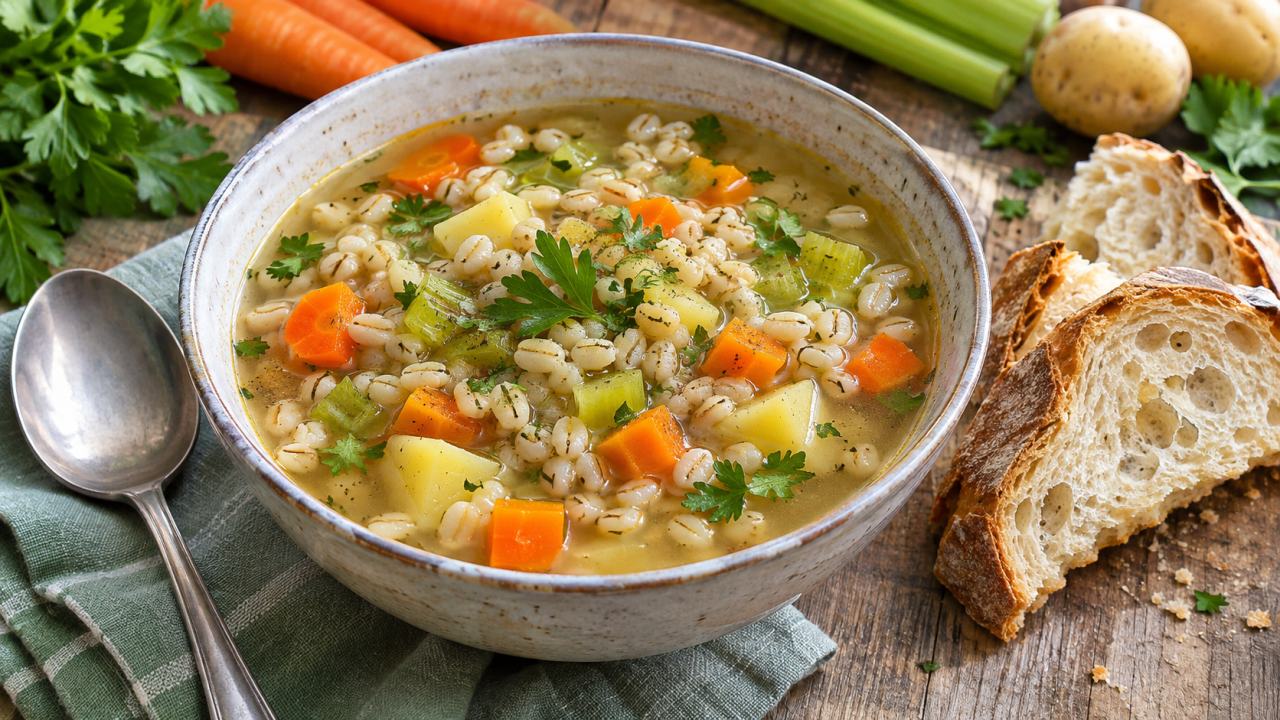
This proposed soup uses pearl barley, carrot, celery, potato and a little mashed vegetable to give the broth body without cream. VegDot has not tested the recipe in its kitchen. The image is AI-generated. Times and the four suggested portions are estimates.
Ingredients and equipment for four bowls
Use 120 grams dry pearl barley, 120 grams peeled onion, 180 grams carrot, 100 grams celery stalks, 180 grams peeled potato, 20 millilitres olive oil, 1.5 litres water or clearly labeled vegetable stock, 2 grams ground turmeric, 15 millilitres lemon juice and 10 grams chopped parsley. Start with about 2 grams salt only if the stock is unsalted, then adjust to taste. Black pepper is optional. Keep up to 300 millilitres hot water available to adjust the consistency.
Choose a saucepan of about 3 litres with a lid, a sieve, chopping board, knife and ladle. A smaller pan leaves little room to stir. A wider pan can lose water more quickly. You can mash a little potato against the side with a spoon or use a small bowl. No blender is required. Keep the ingredient amounts nearby before starting so that extra water is the only variable you may need to adjust.
Allow approximately 20 minutes for preparation and 40 to 55 minutes for cooking, depending on the pearl barley and stove. Tasks can overlap. Read the barley packet because different products vary. Hulled barley, barley flakes and quick-cooking barley are different forms and do not follow the same timing. This recipe is written for pearl barley and the texture checks in the method.
Check ingredients and allergens before cooking
Barley contains gluten. This soup is not suitable as written for someone who needs a gluten-free diet. Celery is also an allergen that some people need to avoid. Check stock and seasonings for relevant ingredients and precautionary information. A vegetable description on the front of the pack does not answer every allergen question.
For a vegan version, verify that the stock and other prepared ingredients have no animal-derived ingredients. Water is a simple option if the stock is uncertain, with seasoning adjusted at the end. Do not add dairy toppings to the shared saucepan. Optional additions can be served separately when that fits the diners’ preferences and preparation requirements.
Wash the vegetables and prepare them on clean surfaces. FoodSafety.gov’s four steps explain cleaning, separating, cooking and chilling. Follow safe handling when preparing a meal for someone with an allergy or another restriction. A change in an ingredient can alter both texture and safety requirements, so plan it before you begin.
Prepare the barley and vegetables
Inspect the pearl barley and rinse it in a sieve according to the package instructions. Finely chop the onion. Cut the carrot and celery into pieces of about 5 to 8 millimetres so they cook evenly. Cut the potato into slightly larger pieces, about 1 centimetre. Keep the vegetables separate because the onion starts first.
Measure the initial liquid and set it beside the stove. If using a stock concentrate, prepare it according to its directions and check how much salt it contributes. The proposed salt amount is only a starting point for unsalted liquid. Starting with less and tasting later is easier than trying to correct a salty pot after reduction.
Measure the parsley and lemon but keep them for the final stage. These additions change the finished flavor without needing the same cooking time as the grain. Set aside a clean spoon for tasting. A small bowl can hold a sample so you can assess the texture once it has cooled enough to eat.
Start the soup base
Warm the oil over medium heat in the saucepan. Add the onion and cook gently for about 5 to 7 minutes, stirring until softened. If it begins to brown quickly while still firm, lower the heat. Add the carrot and celery and stir for about 3 minutes. Add the turmeric and stir briefly, then add the rinsed pearl barley and initial liquid.
Bring the mixture to a boil, then reduce to a gentle simmer. Leave the lid partly open. Stir occasionally along the bottom so the grain does not settle and catch. Start checking the barley near the time suggested on its packet. The proposed recipe expects a substantial simmer, but the packet and the grain’s texture should guide the timing.
If the liquid falls too low while the barley is still firm, add hot water in small measured amounts. Maintain a gentle simmer. A strong rolling boil can evaporate liquid quickly without making the final texture easier to control. Record any extra water if you want to repeat the soup in the same pan.
Add potato and check tenderness
Add the potato once the barley has simmered for around 20 minutes, or earlier if the packet describes a much shorter cooking time. Continue until the potato is tender and the barley has the texture you want. A cooked pearl barley grain can remain pleasantly chewy. It should not have a hard raw center.
Take samples from different parts of the pan and cool them before tasting. If the vegetables are tender but the grain is still hard, keep simmering with enough liquid. If a particular barley takes longer, cook it further before adding potato next time. This adjustment protects the vegetables from breaking down while the grain finishes.
When everything is tender, decide whether you want a light broth or a thicker bowl. The starch released during cooking gives some body. For more thickness, remove a small ladle containing potato and broth, mash the potato and return it. Stir, wait briefly and look again before repeating. Cream is unnecessary for this texture change.
Finish the flavor and consistency
Turn the heat low and check the amount of broth around the grains. Add hot water gradually if it is thicker than you prefer. Let the soup warm through, then turn off the heat and add the lemon juice. Stir in most of the parsley, keeping a little for individual bowls if desired. Taste before adding more salt or pepper.
Use a bowl to judge the final consistency. Soup can look looser in a deep pan than it feels on a spoon. Pearl barley continues to take up liquid as the soup rests, so a portion held for later may need additional water on reheating. Adjust the serving you need without diluting the entire pot unnecessarily.
Serve with bread or another accompaniment that fits the meal. If barley and bread are both present, a person with a gluten-related restriction needs a different meal and suitable preparation. Do not describe a simple substitution as automatically safe. The recipe, stock, utensils and accompaniments must all be considered.
Store and reheat using a clear plan
FoodSafety.gov lists 3 to 4 days for vegetable soups and stews kept refrigerated at 4 degrees Celsius or below. Its freezing guidance gives 2 to 3 months for quality. Chill cooked portions promptly in shallow containers. The four-step guidance advises refrigeration within 2 hours, or within 1 hour when temperatures exceed 32 degrees Celsius.
Label the container and keep a portion separate if it is intended for another meal. Do not leave the saucepan on the counter for a long period waiting for the whole batch to become cold. Use a safe cooling method appropriate to the amount, divide into shallow portions and refrigerate promptly. Follow stricter advice where local guidance or a diner’s needs call for it.
Reheat only the amount needed and stir so the thick soup heats evenly. FoodSafety.gov’s safe temperature guidance gives 74 degrees Celsius for leftovers. Check with a suitable food thermometer rather than judging a dense portion only by steam at the edge. Add water as needed while reheating, then taste the warmed portion before changing seasoning.
Further practical examples
If the soup is too thick at the end of cooking, start by removing a little to a bowl and adding measured water there. That shows roughly how much adjustment you want. If the problem is too much liquid, simmer uncovered while monitoring the bottom, or mash a small amount of potato if you want a different texture. Choose one adjustment so the effect is clear.
If the vegetables are unevenly cooked, compare their sizes. Large pieces of carrot can remain firm while small potato pieces dissolve. Cutting more evenly makes the sequence easier. On a second attempt, keep the ingredients the same and change the cutting or timing. You can then identify which adjustment helped.
If you use water instead of stock, soften the onion properly and taste the finished bowl with lemon and herbs. A stock substitute may change salt and flavor more than consistency. Do not compensate with several strong seasonings at once. Add small amounts, stir and taste a safe cooled sample before deciding whether more is needed.
If only a quick-cooking barley is available, follow its packet and reconsider when to add it. A product that cooks quickly could go in after the vegetables have begun softening. This becomes a variation with a different sequence. Write that down rather than repeating the timing for pearl barley and hoping the result will be the same.
For a smaller batch, halve the ingredients and use a pan that gives a similar depth of soup. Watch the liquid because a wide pan can evaporate more of a small amount. The grain still needs to reach tenderness, so halving the quantity does not imply halving its cooking time. Use the same texture checks.
For a larger batch, make sure the pan has room to stir and the cooling arrangement is adequate before starting. A pot that cooks comfortably can still be too large to chill safely as one unit. Have shallow containers ready. Decide which servings will be eaten soon and which, if any, will be frozen.
For lunch, transport a chilled portion using suitable temperature control and reheat at the destination if facilities allow. A bag alone does not necessarily keep soup cold. If you have no appropriate storage or hot-holding arrangement, choose a different lunch for that day. Practical meal planning includes the journey and waiting time.
Keep a note of the barley brand, initial water and any extra used. Describe whether the final bowl was brothy or thick and how much potato you mashed. The recipe is proposed, and these observations can make it more repeatable in your own kitchen without implying a test result that VegDot has not recorded.
Additional checks for making the proposed soup repeatable
Read the barley package before you begin chopping. If the product is a quick-cooking form, compare its directions with the pearl barley sequence in the recipe. Cooking a grain for much longer than its packet requires can change the texture of the whole pot. If the available barley is a different type, treat the meal as a variation and revise the order. Save the package name so that any later note about time refers to the ingredient actually used.
Put the measured vegetables in separate piles before turning on the heat. Similar pieces soften more evenly, and a separate pile of potato reminds you that it is added later. If another person will help, give them the quantities and the intended sizes. This avoids accidentally changing the recipe while also changing the cook. A consistent cutting pattern makes the texture checks easier to interpret even when the exact minutes differ on another stove.
Watch the onion stage in the pan you are using. A heavy pan can retain heat after you lower the setting, while a thin pan may react more quickly. Stir and reduce heat if edges darken before the onion softens. If you need a splash of water to stop catching, note it and let the method return to its intended stage before adding the main liquid. Do not leave the stove unattended simply because the ingredients are plant based.
At the first grain check, take several pieces rather than one. Cool them on a spoon so you can evaluate the center safely. If the outside is soft and the middle remains hard, keep simmering with enough liquid and check again. A pleasant chew is different from an uncooked center. Use your observation alongside the packet directions. On a later attempt, the note can help you decide whether the potato needs to enter the pot earlier or later.
Use a small sample to decide how much potato to mash. One spoonful can thicken the liquid without turning the soup into a purée. Compare the sample with the grain and vegetables left intact. If you want visible barley, preserve most of the structure and add liquid only as needed. A change in how the soup is served, such as a small starter or a substantial lunch bowl, can affect the consistency you prefer.
Taste the soup after adjusting the water. The same initial seasoning can feel weaker in a looser bowl or stronger after reduction. Add lemon gradually and leave additional lemon available for diners if preferences differ. A garnish should complement the soup without hiding whether the vegetables and grain are tender. Keep optional ingredients separate when that makes dietary or allergy information easier to provide to the people eating.
Summary
Cook pearl barley gently with the vegetables until tender, then adjust thickness using a little mashed potato or water. Add lemon and herbs near serving. Check barley, celery and stock for dietary restrictions, and divide leftover soup for prompt safe cooling and storage.
Frequently asked questions
Is this soup gluten-free?
No. Barley contains gluten. A gluten-free adaptation requires different ingredients and a suitable method and preparation environment.
How does the soup thicken without cream?
Barley releases starch, and a little cooked potato can be mashed into the broth. Add gradually to control the texture.
Can I use any type of barley with the same timing?
Different barley products have different cooking times. This proposed method uses pearl barley. Follow the packet and adjust the sequence if substituting.
Why is refrigerated soup thicker?
The grain can continue to take up liquid. Add a little water while reheating the portion safely and reassess its seasoning.
Leave a Reply