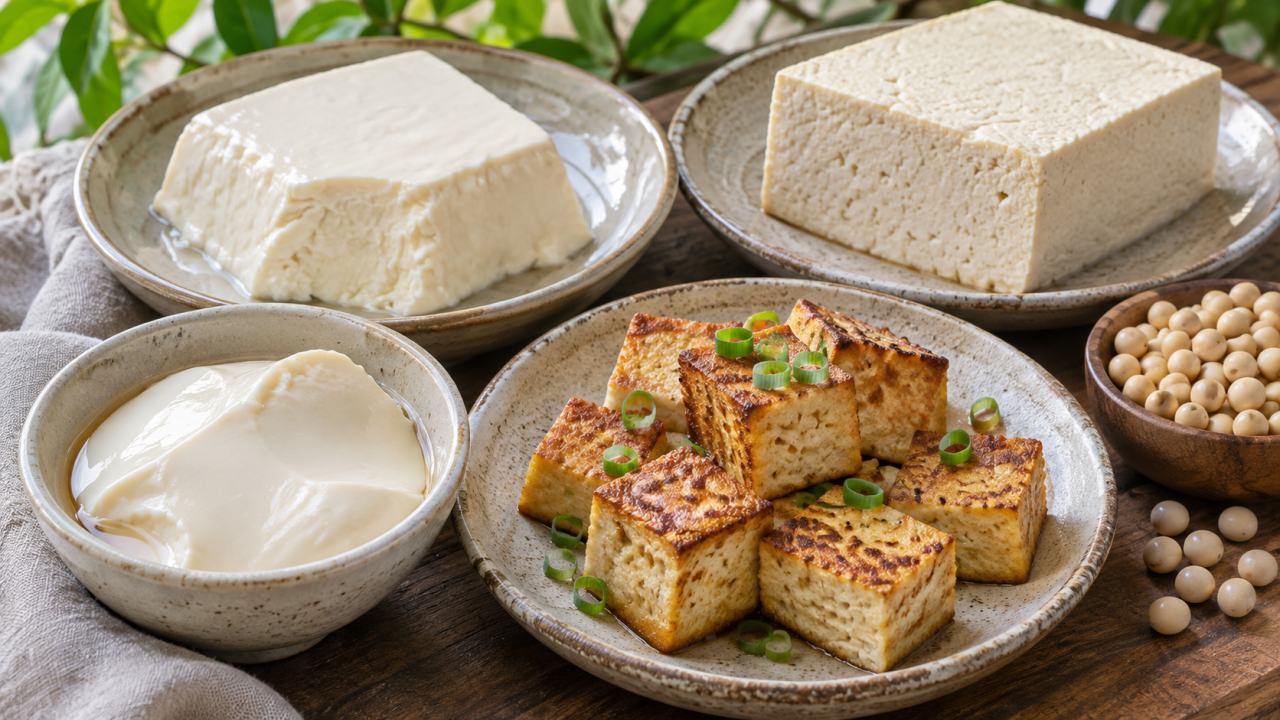
Start with the kind of tofu and the texture your dish needs. Silken and regular block tofu are different categories, and words such as firm can mean different things within them. Read the package, then choose whether you want smoothness, delicate pieces or a block that can be browned.
Identify the product before planning the method
Tofu is a soy food made by coagulating soy milk. Products differ in how they are made and how much moisture they retain. Those differences affect the result in a pan or blender. Look for the full name, ingredients and storage directions. A white block in a photograph does not show how it will behave when cut, pressed or heated.
Distinguish a silken product from a regular block product. Within either category, manufacturers may offer soft, firm or extra-firm versions. The label is useful in the context of that product line. It is not a universal measurement that makes every extra-firm package identical. Check the manufacturer’s own guidance if the recipe depends on a specific style.
Plain tofu, seasoned tofu and a prepared tofu dish raise different questions. Seasonings can add flavor, salt or other ingredients. A ready-to-eat statement and a cooking instruction are separate details. Read the actual pack to learn how it should be handled. If buying loose tofu, ask the seller for reliable information about the product and its storage.
Use silken tofu where a smooth texture helps
Silken tofu has a delicate, smooth structure. It can be useful in blended sauces, dressings or desserts when a recipe is designed for it. A firmer silken product can still differ from a regular firm block. Mori-Nu’s product information and tofu tips show that its silken range includes firmness options. This is an example of why the category should be read alongside the firmness word.
For a cold sauce, begin with a small amount and blend it before adding all the other ingredients. Check how it holds on a spoon and whether the chosen seasonings fit its flavor. Add liquid gradually. A watery sauce is harder to restore than a thick mixture that needs a small adjustment. A recipe’s result also depends on the rest of the ingredients.
For delicate pieces in a soup, add them when the rest of the method allows gentle handling. Strong stirring can break soft pieces. A small test portion can show how the product behaves. Do not press every tofu simply because pressing is recommended in some recipes. The method needs to suit the type you purchased.
Choose regular firm tofu for visible pieces
A firmer block is often easier to cut into cubes or slices for a pan, oven or grill. Read its preparation directions, including whether excess surface liquid should be drained. A recipe may call for pressing, but the package and intended result should inform the decision. Some products are already dense enough for the job.
When browning, dry the surface as the method directs, use a suitable pan and leave space between pieces. Crowding can keep more moisture in the pan. Turn pieces gently after a crust forms rather than moving them constantly. These are general cooking suggestions, not a tested recipe for a specific brand.
For a stew, decide whether tofu should remain in cubes or become part of the sauce. You may brown pieces separately and add them later, or use a suitable product directly according to a verified method. The same tofu can give different results depending on time in liquid and handling. Describe the texture you want before choosing a preparation.
Use soft and crumbled forms deliberately
Soft regular tofu can be useful where a tender texture is welcome. It may break more easily than a firm block. If the dish needs intact slices, test a small piece. If the intention is a loose filling, breaking may be helpful. Match the product to the dish rather than treating softness as a fault.
Crumbling a firm tofu can produce small pieces for a filling or sauce. The moisture it releases needs somewhere to go. Cook it separately or allow the method enough time for evaporation if appropriate. Seasoning a small portion first helps you decide whether the flavor works before making the entire batch.
A smooth purée and a crumbled mixture perform different roles. A purée can add body or a creamy texture in a recipe designed for it. Crumbles can create small pieces with seasoning distributed through them. Neither is automatically a substitute for every egg, dairy product or minced filling. Baking and binding require particular proportions and tested methods.
Read nutrition and ingredients for the exact tofu
Protein, calcium and other values can vary by product and serving. The NHS vegan guide includes calcium-set tofu among calcium sources. That does not mean every block has the same amount of calcium. Check the coagulant and, where available, the nutrition table for the actual product. A calcium-related claim needs that specific information.
Compare labels at the same weight. If one package reports a serving and another gives 100 grams, convert the relevant line before comparing. Distinguish prepared weight from the weight of a dish containing sauce or vegetables. A number for a seasoned prepared item may describe more than tofu alone.
Soy is an allergen. Check all ingredients and precautionary information for the person eating the food. Some prepared tofu products contain additional allergens in their marinades or coatings. A plant-based description is not enough to decide suitability for an allergy. Consult the manufacturer or appropriate guidance when the label leaves a relevant question open.
Store according to the package and product type
A shelf-stable unopened pack and a refrigerated pack can have different requirements. Follow the instructions for the version you buy. A manufacturer’s shelf-stable product is evidence about that product, not permission to keep any tofu at room temperature. Check the date, pack condition and storage location at purchase.
Once opened, use the directions for refrigeration and time limits. Keep a clean utensil for the portion you take and store the remainder as instructed. If an online tip conflicts with the current package, clarify with the manufacturer. A method intended for one product may not apply to another production process.
Freezing can change tofu’s texture. If you want to try it, use appropriate manufacturer guidance and compare a small portion first. Plan safe thawing and handling. A texture change can be useful in one dish and undesirable in another. Note which product you froze and how it was prepared so you can interpret the result.
Compare two types with one small trial
Choose a dish where texture is easy to see. For example, compare two plain products in separately prepared small portions before adding a strong sauce. Follow the product-specific instructions. Record whether each remained intact, how much liquid appeared and whether it browned or blended as you wanted.
Keep other conditions similar if you want the comparison to be useful. Use the same approximate piece size and pan conditions where suitable. Do not claim a product failed when it was prepared by a method designed for a different category. A silken product blended into a sauce and a firm block browned in a pan are serving different purposes.
Write what the trial shows. You may prefer one for a dressing and another for a grain bowl. That finding applies to your products and method. It does not establish an overall ranking of brands or prove that one category is always better. Choose the product that solves the next cooking task.
Further practical examples
If a recipe simply says tofu, read the method before shopping. Cubes that are tossed in a hot pan suggest a different requirement from a mixture blended until smooth. Look at the author’s specified product or photographs if available and ask for clarification when the distinction matters. Matching the recipe’s category saves a difficult adjustment later.
If only another type is available, consider changing the dish. A smooth sauce can use a delicate product more naturally than a stir-fry designed for firm cubes. A grain bowl might take a crumbled topping instead of slices. A useful adaptation changes the preparation to fit the ingredient rather than forcing every product through the same technique.
If tofu is unfamiliar to the household, serve a small amount with a familiar sauce or side. Learn whether the issue is flavor, moisture or texture. Change one factor on the next attempt. Buying the largest pack first may create leftovers before anyone knows how they want to use it.
If cost is part of the decision, compare usable portions and how much is discarded. A smaller pack can be practical for someone who uses tofu occasionally. A larger pack can work when several dishes are planned within the product’s safe storage instructions. Count the portion you actually eat, not just the weight printed on the front.
If you use tofu as a regular nutrient source, retain the product-specific information. A different coagulant, seasoning or moisture level can change the label. Recheck when the package changes. If the food is meant to address an individual nutrition need, show the exact label and serving to a qualified dietitian.
If you share a kitchen, label the portion intended for another meal. Keep it according to the package and tell other cooks which texture it has. A note saying silken for sauce or firm cubes for dinner can prevent an accidental substitution. The next cook should not need to discover the distinction after mixing the whole dish.
Additional checks before changing a tofu recipe
Take the unopened package to the recipe rather than selecting a technique from memory. Read whether the manufacturer calls it silken, regular, soft, firm or another description. Compare the product with the intended method. A recipe that blends tofu into a smooth dressing is asking for a different structure from a recipe that tosses cubes during frying. When the product category is unclear, ask the seller or manufacturer before committing a whole block to a method that could break it apart.
If a recipe recommends pressing, identify why. Removing some liquid may help a suitable regular block in a browning method, while a delicate silken product may not hold together under the same treatment. Use the method specified for the product and dish. If you are experimenting, do so with a small portion and describe the result narrowly. A successful or unsuccessful trial in your kitchen does not establish a rule that every tofu must be pressed for a fixed time.
Use a plate to examine the cut surface before seasoning. A moist delicate block can be handled with a broad spoon or spatula where the recipe calls for intact pieces. A firmer block may allow more regular slices. Similar-sized pieces are easier to compare in a pan. Keep the trial simple so that the sauce does not hide whether the issue is moisture, handling or the ingredient category. A clear observation makes the next adjustment more useful than adding several coatings at once.
For browning, choose a pan you can manage and follow a suitable method for heat and oil. If there is water pooled around the pieces, notice whether the block was drained, whether the pan is crowded or whether the sauce was added early. Address one of those factors on the next attempt. The desired crust is a cooking result that depends on the preparation, not something guaranteed by a firmness word printed on a pack.
For blending, begin with a portion small enough to adjust. Process until the texture matches the intended dish, then add other ingredients gradually. A strong seasoning can cover the flavor of the base but cannot determine the final thickness. If the recipe relies on a specific yield, measure what you add and record any extra liquid. This is particularly helpful when adapting a sauce that will be served cold and may feel different after resting.
If tofu is added to a soup, consider when stirring will stop. A delicate product placed early in a heavily stirred pot may disperse before serving. A firmer block can remain more distinct, but its flavor and feel will also change with time in the liquid. Read the method and test a small amount where possible. If you prefer a smoother bowl, broken pieces may be acceptable; if presentation needs neat cubes, the category and timing deserve more attention.
Compare nutrients only after choosing compatible portions. A plain block and a prepared dish with sauce or breading contain different mixtures. Read the current nutrition information and the ingredients used to set the tofu. A calcium-related choice needs specific support from the product rather than an assumption about all soy foods. If the food regularly replaces another nutrient source, keep the label so a qualified professional can help with an individual question.
If you freeze a portion, label the product and date and follow appropriate guidance for the type and packaging. A changed texture may be useful in one dish and disappointing in another. Compare the thawed portion with the role you wanted it to play rather than expecting it to be identical to the fresh product. Plan how it will be handled and used safely after thawing. An experiment about texture does not remove the need for food safety.
Summary
Read both the tofu category and its firmness, then match it to a smooth sauce, delicate pieces or browned blocks. Use current package instructions for storage and preparation, and check nutrition and allergens on the exact product.
Frequently asked questions
Is extra-firm silken tofu the same as regular extra-firm tofu?
The categories can have different structures. Check the full name and manufacturer guidance before substituting.
Should all tofu be pressed?
No universal rule fits every product. Pressing is useful in some methods, while delicate silken products need different handling.
Is every tofu a reliable calcium source?
Calcium depends on the product and coagulant. Check the actual ingredients and nutrition information.
Can an unopened shelf-stable tofu sit outside the refrigerator?
Follow the directions for that specific unopened package. Do not apply its storage conditions to refrigerated tofu or opened packs.
Leave a Reply