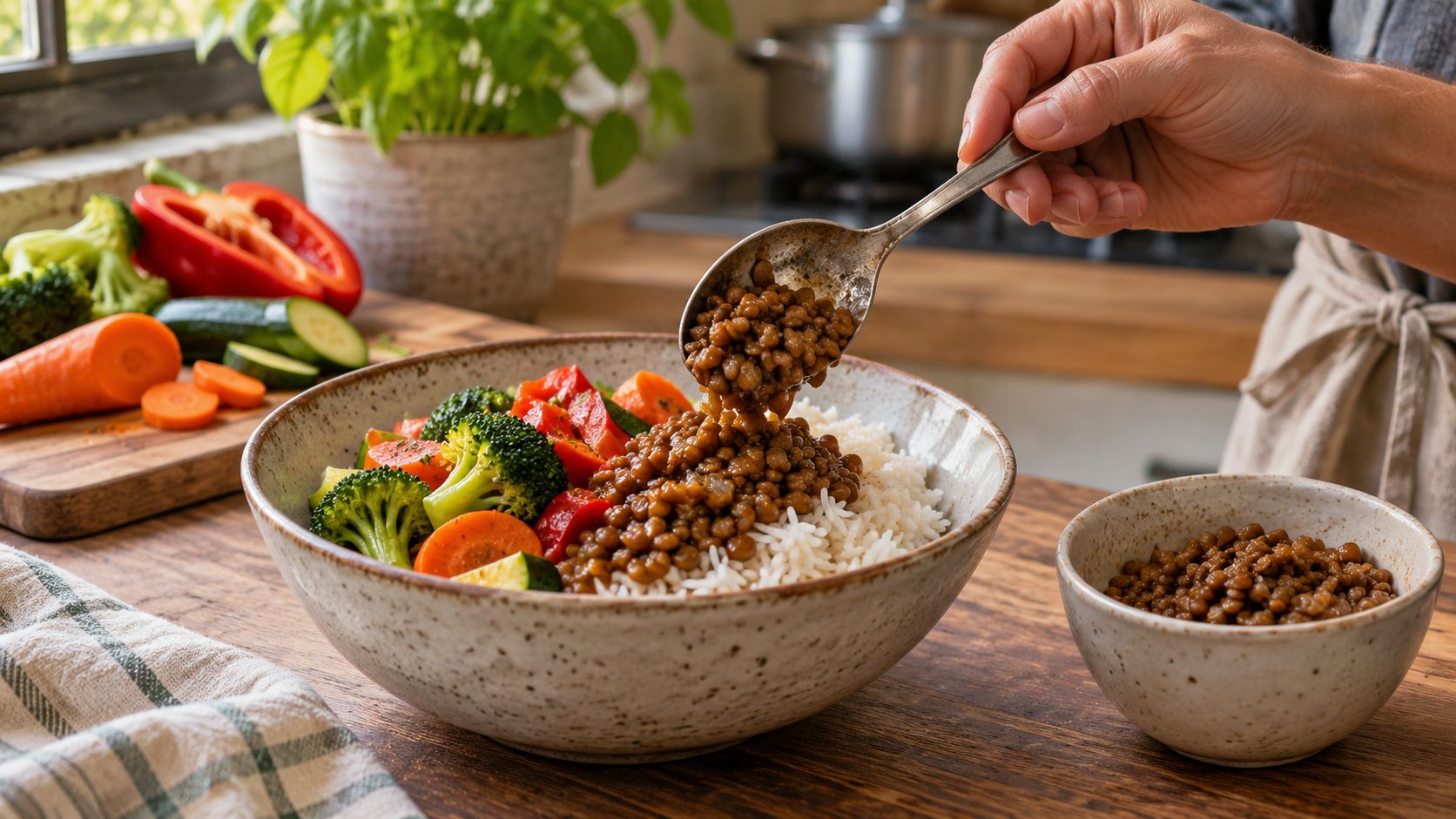
To turn a familiar dish into a vegetarian meal, first determine what role the ingredient you are removing plays in the dish. Ground beef might provide a grainy texture and the main part of a sauce. Butter might be used for frying or for flavoring at the end. If you find the role, you can choose a substitute that works in the same dish. Start with a frequent meal, keep the change small, and measure the results against the same food that the family likes.
Recreate the current version of the food from memory.
Write down the name of the dish and list the ingredients in the order they actually go into the dish. For example, in a homemade pasta dish, you might start with the onions and sauce, add the ground beef, and finally mix it with the pasta. Write down whether you use any broth or cheese. Some things don’t appear in the name of the dish and only come to mind when you review the preparation order. If the recipe comes from a family member, ask them for their home version. It’s easier to change an actual recipe than to change the name of a dish altogether.
Next, decide what meal plan the meal will be prepared for. In a vegetarian diet with dairy and eggs, some ingredients can remain in the recipe. In a vegan version, the label of the pasta, cheese or ready-made sauce should also be checked. If several people are eating with different preferences, determine which parts are common to everyone. For example, make the base sauce vegetarian and separate the toppings for each person on the plate. The NHS guidelines explain the differences in combining the two meal plans. [1] [2]
Keep the part that everyone loves. The bottom of the pot, the aroma of cinnamon, or the pickle at the end of the meal may be important to the family. Changing the main ingredients doesn’t necessarily require changing these familiar cues. If the new dish is different from the previous version, define the criteria for success. For pasta, the sauce that sticks to the pasta may be more important than recreating the exact shape or taste of the meat.
For each role, find a replacement for the same role.
Look at the three characteristics separately. First, what gives the dish volume, second, what gives it texture, and third, where the main flavor comes from. In a tomato dish, cooked lentils may provide volume and grainy texture. Onions and paste can form much of the flavor of the sauce. If the meat is sautéed with the onions before being removed, the cooked lentils do not need to stay in the pan for as long. Add them at a stage where they retain their softness and grainy shape.
For liquid-based dishes, pay special attention to the liquid component. If you typically start a soup or stew using meat stock, omitting it will alter not only the liquid content but also the salt level and overall flavor. Instead, build a base using vegetables and seasonings you are familiar with, and adjust the salt at the end. If you are using a store-bought vegetable stock, check the ingredient list and the dilution instructions; the name of a vegetable on the front of the package does not necessarily reveal the full composition of the product.
When aiming for a roasted or chunky texture, consider how the plant-based ingredients will lose moisture or retain their shape. For instance, if you crowd chopped mushrooms in a pan, they may end up softening in their own juices rather than browning. If a roasted quality is your goal, sauté them in smaller batches before adding them to the sauce. Conversely, if a softer texture is better suited for a stew, there is no need to focus on browning. Align your cooking method with the desired outcome for the dish.
Adapt your approach for pasta dishes and *loobia-polo* (rice with green beans) using two distinct methods.
For pasta with tomato sauce, begin by preparing the sauce—using onions and tomato paste—just as you normally would. Once the tomato base has thickened slightly, add cooked, drained whole lentils. If you prefer a textured, chunky consistency, be careful not to crush the lentils while stirring; if you prefer a smoother sauce, mash a portion of the lentils. Before combining the sauce with the entire batch of pasta, test it on a small portion. The dish is ready to serve when the sauce clings to the pasta without pooling as liquid at the bottom of the serving dish. To understand how different types of lentils behave during cooking, see the section on the differences between green and red lentils during cooking.
When making *Lubia Polo* (Persian rice with green beans), the goal is often to maintain the right balance of rice, green beans, tomatoes, and spices. If you plan to omit the ground meat, first check how much liquid the recipe calls for in the sauce. Once the sauce is ready, you can add a moderate amount of vegetables or cooked legumes of your choice. Since the sauce and rice are steamed together in layers, a sauce that is too liquidy can alter the texture of the rice. Before layering, check the consistency of the sauce using the same method you would for the original recipe.
If your family is hesitant about adding a new ingredient, try it out on a smaller scale first. For example, you could serve one portion of pasta with a sauce containing lentils, and another portion with a sauce containing chopped mushrooms. Ask everyone which texture they prefer for future meals. You don’t need to prepare two full-sized meals just to test a single ingredient; using smaller portions allows you to evaluate the change in a real-world setting while minimizing the waste of ingredients and effort if the choice doesn’t turn out well.
Organize the preparation of *Ash* (thick soups/stews), *Khoresht* (stews), and meals served with bread based on their cooking sequence.
For *Ash-e Reshteh* (a traditional noodle and bean soup), decide on the core components first, then consider the toppings or add-ins. In many households, the base consists of legumes, herbs, and noodles, while *kashk* (fermented whey) or fried onions are added to each individual bowl. If you are cooking for a group with varying preferences, you can keep the toppings separate. If your goal is to create a vegan version, be sure to check the ingredients in the noodles and the stock used. Omitting the *kashk* (whey/yogurt sauce) at the end only affects that specific addition; it does not alter the base composition of the dish.
In stews, the timing of when each ingredient is added affects its texture. Raw legumes, cooked legumes, and sautéed vegetables are distinct elements. If you are using pre-cooked legumes, add them at a point that allows them to meld with the sauce without becoming mushy or falling apart. If you are introducing a fresh ingredient—such as eggplant—first determine which preparation method yields the desired texture. Soft, tender eggplant works well in a stew, whereas a dish requiring firm, crisp pieces would call for a different approach.
When preparing a meal served with bread, consider two simple questions: Will the filling spill out when the bread is picked up? And will the time elapsed between preparation and consumption cause the bread to become soggy? Thick legume-based dishes or spreadable purées are well-suited for this style of serving. If a dish contains a sauce or juicy tomatoes, keep these separate and add them only when ready to eat. For a home-cooked meal, you can serve the same components on a plate, adjusting the consistency to suit the type of bread being used.
Consider the composition of the meal separately from the success of the recipe itself.
Adapting a single recipe into a plant-based dish is a different task than planning a full week’s worth of meals. If a dish already contains rice, vegetables, and legumes, a minor adjustment may be enough to preserve its overall structure. However, if removing the main ingredient leaves you with only side dishes or garnishes, be sure to add a suitable component to complete the meal. For example, you could serve a bean or lentil dish alongside a plate of rice and salad. The NHS guidelines explain how to incorporate a variety of food groups throughout the day and week. [1] [2]
For your most frequent meals, make a note of which food sources are actually available to you and which ones you consume regularly. Depending on your chosen dietary pattern, this might include cooked legumes, bread, and vegetables in one household, or soy products or eggs in another. If you follow a vegan diet, consult a reliable guide regarding nutrients that require careful planning. If you need a personalized approach, seek assistance from a dietitian or nutritionist. [2]
If you are trying out new dishes during the week, limit your shopping to only what is needed for that specific meal. Use a familiar ingredient across two different recipes, and keep a simpler option on hand for your busier days. Start by looking at your household calendar; a night when everyone gets home late is not the best time to attempt a time-consuming stew for the first time. Meal planning allows you to factor in both the actual cooking time and the number of people you are feeding. [3]
Change only one thing the second time around.
After serving the meal, make a note of what went well and what needs adjustment. If the flavor was right but the sauce turned out too watery, try changing only the amount of liquid or the time allowed for the sauce to thicken next time. If the texture was perfect but your family missed a familiar flavor, bring back the seasoning used in the previous version. Changing too many variables at once makes it difficult to pinpoint the cause of a specific outcome.
The best notes are brief and easy to replicate. For example, you might write: “Added a ladle of cooked lentils after the sauce thickened; it was enough for two people.” If you rely on memory or guesswork, you might not remember exactly which pot you used or the precise quantities involved. For the first week, try modifying just two meals—this gives you enough space to evaluate the results. If you haven’t finalized your weekly plan yet… First-Week Vegetarian Checklist This helps you distinguish between the time spent shopping and the time spent cooking.
Summary
For any familiar dish, identify the function of the ingredient being removed, and select a substitute based on its texture, flavor, and cooking requirements. Retain the elements of the recipe that are important to your family. If the result needs adjustment, change only one variable next time and evaluate the outcome with that same meal.
Frequently asked questions
Can lentils replace ground meat in all dishes?
Cooked lentils have a good texture for some sauces and dishes, but the cooking method and shape of the dish are important. For sauces where the grains should remain visible, whole lentils are suitable, and for a softer texture, partially crushed lentils are suitable. In molded dishes, you need to adjust the consistency and moisture of the ingredients separately.
How can I satisfy multiple food preferences with one cooking session?
Prepare a common base, such as rice and vegetable sauce, and keep the additives separate when serving. Determine from the beginning what broth or oil the common ingredients are cooked in. If it is a food allergy issue, separating the additive when serving is not enough to prevent cross-contact.
Which food should I start with?
Choose a dish that you know the steps for and can swap out the main ingredient without changing all the parts. A tomato pasta sauce, a soup with a separate topping, or a bean dish can be a starting point. Fit the time and ingredients into your schedule for the day.
What should I check if I use a ready-to-use replacement product?
Read the product type, preparation instructions, and ingredient list. A product may have a similar texture to the previous ingredient and may contain dairy or eggs. To replicate the results, record the exact name of the product and the amount you used in the meal.
Leave a Reply